

The best foods for overactive nerves are those rich in magnesium, B vitamins, omega-3 fatty acids, and calming amino acids like tryptophan and GABA precursors. Spinach, salmon, almonds, avocados, eggs, and tart cherry juice are good examples. These foods supply nutrients your nerves use for signaling, and a few have been studied for anxiety or sleep. Food cannot repair damaged nerves on its own, so ongoing symptoms need a medical check. (see peripheral neuropathy)
Written by the Editorial Team. Medically reviewed by Matthew Olesiak, MD, on September 24, 2026. Updated March 2026. Part of the Consumer Health Guide research library.
That’s the short answer. But if your nerves feel constantly fired up (tingling, muscle twitching, anxiety, heightened pain sensitivity, restless legs, or that “wired but tired” feeling), you need more than a grocery list. You need to understand which nutrients your nervous system is probably missing and how to get enough of them from food before turning to supplements.
About 48% of Americans get less magnesium from food and drinks than they need, according to the NIH Office of Dietary Supplements. Low vitamin B12 can cause numbness and tingling in the hands and feet, according to the same NIH office.
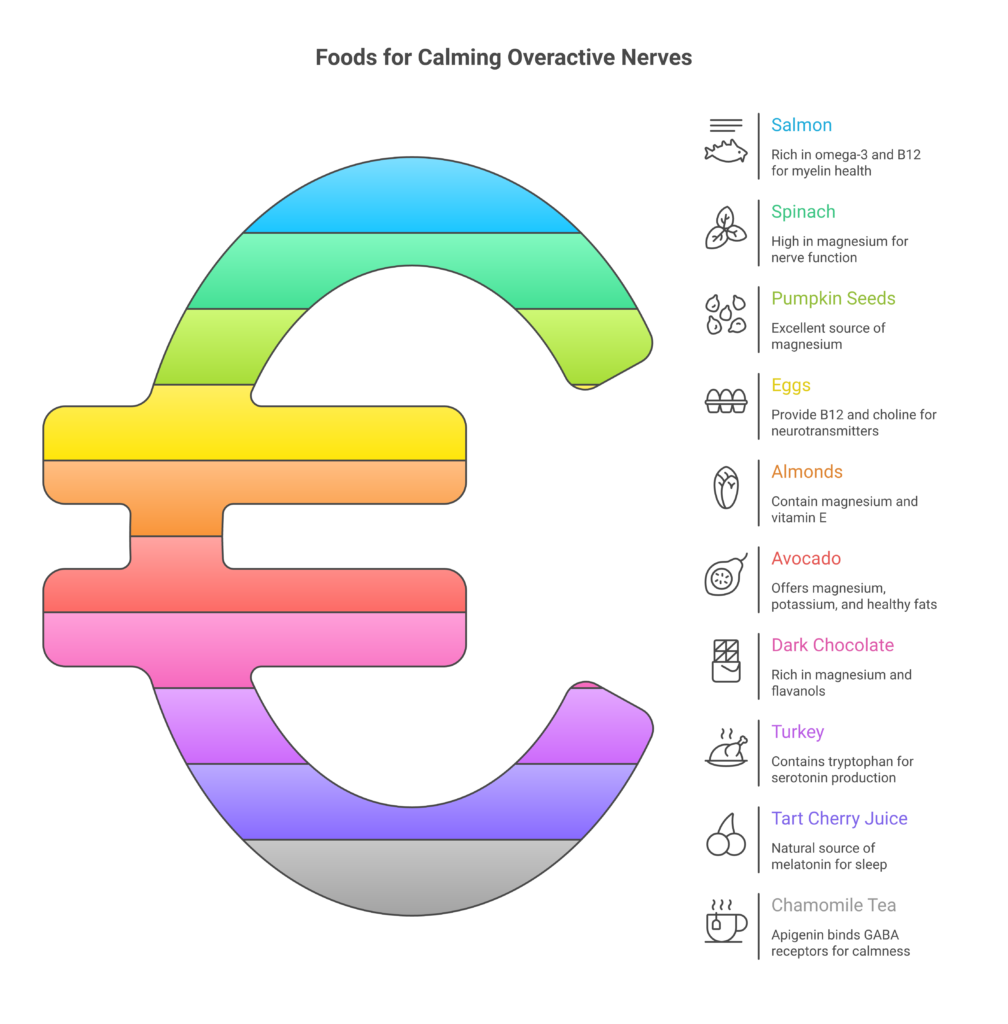
What Foods Calm Overactive Nerves?
Foods that calm overactive nerves fall into five categories based on how they affect nerve signaling. I’ll cover each with the specific foods, how they work, and what the research does and does not show.
Magnesium-Rich Foods: The Nerve Relaxation Mineral
Magnesium blocks NMDA receptors, which are excitatory receptors that fire nerve signals. When magnesium is low, those receptors become overactive, and nerves fire too easily. Think of magnesium as the brake pedal for your nervous system.
A 2017 review in Nutrients analyzed 18 studies and concluded that the evidence suggests a benefit of magnesium on subjective anxiety in people prone to anxiety, such as mildly anxious individuals and those with premenstrual symptoms. The authors rated the quality of the evidence as poor.
Best food sources:
- Pumpkin seeds (roasted): 156 mg per ounce (37% daily value). Top of the NIH list of food sources. Toss a handful on salads or eat them as a snack.
- Spinach (boiled): 78 mg per half cup (19% DV). Other leafy greens like Swiss chard and kale work too.
- Dark chocolate (70%+ cacao): Also contains magnesium. Keep portions small.
- Avocados: 22 mg per half cup, cubed, plus potassium (which also regulates nerve firing) and healthy monounsaturated fats.
- Black beans: 60 mg per half cup, cooked (14% DV). Legumes provide magnesium alongside fiber and protein.
- Almonds (dry roasted): 80 mg per ounce (19% DV). Cashews are close at 74 mg.
Daily target (RDA): 310 to 320 mg for adult women and 400 to 420 mg for adult men, per the NIH. A few extra servings of the foods above can help close the gap.
B Vitamin Foods: Rebuilding Neurotransmitter Balance
Your nervous system depends on B vitamins to produce GABA (the calming neurotransmitter), serotonin (mood regulation), and myelin (nerve insulation). Three B vitamins matter most for overactive nerves:
Vitamin B12 is required for myelin synthesis. When B12 drops, myelin deteriorates and nerve signals misfire, causing tingling, numbness, and heightened sensitivity. If you’re an older adult, take metformin, or eat plant-based, you are at higher risk of low B12, so ask your doctor about testing. For supplement guidance, see our full guide on what to look for in a nerve supplement.
- Eggs: One large egg provides 0.5 mcg B12 (19% DV) plus choline, which supports neurotransmitter production. Eat the yolk, that’s where the nutrients are.
- Salmon (Atlantic, cooked): 2.6 mcg B12 per 3-oz serving (108% DV), plus omega-3s for a dual nerve benefit.
- Beef liver (pan fried): 70.7 mcg per 3-oz serving (2,944% DV). The most concentrated food source of B12, though the taste isn’t for everyone.
Vitamin B6 is needed to produce GABA and serotonin, the neurotransmitters that calm nerve activity. But there’s a safety note for supplements. Vitamin B6 supplements can themselves cause peripheral neuropathy. The U.S. upper limit for adults is 100 mg a day from food and supplements combined (NIH Office of Dietary Supplements), and Australia’s medicines regulator says the risk cannot be ruled out even below 50 mg a day (TGA). B6 from food has not been reported to cause harm, according to the NIH.
- Chickpeas: 1.1 mg per cup (65% DV)
- Bananas: 0.4 mg each (25% DV), plus potassium for nerve signal regulation
- Poultry: 0.5 mg per 3 oz of roasted chicken breast (29% DV), 0.4 mg for roasted turkey
Folate (B9) supports neurotransmitter synthesis and DNA repair in nerve cells. Leafy greens are a good source: half a cup of boiled spinach provides 131 mcg DFE (33% DV).
Omega-3 Rich Foods: Anti-Inflammatory Nerve Protection
Chronic neuroinflammation makes nerves hypersensitive. Omega-3 fatty acids (EPA and DHA) are studied for their effects on inflammation.
A 2018 meta-analysis by Su et al. in JAMA Network Open pooled data from 19 clinical trials (2,240 participants) and found that omega-3 supplementation was associated with reduced anxiety symptoms, mainly in people with a clinical diagnosis and only in trials using higher amounts (Su et al., 2018). The authors called for better-designed studies.
- Salmon (Atlantic, cooked): about 1,800 mg EPA plus DHA per 3 oz for farmed and about 1,600 mg for wild.
- Mackerel (Atlantic, cooked): about 1,000 mg EPA plus DHA per 3 oz.
- Sardines (canned in tomato sauce): about 1,200 mg EPA plus DHA per 3 oz. Budget-friendly and shelf-stable.
- Flaxseed: 2,350 mg ALA per tablespoon of whole seeds. Plant-based alternative, though the body converts less than 15% of ALA to EPA and DHA.
- Walnuts: 2,570 mg ALA per ounce.
Heart-health advisories recommend one to two servings of seafood per week. Food figures above are from the NIH Office of Dietary Supplements.
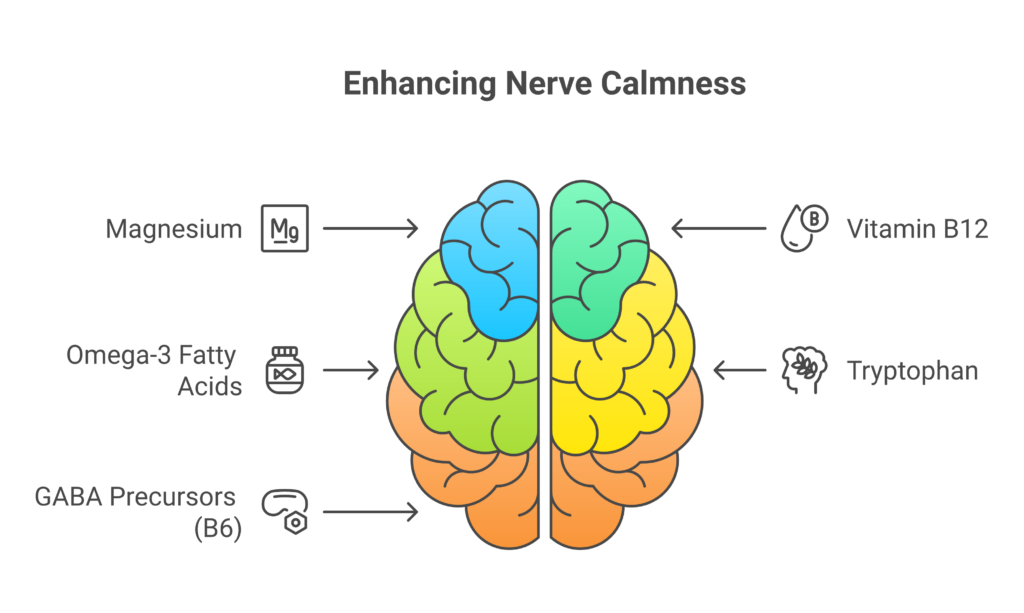
Tryptophan and GABA-Boosting Foods: Building Calm From the Inside
Tryptophan is an amino acid your body uses to make serotonin and melatonin.
- Turkey: A familiar source of tryptophan.
- Pumpkin seeds: Also one of the best magnesium sources listed above.
- Chicken, tofu, and cheese: All good tryptophan sources.
Anti-Inflammatory Spices and Drinks for Nerve Comfort
Turmeric (curcumin) has anti-inflammatory properties in laboratory research. Curcumin is poorly absorbed on its own; in a 1998 study in Planta Medica, taking it with piperine from black pepper raised absorption by 2,000% in human volunteers.
Ginger contains gingerols and shogaols. Evidence for nerve pain specifically is limited, but it is an easy way to flavor food. Add fresh ginger to stir-fries, smoothies, or steep slices in hot water for tea.
Calming drinks for overactive nerves:
- Chamomile tea: Contains apigenin. A 2016 randomized trial in Phytomedicine found that long-term chamomile extract was safe and reduced moderate-to-severe generalized anxiety symptoms, though it did not significantly lower relapse rates.
- Tart cherry juice: Contains anthocyanins. In a small 2018 pilot study in the American Journal of Therapeutics, 8 adults over 50 with insomnia who drank tart cherry juice twice a day for two weeks slept 84 minutes longer on sleep testing.
- Green tea: Contains L-theanine, an amino acid studied for relaxation.
The Gut-Nerve Connection: Fermented Foods
Your gut and nervous system communicate through the vagus nerve. Researchers call this the gut-brain axis, and they are still working out how gut bacteria affect the nervous system.
Fermented foods like yogurt, kefir, kimchi, sauerkraut, and miso contain live bacteria. A 2021 Stanford University study in Cell found that a diet high in fermented foods increased gut microbiome diversity and lowered inflammatory markers in healthy adults. For a deeper look at how food supports gut health (which in turn supports nerve health), see our guide on the best foods for gut health.
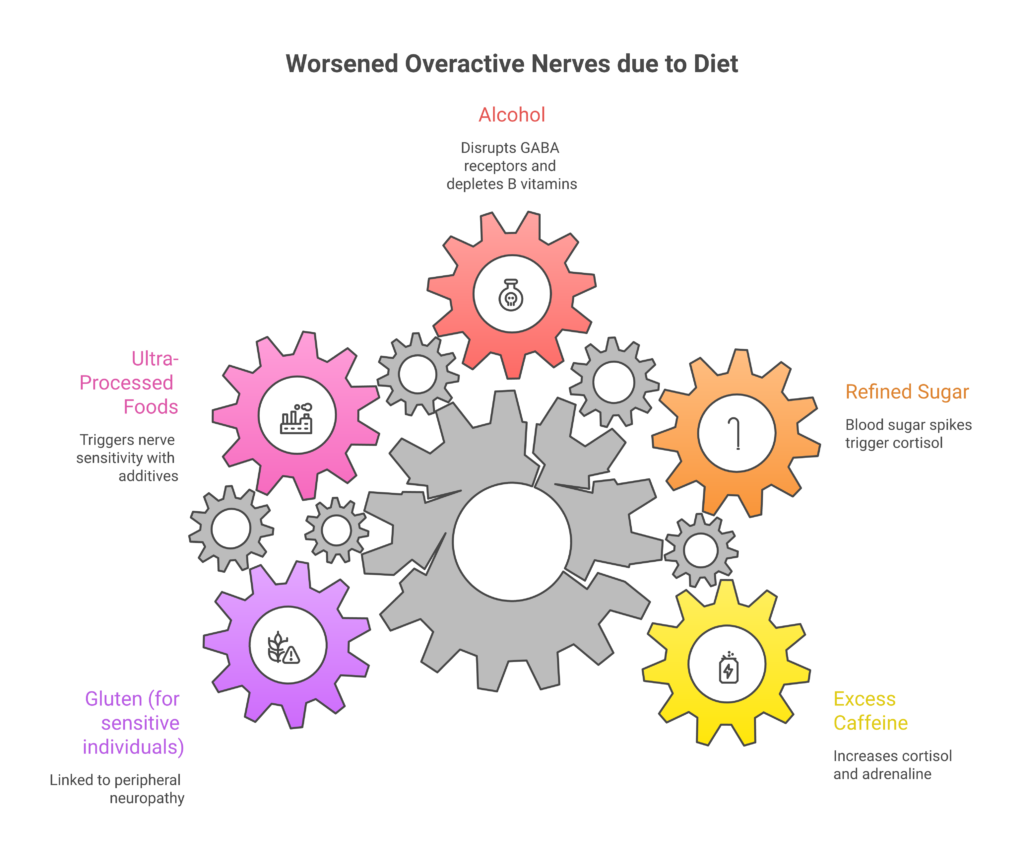
Foods That Make Overactive Nerves Worse
Equally important is reducing foods that overstimulate your nervous system:
- Excess caffeine: Blocks adenosine receptors (the “drowsiness” signal), increases cortisol and adrenaline. If your nerves are already overactive, caffeine pours gasoline on the fire. Limit to 1-2 cups of coffee before noon, or switch to green tea for the L-theanine calming effect.
- Refined sugar and simple carbs: Cause blood sugar spikes and crashes that trigger cortisol release and nerve hyperactivity. Replace white bread, pastries, and sugary drinks with whole grains, legumes, and fruit.
- Alcohol: While it feels calming initially, alcohol disrupts GABA receptor function and depletes B vitamins that your nerves need. Even moderate drinking can worsen nerve-related sleep disruption. Chronic heavy drinking directly damages peripheral nerves.
- Ultra-processed foods: Contain additives (MSG, artificial sweeteners, artificial colors) that can trigger nerve sensitivity in some people. The preservatives and emulsifiers also disrupt gut bacteria, which feeds back into nerve dysregulation through the gut-brain axis.
- Gluten (for sensitive individuals): A 2006 study in Muscle and Nerve found that people with unexplained neuropathy and gluten sensitivity markers who followed a gluten-free diet had better nerve test results after one year than those who did not. If you notice nerve symptoms worsening after wheat-heavy meals, ask your doctor about celiac testing before cutting out gluten.
A Sample Day for Calmer Nerves
Here is one example of a day built around the foods above. It is an illustration of how the nutrients fit together, not a treatment plan.
- Breakfast: Scrambled eggs with spinach and half an avocado. Green tea instead of coffee.
- Mid-morning: Pumpkin seeds and almonds.
- Lunch: Salmon over leafy greens with chickpeas, walnuts, and olive oil. Boring? Maybe. But it covers B12, omega-3s, magnesium, and folate in one plate.
- Afternoon: Chamomile tea and a banana with almond butter.
- Dinner: Turkey stir-fry with broccoli, sweet potato, turmeric, ginger, and brown rice. Sauerkraut on the side for the gut-nerve connection.
- Before bed: 8 oz tart cherry juice and a square of dark chocolate.
Count the nerve nutrients in that day: magnesium from spinach, pumpkin seeds, almonds, and dark chocolate. B12 from eggs and salmon. Omega-3s from salmon and walnuts. Tryptophan from turkey and pumpkin seeds. GABA support from chamomile. Natural melatonin from tart cherry. Anti-inflammatory curcumin from turmeric. And fermented sauerkraut for the gut. No single food does everything, and no menu replaces medical care for nerve symptoms.
How Quickly Can Food Changes Calm Your Nerves?
There is little research on how fast food changes affect nerve symptoms. In the tart cherry pilot study above, the sleep gain was measured after two weeks of drinking the juice twice a day. The Stanford fermented food study ran for several weeks before changes in gut bacteria and inflammatory markers were measured.
If you think you have a deficiency, ask your doctor about testing, since a true deficiency needs proper treatment. If your symptoms are new, spreading or getting worse, see a doctor rather than waiting on diet changes.
If you are considering supplements, read up on safety first. For guidance on what to look for, see our article on nerve supplement safety, and compare the top-rated nerve support supplements.
Browse all of our nerve supplements reviews and guides for more research-backed recommendations.
For detailed product comparisons, see our nerve health supplement reviews.
You may also want to read our guide on eye vitamins.
Foods that calm an overactive nervous system also tend to calm the gut, because the two communicate through the vagus nerve. The same diet that supports nerve regulation often improves gut function. See our companion guide on foods that support better gut health.
Frequently Asked Questions
What is the number one food for nerve pain?
Fatty fish (salmon, mackerel, sardines) is a strong all-round choice. It provides omega-3 fatty acids and vitamin B12, which your nerves need. Heart-health advisories recommend one to two servings of seafood per week. No single food treats nerve pain, so see a doctor if pain persists.
Is banana good for nerves?
Yes. A medium banana provides 0.4 mg of vitamin B6 (25% of the daily value), plus potassium. They’re not the most potent nerve food, but they’re convenient, affordable, and a useful part of a balanced diet.
What drink is good for nerves?
Chamomile (a long-term trial of chamomile extract reduced anxiety symptoms), tart cherry juice (it added 84 minutes of sleep in a small pilot study of adults with insomnia), and green tea (a source of L-theanine). Keep caffeine moderate and limit alcohol, since heavy drinking can damage nerves.
Can diet reverse nerve damage?
Diet alone cannot be relied on to reverse nerve damage. Neuropathy caused by vitamin B12 deficiency needs medical treatment, and early diagnosis matters because the damage can become permanent. Diabetic neuropathy is managed mainly through blood sugar control. A balanced diet supports overall nerve health, but see a doctor about any ongoing numbness, tingling or pain.
Does magnesium help nerve pain?
The evidence is limited. Magnesium helps regulate nerve signaling, and a 2017 review in Nutrients found that magnesium supplements may reduce anxiety in people prone to it, though the studies were of poor quality. About 48% of Americans get less magnesium from food than they need, so eating more spinach, pumpkin seeds and almonds is a sensible step. Ask your doctor before taking magnesium supplements, especially if you have kidney disease.
What foods make neuropathy worse?
Excess alcohol (a known cause of peripheral neuropathy) and, if you have diabetes, foods that keep your blood sugar high (diabetes is the leading cause of neuropathy in the U.S.). For some people with gluten sensitivity, gluten may also play a part, so ask your doctor about testing.
Further Reading from Consumer Health Guide
If you want to go deeper, our guide to B vitamins for nerve health covers what most product pages skip. For readers comparing options, see our breakdown of natural neuropathy relief.