

Most nerve supplements sold in the United States are safe for healthy adults when taken at recommended doses. Ingredients like vitamin B12, benfotiamine (vitamin B1), alpha-lipoic acid, and acetyl-L-carnitine have decades of clinical research behind them and typically cause only mild, temporary side effects such as digestive discomfort. But “generally safe” does not mean “risk-free for everyone.” Certain ingredients carry real dangers at high doses, several interact with common prescription medications, and the supplement industry’s self-regulated structure means product quality varies widely. This guide covers every safety concern you should evaluate before taking a nerve supplement, with specific dosage thresholds, interaction warnings, and red flags to watch for.
Written by the Editorial Team. Medically reviewed by Matthew Olesiak, MD, on September 24, 2026. Last updated March 19, 2026. Part of the Consumer Health Guide research library.
Why Safety Matters More with Nerve Supplements
Nerve supplements target your peripheral nervous system, which controls sensation, movement, and autonomic functions like heart rate and digestion. Because of that, side effects from nerve-targeting ingredients can produce symptoms that mimic or worsen the exact conditions you are trying to treat. Vitamin B6 toxicity, for example, causes peripheral neuropathy, the same condition many people take nerve supplements to relieve.
This is a category where getting the dose right is not optional. Too little of certain B vitamins contributes to nerve damage. Too much of others (specifically B6) also causes nerve damage. The therapeutic window for nerve health is narrower than it is for general multivitamins, and that makes informed supplementation more important here than in most other supplement categories.
The Vitamin B6 Toxicity Risk: The Most Misunderstood Danger
Vitamin B6 (pyridoxine) is the single most important safety concern in nerve supplements, and most consumers do not know about it. According to the NIH Office of Dietary Supplements, chronic intake of 1,000 to 6,000 mg per day of pyridoxine for 12 to 40 months causes severe, progressive sensory neuropathy with loss of coordination. The same fact sheet notes several reports of sensory neuropathy at doses below 500 mg per day, and Australia’s Therapeutic Goods Administration says the risk cannot be ruled out even below 50 mg per day.
The Food and Nutrition Board of the National Academies set the Tolerable Upper Intake Level (UL) for adults at 100 mg per day. In 2023, the European Food Safety Authority took a more conservative position, setting their upper limit at just 12 mg per day for all adults, including pregnant and breastfeeding women.
Here is what makes this risky in practice: B6 turns up in B vitamins, multivitamins, and magnesium and zinc products, as well as in fortified foods and drinks, according to the TGA. Taken together, your total daily B6 intake can exceed the upper limit without you realizing it.
How to Protect Yourself from B6 Toxicity
- Check the B6 content on every supplement you take, including multivitamins
- Add up your total daily B6 from all sources (supplements, fortified foods, energy drinks)
- Stay under the 100 mg per day upper limit from all sources combined, and ask your doctor or pharmacist whether you need a high-dose B6 product at all
- If you notice new tingling, numbness, or worsening symptoms while taking a nerve supplement, stop the B6 source immediately and see your doctor
- Symptoms of B6 toxicity are dose-dependent and usually reverse after stopping supplementation, according to the NIH
Regulators are tightening controls: from June 2027, Australia will require a pharmacist’s advice for products with more than 50 mg of B6 per daily dose. For help choosing safe products, see our guide on what to look for in a nerve supplement.
Alpha-Lipoic Acid: Blood Sugar Effects and Drug Interactions
Alpha-lipoic acid (ALA) has one of the strongest evidence bases for nerve support. In a 2004 meta-analysis of intravenous ALA trials, adverse event rates did not differ from placebo. In the four-year NATHAN 1 trial of oral ALA, however, serious adverse events were more common on ALA (38.1%) than on placebo (28.0%).
The primary safety concern with ALA is its blood-sugar-lowering effect. ALA improves insulin sensitivity and increases glucose uptake into cells. For people with diabetes who take insulin, metformin, sulfonylureas, or meglitinides, adding ALA can push blood sugar dangerously low. A Health Canada safety review found that ALA may, in rare cases, trigger insulin autoimmune syndrome (IAS), causing severe hypoglycemia in individuals with a specific genetic variation.
ALA Interaction Warnings
- Diabetes medications: Monitor blood sugar closely when starting ALA. Keep glucose tablets available. Your doctor may need to adjust medication doses
- Thyroid medications: ALA may reduce levels of thyroid hormones. If you take levothyroxine or similar drugs, get thyroid levels checked after starting ALA
- Chemotherapy drugs: ALA has antioxidant properties that could theoretically interfere with certain chemotherapy agents. Consult your oncologist before use
Acetyl-L-Carnitine: Blood Thinner Warning and Chemotherapy Concern
Acetyl-L-carnitine (ALC) is generally well tolerated in clinical trials. The most common side effects are mild nausea, digestive discomfort, and a fishy body odor in some people. Taking ALC with food typically prevents stomach issues. Because ALC supports cellular energy production, taking it late in the day may cause difficulty sleeping.
Two cautions apply to ALC:
Blood thinners. If you take warfarin (Coumadin), clopidogrel (Plavix), apixaban (Eliquis), rivaroxaban (Xarelto), or another anticoagulant, do not add ALC or any other supplement without discussing it with your prescribing doctor.
Taxane chemotherapy. Memorial Sloan Kettering Cancer Center reports that ALC worsened chemotherapy-induced peripheral neuropathy (CIPN) in patients receiving taxane-class drugs. Current guidelines do not recommend ALC for preventing CIPN. If you are undergoing or have recently completed chemotherapy, avoid ALC unless your oncologist approves it.
Other Common Drug Interactions
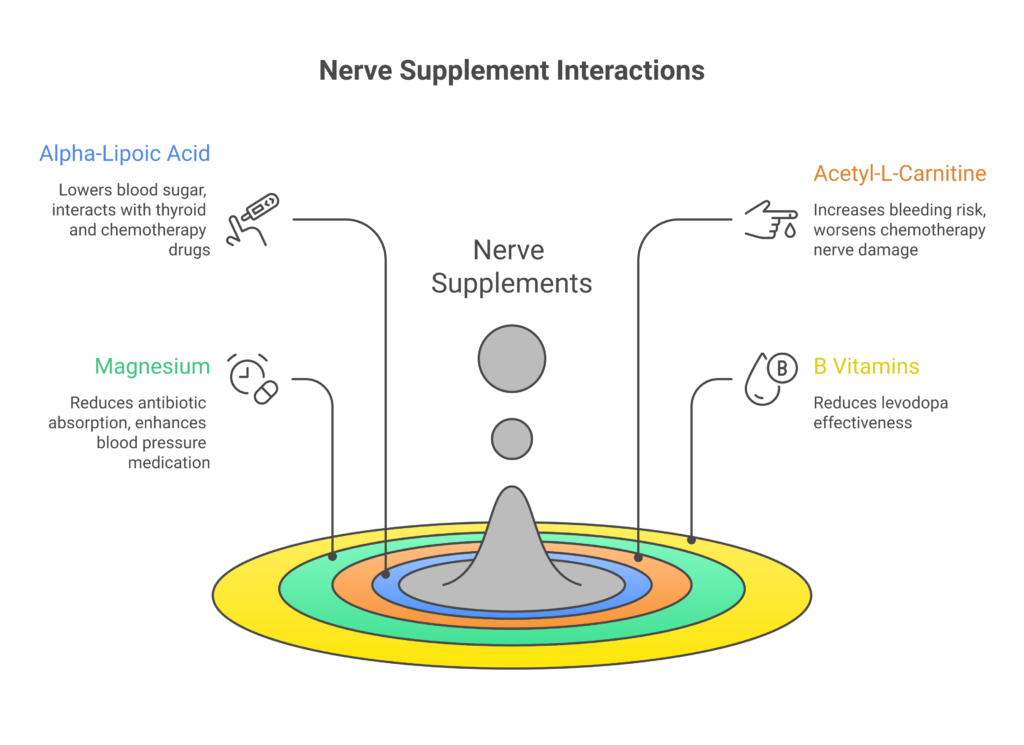
Beyond ALA and ALC, several other nerve supplement ingredients interact with medications:
- Magnesium + antibiotics: Magnesium reduces the absorption of fluoroquinolone and tetracycline antibiotics. Take these antibiotics at least 2 hours before or 4 to 6 hours after a magnesium-containing supplement, per the NIH Office of Dietary Supplements
- Magnesium + blood pressure medications: Magnesium can enhance the blood-pressure-lowering effect of ACE inhibitors, ARBs, and calcium channel blockers. Monitor for dizziness or lightheadedness
- Vitamin B6 + levodopa: B6 can reduce the effectiveness of levodopa (used for Parkinson’s disease) when levodopa is taken without carbidopa. If you take Sinemet (levodopa/carbidopa combination), this interaction is less of a concern
- Nerve supplements + gabapentin or pregabalin: Some nerve supplement ingredients may have additive effects with prescription nerve pain medications like gabapentin (Neurontin) or pregabalin (Lyrica). This is not necessarily dangerous but may require dose adjustments under medical supervision
The safest approach: bring your supplement bottle to your next doctor or pharmacist visit and ask them to check for interactions with everything you currently take.
Quality Control and Contamination Risks
The FDA does not approve dietary supplements before they reach store shelves. Under the Dietary Supplement Health and Education Act (DSHEA) of 1994, manufacturers are responsible for ensuring their products are safe and properly labeled, but the FDA only steps in after a problem is reported. This self-regulated structure creates real quality gaps.
According to the Department of Defense’s Operation Supplement Safety program, mislabeled and contaminated supplement products are not uncommon. Problems found in independent testing include: less active ingredient than the label claims, undisclosed fillers or additives, heavy metal contamination (lead, arsenic, mercury, cadmium), and undisclosed pharmaceutical ingredients or stimulants.
How to Verify Supplement Quality
Look for products tested by one of these independent certification bodies:
- NSF International: Tests against NSF/ANSI Standard 173, which covers ingredient identity, contaminant testing, and on-site facility inspections
- USP (United States Pharmacopeia): Verifies that the product contains what the label says, in the declared amounts, and is free from harmful contaminants
- ConsumerLab: Independently purchases and tests supplements, publishing pass/fail results publicly
A certification seal from any of these organizations does not guarantee the supplement will work for your condition, but it does confirm you are getting what you paid for and that the product is free from dangerous contaminants.
Upper Limits and Safety Notes for Common Nerve Supplement Ingredients
This guide does not recommend doses. The list below gives the official upper limits where they exist, which are safety ceilings rather than targets. Discuss any product with your doctor or pharmacist.
- Vitamin B12: No upper limit has been set because of its low potential for toxicity, according to the NIH Office of Dietary Supplements
- Vitamin B1 (thiamin): No upper limit has been set, because high intakes have not been reported to cause adverse effects
- Vitamin B6: Upper limit of 100 mg per day for adults from all sources combined. EFSA set a lower limit of 12 mg per day in 2023
- Alpha-lipoic acid: No official upper limit. It can lower blood sugar, so monitor closely if you have diabetes
- Acetyl-L-carnitine: No official upper limit. Do not use it during taxane chemotherapy unless your oncologist approves, and check with your doctor if you take a blood thinner
- Magnesium: Upper limit of 350 mg per day from supplements for adults. Higher doses often cause diarrhea, and the risk of toxicity rises with kidney disease
- Vitamin D: Upper limit of 4,000 IU (100 mcg) per day for adults
Special Populations: Who Needs Extra Caution
Pregnant and Breastfeeding Women
Safety data during pregnancy is limited for most nerve supplement ingredients beyond basic B vitamins. Vitamin B12 and B1 are generally considered safe during pregnancy at standard doses. Alpha-lipoic acid, acetyl-L-carnitine, and high-dose magnesium have not been studied enough in pregnant women to confirm safety. The Foundation for Peripheral Neuropathy recommends consulting your OB-GYN before taking any nerve supplement during pregnancy or while nursing.
People with Kidney Disease
Impaired kidneys cannot excrete excess minerals and water-soluble vitamins as efficiently as healthy kidneys. Magnesium accumulation is a particular risk in people with reduced kidney function, and even moderate supplemental doses can cause dangerous elevations. ALC is also processed by the kidneys. If you have reduced kidney function, ask your nephrologist to review any supplements before you start them.
People with Liver Disease
The liver metabolizes many supplement ingredients. While most nerve supplement components are safe for normal liver function, existing liver conditions change the equation. ALA has shown liver-protective properties in some research, but higher doses in people with compromised liver function have not been well-studied. Get medical clearance first.
People on Multiple Medications
The more medications you take, the higher the chance of a supplement interaction. This is especially true for people taking blood thinners, diabetes medications, blood pressure drugs, seizure medications, or chemotherapy. A clinical pharmacist can run a formal interaction check across all your medications and supplements, which is more thorough than checking one supplement at a time.
When to See a Doctor Instead of Taking Supplements
Nerve supplements are not a substitute for medical diagnosis and treatment. Certain nerve symptoms require urgent evaluation, not supplementation:
- Sudden onset of severe numbness, tingling, or weakness (especially on one side of the body)
- Rapidly worsening neuropathy over days or weeks rather than months
- Loss of bladder or bowel control, which may indicate spinal cord compression
- Weakness in the legs causing difficulty walking or frequent falls
- Nerve pain after an injury, surgery, or new medication
These symptoms may indicate conditions like Guillain-Barre syndrome, spinal cord compression, stroke, or medication-induced neuropathy that require specific medical treatment. Using supplements instead of seeking care for these conditions wastes time and can lead to permanent damage. Certain foods can also support nerve health alongside medical treatment. See our guide on what foods are good for overactive nerves.
How to Start Nerve Supplements Safely
If you and your doctor have decided a nerve supplement is appropriate, follow these steps to minimize risk:
- Start with one product at a time. If you react to something, you will know exactly which supplement caused it
- Let your clinician set the dose. Ask your doctor or pharmacist how much to take instead of relying on the label or marketing
- Take it with food. Most nerve supplement ingredients absorb better and cause less stomach discomfort when taken with a meal
- Track your symptoms. Keep a simple daily log of your nerve symptoms (tingling, numbness, pain level) so you can objectively assess whether the supplement helps
- Agree on a review date. Decide with your doctor how long to try it and what change would count as a real benefit
- Ask about baseline blood tests. Your doctor may want to check levels such as B12, blood sugar or kidney function first
For a side-by-side comparison of top products, see our verified nerve supplement reviews.
Long-Term Safety Considerations
Trial data for the main ingredients run from weeks to a few years. The acetyl-L-carnitine trials lasted 52 weeks, and the NATHAN 1 trial followed people taking oral ALA for four years.
What is not well-studied is the effect of high-dose supplementation over decades. If you plan to take nerve supplements long-term, ask your doctor whether periodic blood tests make sense for you. Your gut health also influences how well you absorb supplement ingredients. For tips on supporting your digestive system, read our guide on the best foods for gut health.
Periodic “supplement holidays” (taking 1 to 2 weeks off every 3 to 6 months) are sometimes recommended by integrative medicine practitioners, though there is no strong clinical evidence either for or against this practice for most nerve supplement ingredients.
The Bottom Line on Nerve Supplement Safety
Nerve supplements containing B12, B1/benfotiamine, alpha-lipoic acid, and acetyl-L-carnitine are generally safe for most healthy adults at recommended doses. The biggest risks are B6 toxicity from stacking multiple supplements, blood sugar drops from ALA in diabetic patients on medication, unanswered questions about ALC for people on anticoagulants, and contamination from low-quality products without third-party testing.
You can reduce every one of these risks by checking labels for B6 content, telling your doctor about all supplements you take, choosing products with NSF, USP, or ConsumerLab certification, and following your doctor’s advice on dose while monitoring your response. The goal is not just symptom relief but safe, sustainable support for your nervous system over the long term.
Browse all of our nerve supplements reviews and guides for more research-backed recommendations.
For detailed product comparisons, see our nerve health supplement reviews.
You may also want to read our guide on vitamins for eye health.
Eye-health supplements can also contain B vitamins, so count their B6 toward your daily total. See our guide on safe upper limits for B vitamins in vision support for a related ingredient breakdown.
Frequently Asked Questions
Can nerve supplements interact with blood pressure medication?
Yes. Magnesium, which is found in many nerve supplement formulas, can enhance the blood-pressure-lowering effect of ACE inhibitors, ARBs, and calcium channel blockers. This may cause dizziness, lightheadedness, or fainting, especially when standing up quickly. If you take blood pressure medication, monitor your readings more frequently after starting a magnesium-containing nerve supplement and report any drops to your doctor.
Is it safe to take nerve supplements with gabapentin or pregabalin?
Taking nerve supplements alongside prescription nerve pain medications like gabapentin (Neurontin) or pregabalin (Lyrica) is not inherently dangerous, but the combination may produce additive effects such as increased drowsiness or dizziness. Your doctor may want to adjust your prescription dose if you add supplements. Do not stop or change your prescription medication dose without medical guidance.
How much vitamin B6 is too much in a nerve supplement?
Vitamin B6 supplements can themselves cause peripheral neuropathy. The U.S. upper limit for adults is 100 mg a day from food and supplements combined, and Australia’s medicines regulator (TGA) says the risk cannot be ruled out even below 50 mg a day. The European Food Safety Authority set a stricter limit of 12 mg per day in 2023. Add up B6 from all sources, including multivitamins and fortified foods, and ask your doctor or pharmacist before taking a high-dose product.
Are nerve supplements safe during pregnancy?
Standard-dose B vitamins (B12, B1) are generally considered safe during pregnancy. Alpha-lipoic acid, acetyl-L-carnitine, and high-dose magnesium have limited pregnancy safety data. The Foundation for Peripheral Neuropathy recommends pregnant and breastfeeding women consult their OB-GYN before taking any nerve supplement beyond a standard prenatal vitamin.
Can alpha-lipoic acid cause dangerously low blood sugar?
ALA lowers blood sugar by improving insulin sensitivity. For people not on diabetes medication, this effect is usually mild and not dangerous. For people taking insulin, sulfonylureas, or other glucose-lowering drugs, the combined effect can cause hypoglycemia. Health Canada identified a rare condition called insulin autoimmune syndrome (IAS) linked to ALA in people with a specific genetic variation. If you have diabetes, get your doctor’s approval before adding ALA.
Should I take nerve supplements if I have kidney disease?
People with reduced kidney function need to be cautious with nerve supplements, especially those containing magnesium. Healthy kidneys excrete excess minerals, but impaired kidneys cannot do this efficiently. Magnesium can accumulate to dangerous levels. Acetyl-L-carnitine is also processed by the kidneys. Ask your nephrologist to review any nerve supplement before you start it.
How do I know if a nerve supplement is contaminated?
You cannot tell from the label alone. Independent testing organizations like NSF International, USP, and ConsumerLab purchase supplements off store shelves and test them for contaminants (heavy metals, pesticides, pharmaceutical adulterants), label accuracy, and manufacturing quality. Look for certification seals from these organizations on the product packaging. If a nerve supplement has no third-party testing, you are relying entirely on the manufacturer’s self-reported quality claims.
What should I do if my nerve symptoms get worse after starting a supplement?
Stop taking the supplement immediately and contact your healthcare provider. Worsening nerve symptoms could indicate B6 toxicity (if your supplement contains high-dose B6), an allergic reaction, a drug interaction, or progression of the underlying condition causing your neuropathy. Do not assume the supplement just “needs time to work” if your symptoms are actively getting worse. Worsening symptoms always require medical evaluation.
Further Reading from Consumer Health Guide
If you want to go deeper, our guide to supplements for eye health covers what most product pages skip. For readers comparing options, see our breakdown of vitamins for nerve regeneration. A useful companion read is Emma Relief review.
We also looked closely at improve gut health naturally in a separate guide. For the related question, check natural remedies for nerve pain.