

Look for a nerve supplement that lists every ingredient with its dose, uses ingredients studied in human trials such as alpha-lipoic acid, vitamin B12, benfotiamine and acetyl-L-carnitine, avoids proprietary blends, and shows third-party testing such as a USP or NSF seal.
Written by the Editorial Team. Medically reviewed by Matthew Olesiak, MD, on September 24, 2026. Updated March 2026. Part of the Consumer Health Guide research library.
Peripheral neuropathy affects millions of people in the U.S., according to the National Institute of Neurological Disorders and Stroke. Tingling hands, burning feet, numbness that creeps up from the toes. The symptoms range from mildly annoying to debilitating, and the supplement market has responded with hundreds of products claiming to help.
Most of them won’t do much. Some contain the right ingredients at the wrong doses. Others hide behind “proprietary blends” that make it impossible to know what you’re actually taking. Here’s how to evaluate them. (see peripheral neuropathy)
The 7 Ingredients With Real Clinical Evidence
Not every ingredient marketed for nerve health has research behind it. These seven have published research behind them, though the strength of that evidence varies a lot.
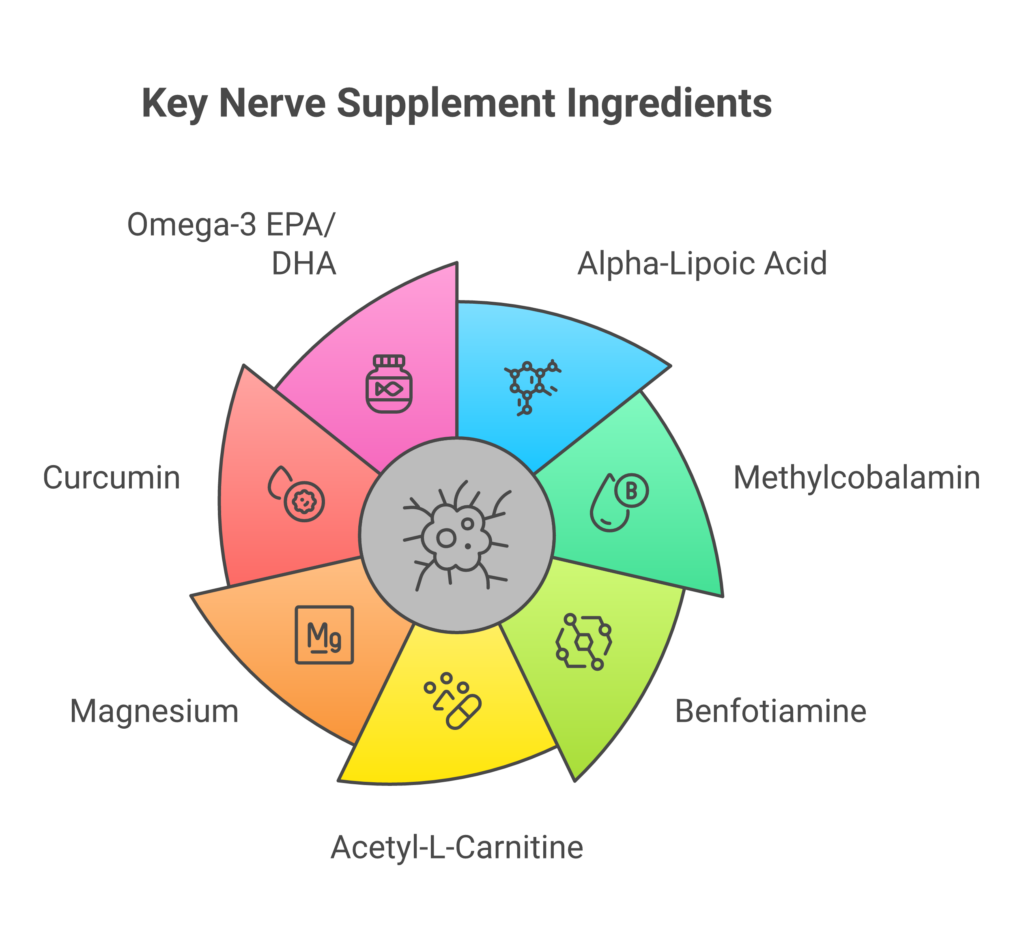
1. Alpha-Lipoic Acid (ALA): The Most-Studied Nerve Supplement
Alpha-lipoic acid appears on virtually every “best nerve supplement” list for good reason. A 2004 meta-analysis in Diabetic Medicine pooled data from 1,258 patients in four trials (ALADIN I, ALADIN III, SYDNEY and NATHAN II) and found that three weeks of intravenous ALA reduced neuropathy symptoms, with a 52.7% responder rate compared with 36.9% on placebo.
Since the gut-brain axis directly affects nerve function, what you eat matters too. Our guide to the gut health foods covers the dietary foundations that support healthy nerve signaling.
Oral ALA has been tested too. The NATHAN 1 trial, published in Diabetes Care in 2011, followed people with mild-to-moderate diabetic neuropathy for four years. ALA did not change the trial’s main combined endpoint, but it improved neuropathic impairment scores and was generally well tolerated. Serious adverse events were more common on ALA (38.1%) than on placebo (28.0%).
Important if you have diabetes: ALA can lower blood sugar. If you take insulin or sulfonylureas, monitor your glucose levels carefully and talk to your doctor before starting ALA supplementation.
2. Vitamin B12: Essential for Myelin
Your nerves are wrapped in a protective coating called myelin, similar to insulation on electrical wires. B12 is required to build and maintain that myelin sheath. When B12 levels drop, myelin deteriorates and nerve signals slow down or misfire, causing numbness, tingling, and pain.
Risk factors for B12 deficiency include age over 50 (stomach acid production decreases, reducing B12 absorption), vegetarian or vegan diets, metformin use, and proton pump inhibitor medications.
Supplements often use cyanocobalamin, which the body converts into the active forms, methylcobalamin and 5-deoxyadenosylcobalamin. According to the NIH Office of Dietary Supplements, evidence suggests no difference in effect between oral and sublingual (under-the-tongue) B12. If you are low, your doctor can advise on how to correct it.
3. Vitamin B1: Thiamine and Benfotiamine
Thiamine (B1) is critical for nerve cell energy production. Deficiency causes beriberi, a disease characterized by severe peripheral neuropathy.
Benfotiamine is a fat-soluble form of thiamine that has been studied for diabetic neuropathy. A 2008 study in Experimental and Clinical Endocrinology and Diabetes (the BENDIP trial) tested benfotiamine at 300 mg and 600 mg daily in 165 patients with diabetic neuropathy. After six weeks, the Neuropathy Symptom Score differed significantly between groups in the per-protocol analysis, but only narrowly missed significance in the intention-to-treat analysis.
4. Acetyl-L-Carnitine (ALC): Nerve Regeneration Support
Acetyl-L-carnitine fuels the mitochondria inside nerve cells and may support actual nerve fiber regeneration. A 2005 analysis of two randomized placebo-controlled trials published in Diabetes Care found that ALC improved nerve fiber regeneration (measured by sural nerve biopsy) and vibration perception in 1,257 patients with diabetic neuropathy, with pain improving in the combined group on the higher dose (Sima et al., 2005). A 2019 Cochrane review later rated the evidence on pain relief as very low certainty.
Chemotherapy-induced peripheral neuropathy (CIPN) is different. Memorial Sloan Kettering reports that ALC increased CIPN in cancer settings, and current guidelines do not recommend it for preventing CIPN. For our guide on whether nerve supplements are safe alongside other medications, see our article on nerve supplement safety.
Make sure the label says “acetyl-L-carnitine,” not just “L-carnitine.” The trials above used acetyl-L-carnitine.
5. Magnesium: Nerve Signal Regulation
Magnesium controls the flow of calcium and potassium through ion channels in nerve cell membranes, directly regulating how nerve signals fire. When magnesium is low, nerves become overexcitable, causing cramping, spasms, and heightened pain sensitivity. Federal survey data show that 48% of Americans get less magnesium from food and drinks than they need, according to the NIH Office of Dietary Supplements.
Magnesium supplements come in several forms. The NIH upper limit for magnesium from supplements is 350 mg a day for adults, high supplemental doses often cause diarrhea, and the risk of magnesium toxicity rises with kidney disease, so check with your doctor first if you have kidney problems.
6. Curcumin: Anti-Inflammatory Nerve Protection
Curcumin, the active compound in turmeric, has anti-inflammatory and antioxidant properties in laboratory research.
Curcumin is poorly absorbed on its own. In a 1998 study in Planta Medica, Shoba and colleagues found that giving it with piperine (from black pepper) raised curcumin bioavailability by 2,000% in human volunteers. Human evidence for nerve pain is thin: a 2025 randomized trial of nanocurcumin in people with type 2 diabetes and neuropathy found no improvement in pain compared with placebo.
7. Omega-3 Fatty Acids (EPA/DHA)
Human evidence for omega-3s and nerve pain is limited. In a 2012 randomized trial in BMC Cancer, 70% of breast cancer patients taking omega-3s during paclitaxel chemotherapy did not develop peripheral neuropathy, compared with 40.7% on placebo.
If you take fish oil, choose a third-party tested product, and check with your doctor if you take a blood thinner, since fish oil can affect clotting at high doses.
Botanical Ingredients: The Emerging Science
Beyond vitamins and antioxidants, several botanical compounds show promise for nerve comfort, though with less clinical evidence than the seven ingredients above. Some nerve formulas include them.
Passionflower (Passiflora incarnata): Used traditionally for anxiety. Clinical evidence for nerve pain is limited.
Corydalis (Corydalis yanhusuo): Contains dehydrocorybulbine (DHCB), which a 2014 study in Current Biology led by UC Irvine researchers found reduced pain in mice, mainly through dopamine D2 receptors. This was animal research, not a human trial.
California Poppy: Traditional use for nerve pain and sleep. Clinical evidence for nerve pain is limited.
Lion’s Mane Mushroom: A small 2009 trial in Phytotherapy Research (30 Japanese adults aged 50 to 80) found improved cognitive scores in people with mild cognitive impairment. Nerve regeneration data is mostly from animal studies so far.
For a comparison of how top products combine these ingredients, see our expert-reviewed nerve supplement rankings.
How to Read a Nerve Supplement Label
The supplement industry relies on consumers not knowing how to evaluate what’s in the bottle. Here’s what to check, and what the red flags look like.
Check the dose against clinical research
Compare what’s on the label with what was tested in studies. If a product lists an ingredient at a small fraction of the amount used in trials (sometimes called “fairy dusting”), it is there for marketing. A pharmacist can help you compare a label with the research for your situation.
Avoid “proprietary blends”
When a label says “Proprietary Nerve Support Blend: 800 mg” followed by a list of six ingredients, you have no idea how much of each ingredient is in there. The first ingredient could be 790 mg and the remaining five could be dust. Under FDA labeling rules (21 CFR 101.36), ingredients in a blend that are not vitamins or minerals only need to be listed in order of weight, with one total amount for the whole blend. Transparent companies list every ingredient with its exact dose.
Check the form of each ingredient
A good label names the form of each ingredient, such as cyanocobalamin or methylcobalamin for B12. A cheaper form is not automatically worse: the body converts cyanocobalamin into active B12. What matters most is that the form and amount are disclosed.
Look for third-party testing
NSF International, USP, and ConsumerLab independently verify that what’s on the label matches what’s in the bottle. Third-party testing is the most practical way for a shopper to check that a product matches its label.
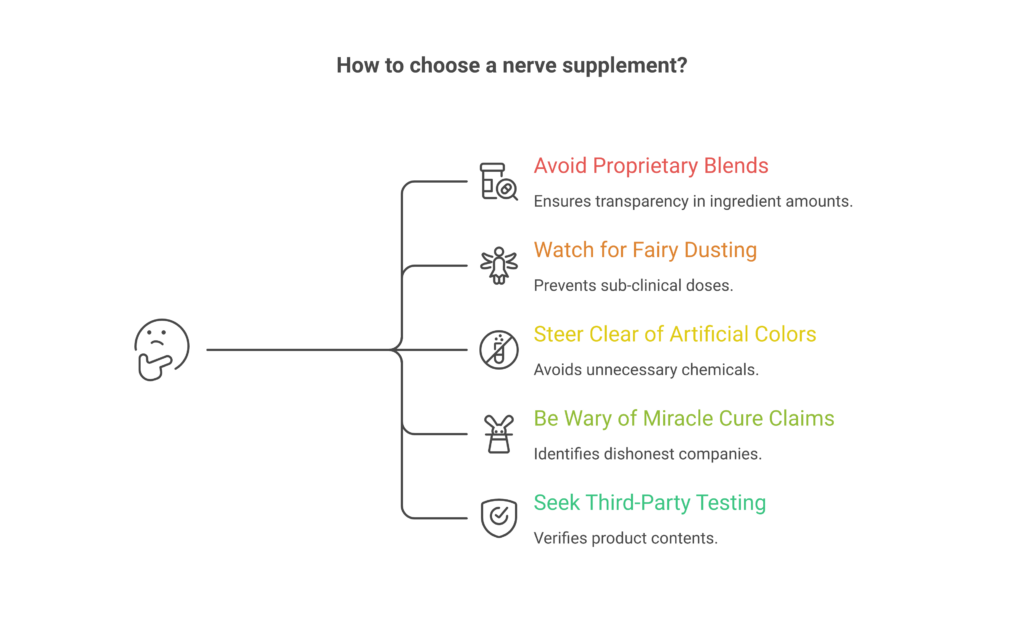
Red Flags: What to Avoid in a Nerve Supplement
These are warning signs that a product may not be worth your money:
- “Miracle cure” or “reverses neuropathy” claims: Supplements cannot legally claim to cure, treat, or prevent any disease. Companies making these claims are either breaking FDA regulations or hiding behind fine-print disclaimers. Honest products say “supports nerve health” or “may help maintain healthy nerve function.”
- Artificial colors and dyes: FD&C Blue No. 2, FD&C Yellow No. 6, and similar synthetic dyes have no health benefit and add unnecessary chemical exposure. Some well-known nerve supplements contain these. If a company cuts corners on something this simple, question what else they’re cutting corners on.
- No GMP certification: Good Manufacturing Practices (GMP) certification from an FDA-registered facility means the product was made under controlled conditions with quality checks. Without GMP, there’s no assurance of consistency between batches.
- Exclusively 5-star reviews: No product works perfectly for everyone. If every review is glowing, reviews are likely filtered or fake. Look for products with a mix of positive and critical feedback where you can read real user experiences.
- No clear return policy: Reputable nerve supplement companies offer 60-90 day money-back guarantees. If a company won’t stand behind its product, that’s a signal.
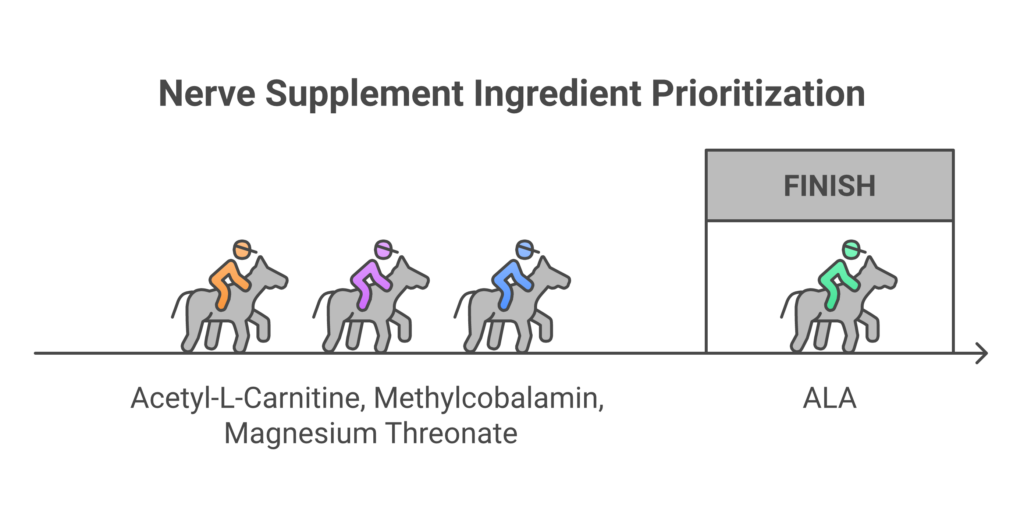
Matching Ingredients to Your Specific Condition
Different types of nerve damage respond to different ingredients. Here’s how to prioritize based on your situation:
Diabetic neuropathy: ALA has the most trial data, and benfotiamine has one positive six-week trial. Blood sugar control comes first. ALA can lower blood sugar, so involve your doctor before adding it.
Chemotherapy-induced neuropathy (CIPN): Do not take acetyl-L-carnitine unless your oncologist approves it. Memorial Sloan Kettering reports it increased CIPN in cancer settings, and current guidelines do not recommend it for preventing CIPN. Ask your oncology team before taking any supplement during treatment.
Age-related nerve decline: Low B12 is common in older adults, especially those with atrophic gastritis (NIH ODS puts it at 3% to 43% of older adults living in the community, depending on the definition), so ask your doctor about checking your B12 level before choosing a product.
General nerve support and prevention: Without a diagnosed problem, there is little trial evidence for taking a nerve formula. Diet is a sensible place to start. For food-based approaches, see our guide on foods that support nerve health.
How Long Before You See Results?
Nerve tissue regenerates slowly, so don’t expect overnight improvement. Trial lengths give a rough guide: the intravenous ALA trials measured symptoms after three weeks, the BENDIP benfotiamine trial after six weeks, the acetyl-L-carnitine trials after 52 weeks, and the NATHAN 1 oral ALA trial ran for four years.
If a supplement has not helped after the trial period you agreed with your doctor, your nerve symptoms may need medical evaluation beyond supplementation. Don’t keep buying refills out of hope. Reassess and consult your healthcare provider.
Browse all of our nerve supplements reviews and guides for more research-backed recommendations.
For detailed product comparisons, see our nerve health supplement reviews.
You may also want to read our guide on vision supplements.
Several B-vitamin and antioxidant ingredients in nerve supplements also support eye health, because optic and peripheral nerves share metabolic pathways. Our guide on shared nutrients for nerve and eye function covers the overlapping list.
Frequently Asked Questions
What is the best vitamin for nerve pain?
Alpha-lipoic acid (ALA) has the most clinical trial data for diabetic neuropathy, mainly from trials of intravenous ALA. Among vitamins, B12 matters most when a deficiency is present, which is more likely if you are older, take metformin, or eat a plant-based diet. A doctor can check your B12 level.
Can neuropathy be reversed with supplements?
It depends on the cause and severity. Neuropathy caused by B12 deficiency needs prompt medical treatment, because the nerve damage can become irreversible if it is not caught early. For diabetic neuropathy, blood sugar control is the foundation, and supplements such as ALA have shown modest effects on symptoms in trials. Severe nerve damage is generally not fully reversible with supplements.
Is Nervive a good nerve supplement?
We do not rate individual products in this guide. To judge Nervive or any other nerve supplement, use the checks above: every ingredient amount disclosed, total vitamin B6 content, and third-party testing. See our nerve supplement comparison for alternatives.
Can you take too much vitamin B6 for nerve health?
Yes. Vitamin B6 supplements can themselves cause peripheral neuropathy. The U.S. upper limit for adults is 100 mg a day from food and supplements combined, and Australia’s medicines regulator (TGA) says the risk cannot be ruled out even below 50 mg a day. Check the B6 content of every product you take, including multivitamins, and ask your doctor or pharmacist if the total is high.
How much alpha-lipoic acid should I take for neuropathy?
That is a decision for your doctor, because ALA can lower blood sugar and interact with diabetes medication. For context, the ALA trials in the 2004 Diabetic Medicine meta-analysis gave 600 mg a day intravenously for three weeks, and the NATHAN 1 trial used 600 mg a day by mouth for four years. Those were supervised trials, not a home dosing guide.
Are nerve supplements safe to take with diabetes medications?
ALA requires caution alongside diabetes medications. Because ALA can lower blood sugar, combining it with insulin or sulfonylureas increases the risk of hypoglycemia. Monitor your blood glucose more frequently when starting ALA and discuss dose adjustments with your doctor. Metformin can also lower B12 levels over time, so ask about B12 testing if you take it.
What’s the difference between methylcobalamin and cyanocobalamin?
Both are forms of vitamin B12. Methylcobalamin is one of the two active forms the body uses. Cyanocobalamin, the form in many supplements, is converted by the body into the active forms. The NIH Office of Dietary Supplements does not describe one supplement form as better than the other, so the amount and your B12 status matter more than the form.
Further Reading from Consumer Health Guide
If you want to go deeper, our guide to alpha-lipoic acid for nerves covers what most product pages skip. For readers comparing options, see our breakdown of nerve pain remedies.