

The most effective natural remedies for nerve pain and neuropathy include alpha-lipoic acid, acetyl-L-carnitine, B-complex vitamins (especially B12 methylcobalamin and B1 benfotiamine), magnesium, and topical capsaicin. Alpha-lipoic acid has the strongest clinical evidence for diabetic neuropathy. This guide ranks options by strength of evidence and safety considerations. It does not give doses.
Written by the Editorial Team. Medically reviewed by Matthew Olesiak, MD, on September 24, 2026.
Medical Disclaimer: This content is for informational purposes only and does not replace professional medical advice. Always consult a qualified healthcare provider before starting any supplement or treatment for nerve pain. (see peripheral neuropathy)
Peripheral neuropathy affects millions of people in the U.S., according to the National Institute of Neurological Disorders and Stroke. If you or someone you care about deals with that burning, tingling, or shooting pain in the hands or feet, you already know how frustrating it can be. Prescription options like gabapentin and pregabalin help some people, but side effects (drowsiness, weight gain, dizziness) push many to look for alternatives. What follows is a plain look at what the research supports, what needs more study, and what to skip.
This guide covers the most studied natural remedies for neuropathic pain, organized by strength of evidence. It covers clinical trial findings and the limits of each option. For a curated list of products that meet strict quality standards, see our verified nerve supplement reviews.
Understanding Neuropathy: Types and Causes
Before looking at supplements, it helps to understand what you’re dealing with. Neuropathy isn’t a single condition. It’s a group of disorders caused by nerve damage, and the type matters when choosing a remedy.
Peripheral Neuropathy
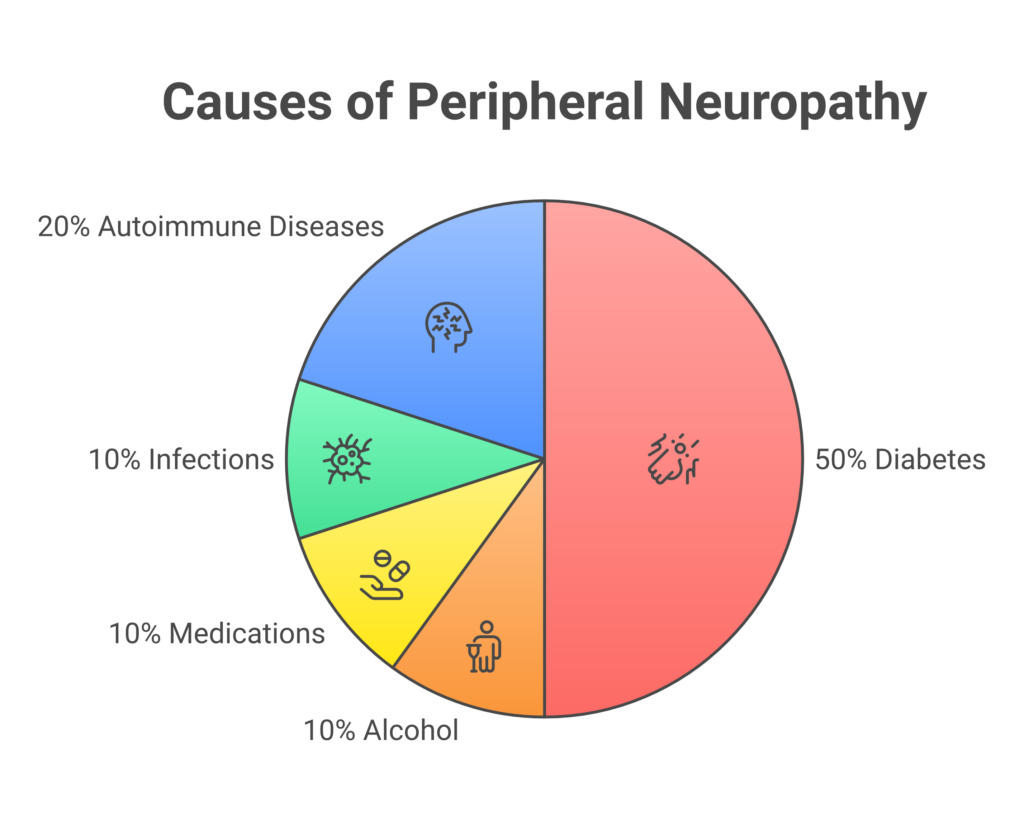
The most common form. It affects the nerves outside your brain and spinal cord, usually starting in the feet and hands. Diabetes is the leading cause. Other causes include alcohol use, certain medications, infections, and autoimmune conditions.
Diabetic Neuropathy
This deserves its own mention because it’s so common. According to NINDS, about two thirds of people with diabetes have mild to severe nerve problems. High blood sugar damages the small blood vessels that feed your nerves, starving them of oxygen and nutrients.
Chemotherapy-Induced Peripheral Neuropathy (CIPN)
Drugs like paclitaxel, vincristine, and cisplatin are effective against cancer but toxic to nerves. A 2014 systematic review and meta-analysis in the journal Pain estimated CIPN prevalence at about 68% in the first month after chemotherapy and 30% at six months or later. Symptoms sometimes persist for months or years after treatment ends.
Other Types
Compression neuropathies (carpal tunnel syndrome, sciatica), small fiber neuropathy, and idiopathic neuropathy (where no cause is found) are also common. Identifying the underlying cause is the first step toward effective treatment.
Conventional Treatments: A Quick Overview
Doctors typically prescribe one of three medication classes for neuropathic pain:
- Gabapentinoids (gabapentin, pregabalin): These work by calming overactive nerve signals. Common side effects include drowsiness, dizziness, and weight gain.
- SNRIs (duloxetine, venlafaxine): Originally developed as antidepressants, these also reduce nerve pain. Nausea and fatigue are frequent complaints.
- Tricyclic antidepressants (amitriptyline, nortriptyline): Older medications that can help, but dry mouth, constipation, and sedation limit their use in older adults.
A 2015 NeuPSIG systematic review published in The Lancet Neurology found that trial results were generally modest. The number needed to treat for 50% pain relief was 6.4 for SNRIs, 7.2 for gabapentin and 7.7 for pregabalin. That leaves a large group still searching for answers. This is where supplements and natural approaches enter the picture.
Natural Supplements for Nerve Pain: The Evidence
These are organized by the strength of clinical evidence, starting with the most studied options. Not every supplement that “supports nerve health” actually reduces pain. The distinction matters.
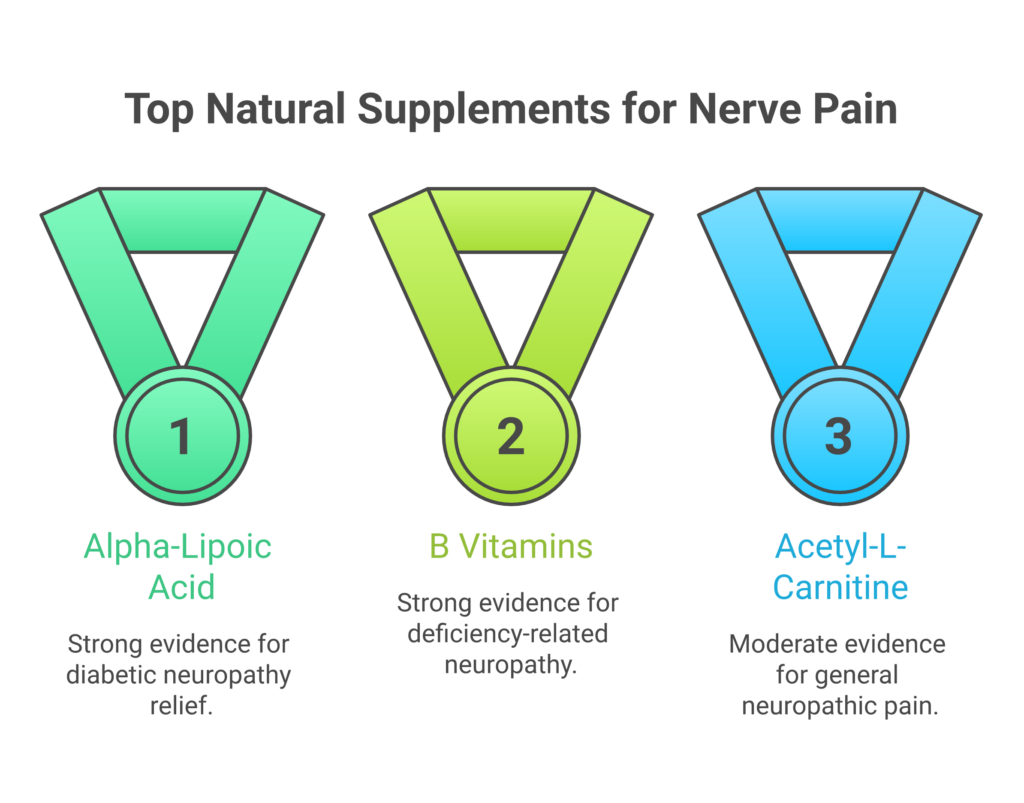
1. Alpha-Lipoic Acid (ALA)
Evidence strength: Strong
Alpha-lipoic acid is the best-studied natural supplement for diabetic neuropathy. It’s a potent antioxidant that your body produces in small amounts, and it works by neutralizing free radicals that damage nerve tissue.
The landmark evidence comes from a 2004 meta-analysis by Ziegler and colleagues, published in Diabetic Medicine. They pooled data from four randomized controlled trials (ALADIN I, ALADIN III, SYDNEY, and NATHAN II) involving 1,258 patients. Intravenous ALA at 600 mg daily for three weeks produced a 52.7% responder rate (defined as 50% or greater improvement in symptom scores) compared to 36.9% for placebo.
The evidence for oral ALA is weaker. A 2012 meta-analysis in the International Journal of Endocrinology graded intravenous ALA as clinically relevant, but concluded it is unclear whether the improvements seen with oral ALA are clinically relevant.
Bottom line: If you have diabetic neuropathy, ALA is the supplement with the most trial data to discuss with your doctor. ALA can lower blood sugar, so this matters if you take diabetes medication.
2. B Vitamins (B1, B6, B12)
Evidence strength: Strong (especially for deficiency-related neuropathy)
B vitamins are essential for nerve function. Deficiency in B12 alone causes neuropathy, and it’s more common than most people realize. A 2019 cross-sectional study in Endocrine Connections of people with type 2 diabetes taking metformin found low or borderline B12 levels in 64% of those with diabetic neuropathy, compared with 17% of those without neuropathy.
This matters because metformin might reduce B12 absorption and lower blood B12 levels, according to the NIH Office of Dietary Supplements. If you take metformin, ask your doctor about checking your B12.
Benfotiamine (a fat-soluble form of vitamin B1) deserves special attention. The BENDIP trial, published in 2008 in Experimental and Clinical Endocrinology and Diabetes, randomized 165 patients with diabetic neuropathy to benfotiamine 600 mg daily, 300 mg daily, or placebo. After six weeks, the neuropathy symptom score differed significantly between groups in the per-protocol analysis (p=0.033), but not quite in the intention-to-treat analysis (p=0.055).
Vitamin B6 supports nerve function but requires caution. Vitamin B6 supplements can themselves cause peripheral neuropathy. The U.S. upper limit for adults is 100 mg a day from food and supplements combined (NIH Office of Dietary Supplements), and Australia’s medicines regulator says the risk cannot be ruled out even below 50 mg a day (TGA).
Bottom line: Ask your doctor about testing your B12 level before supplementing, since a deficiency needs medical treatment.
3. Acetyl-L-Carnitine (ALC)
Evidence strength: Moderate
Acetyl-L-carnitine plays a role in energy production within nerve cells and has shown promise for pain reduction. A 2019 systematic review published in the Journal of Pain Research analyzed 14 clinical trials and performed a meta-analysis of four randomized controlled trials. The result: ALC produced a statistically significant pain reduction of 20.2% compared to baseline (95% CI: 8.3% to 32.1%, p less than 0.0001).
However, a 2019 Cochrane review struck a more cautious note, rating the evidence on pain relief as very low certainty.
Bottom line: The ALC evidence is weaker than it first looks. If you have cancer or are on chemotherapy, note that Memorial Sloan Kettering reports ALC increased chemotherapy-induced neuropathy in cancer settings, and current guidelines do not recommend it for preventing CIPN.
4. Curcumin (Turmeric Extract)
Evidence strength: Emerging
Curcumin targets inflammation through multiple pathways, which makes it theoretically appealing for neuropathic pain. The clinical evidence is growing but still limited.
A promising 2025 randomized controlled trial published in BMC Cancer studied oral curcumin for vincristine-induced neuropathy in pediatric leukemia patients. Only 39.4% of the curcumin group developed peripheral neuropathy compared to 70.0% in the placebo group. That’s a notable protective effect.
For diabetic neuropathy specifically, results are mixed. A 2025 randomized, double-blind trial in the Nutrition Journal found that 16 weeks of nanocurcumin did not improve pain or neuropathic outcomes compared with placebo in people with type 2 diabetes.
Bioavailability is the central challenge with curcumin. Standard turmeric powder absorbs poorly. A 2013 open-label trial by Di Pierro and Settembre in the Journal of Pain Research tested a multi-ingredient formula (lipoic acid plus curcumin phytosome and piperine) added to an anti-inflammatory drug in people with sciatica or carpal tunnel syndrome, and reported pain reductions of more than 66%. Because the formula combined several ingredients and the trial was open-label, it does not show what curcumin does on its own.
Bottom line: Curcumin shows early promise for prevention of chemotherapy-induced neuropathy. For existing neuropathic pain, the human evidence is limited and mixed.
5. Omega-3 Fatty Acids
Evidence strength: Moderate (animal studies strong, human data limited)
Omega-3s reduce inflammation and may support nerve repair. Animal studies are encouraging. A 2017 study in Frontiers in Pharmacology found that omega-3 supplementation accelerated nerve regeneration and prevented neuropathic pain behavior in mice.
Human evidence is thinner. A case series published in The Clinical Journal of Pain (2010) treated five patients with various neuropathies using high-dose fish oil (2,400 to 7,200 mg daily). All five experienced clinically significant pain reduction over follow-up periods of up to 19 months.
For chemotherapy-induced neuropathy, a randomized controlled trial published in BMC Cancer (2012) found that 70% of patients taking omega-3s during paclitaxel chemotherapy did not develop peripheral neuropathy, compared with 40.7% on placebo. The difference in severity was only a trend.
Bottom line: Omega-3s probably won’t be your primary nerve pain solution, but they offer anti-inflammatory benefits that support overall nerve health. Fish oil can affect blood clotting at high doses, so check with your doctor if you take a blood thinner.
6. Magnesium
Evidence strength: Emerging
Magnesium is involved in over 300 enzymatic reactions, including nerve signal transmission. A 2021 review in Frontiers in Cell and Developmental Biology on magnesium and peripheral nerve regeneration focused on magnesium-based implant materials and laboratory research, not on oral supplements in people.
The strongest human data involves chemotherapy-induced neuropathy. A 2018 study of colorectal cancer patients in Nutrients found that higher magnesium intake during chemotherapy was associated with a lower prevalence of CIPN.
Low magnesium intake is common: federal survey data show 48% of Americans get less magnesium from food and drinks than they need (NIH Office of Dietary Supplements). Low magnesium can contribute to muscle cramps, tingling, and numbness that overlap with neuropathy symptoms.
The NIH upper limit for magnesium from supplements is 350 mg a day for adults, and people with kidney disease should not take it without medical advice.
Bottom line: The nerve data for magnesium is preliminary. If you think your intake is low, food sources and a conversation with your doctor come first.
Topical Options: Capsaicin
Not every remedy for neuropathy comes in pill form. Capsaicin, the compound that makes chili peppers hot, is one of the most effective topical treatments for localized nerve pain.
Capsaicin works by depleting substance P, a neurotransmitter that carries pain signals. Regular application essentially “tires out” the pain nerves in the treated area.
The effect is modest. In the 2015 Lancet Neurology meta-analysis mentioned above, high-concentration capsaicin patches had a number needed to treat of 10.6 for 50% pain relief.
The main downside? It burns. The initial application causes an intense burning sensation that decreases with repeated use over one to two weeks. This is actually how it works: the burning means it’s depleting substance P from your nerve endings.
Over-the-counter capsaicin creams are widely available. Follow the product label and ask a pharmacist if you are unsure whether it suits you.
Lifestyle Approaches That Reduce Nerve Pain
Supplements get the most attention, but lifestyle changes can be equally powerful.
Exercise
Regular physical activity improves blood flow to nerves, reduces blood sugar (critical for diabetic neuropathy), and triggers the release of natural pain-relieving endorphins. A small 2012 study in the Journal of Diabetes and Its Complications found that a 10-week exercise program reduced pain and neuropathic symptoms in 17 people with diabetic neuropathy, although it had no control group. Start with 20 to 30 minutes of walking, swimming, or cycling most days. Low-impact is key if you have balance issues from neuropathy.
TENS (Transcutaneous Electrical Nerve Stimulation)
TENS units deliver mild electrical pulses through electrodes placed on the skin. They work by interrupting pain signals before they reach the brain. They are available without a prescription. Ask your doctor whether one is suitable for you.
Acupuncture
Research on acupuncture for neuropathy is limited. If you try it, use a licensed practitioner.
Blood Sugar Control
For diabetic neuropathy, nothing matters more than getting blood sugar under control. The Diabetes Control and Complications Trial (DCCT, published in the New England Journal of Medicine in 1993) demonstrated that intensive glucose control reduced the risk of developing neuropathy by 60% in type 1 diabetes patients.
Anti-Inflammatory Diet
Chronic inflammation worsens nerve damage. An anti-inflammatory diet rich in fatty fish, leafy greens, berries, nuts, and olive oil can reduce systemic inflammation. Reducing sugar and processed foods helps stabilize blood sugar and lower inflammatory markers. For specific food recommendations, see our guide on foods for overactive nerves.
Building a Nerve Support Plan With Your Doctor
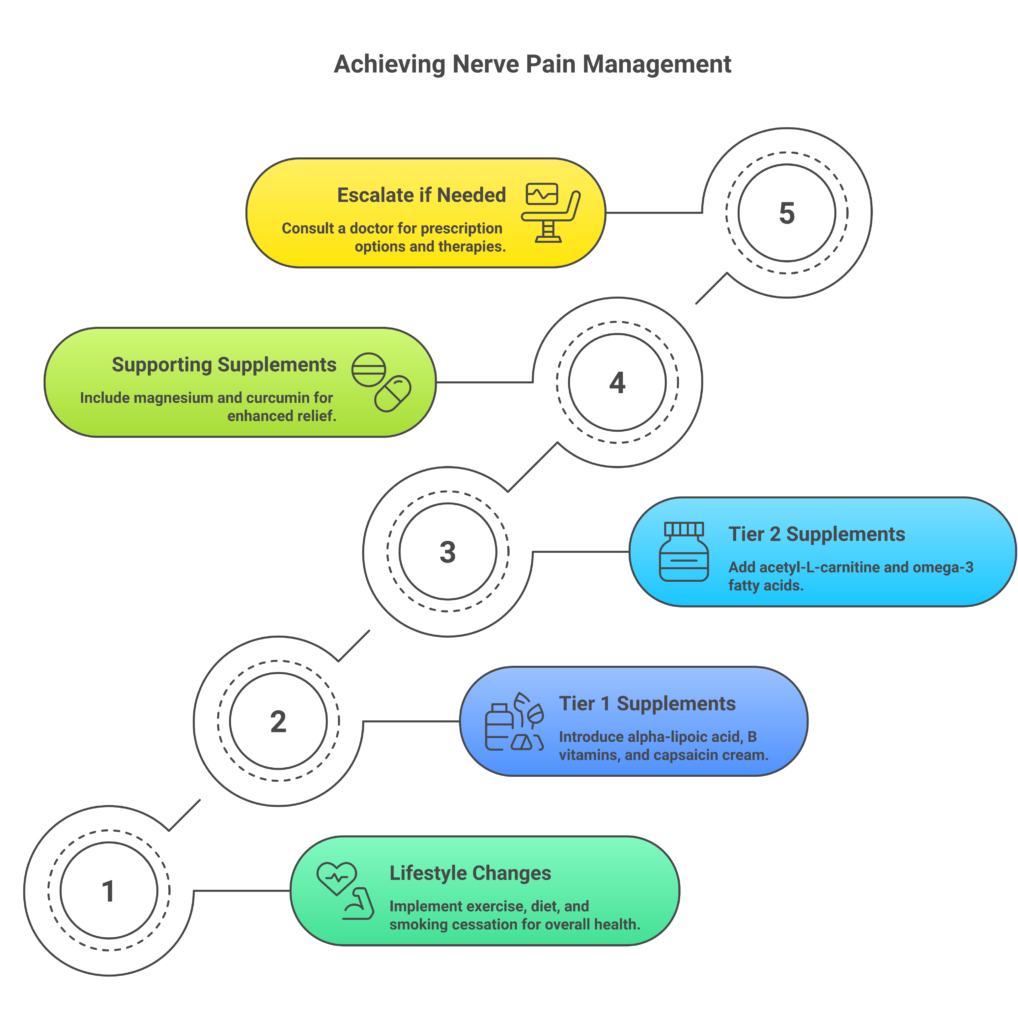
This guide does not give a supplement schedule or doses. Which option, if any, makes sense depends on the cause of your neuropathy, your blood work and the medicines you take. Start with a diagnosis, blood sugar control if you have diabetes, and regular activity, then review any supplement with your doctor or pharmacist.
If you use more than one product, add up the vitamin B6 in all of them. Australia’s TGA notes that B vitamins, multivitamins, and magnesium and zinc products can all contain B6.
For reviews of specific nerve support products that combine many of these ingredients, visit our verified nerve supplement reviews page.
When to See a Doctor
Supplements and lifestyle changes are valuable tools, but they’re not a substitute for medical evaluation. See a doctor promptly if you experience any of the following:
- Sudden onset of symptoms. Neuropathy that appears over days rather than weeks or months could signal a medical emergency.
- Weakness or muscle wasting. This suggests motor nerve involvement and may require prescription treatment.
- Loss of bladder or bowel control. This could indicate autonomic neuropathy or spinal cord compression.
- Symptoms after starting a new medication. Many drugs can cause or worsen neuropathy.
- Spreading or worsening symptoms despite treatment.
- Open sores or wounds on your feet that you didn’t feel developing (common in advanced diabetic neuropathy).
Your doctor can run nerve conduction studies, blood tests for B12 and glucose levels, and rule out treatable causes. Early diagnosis and treatment of the underlying cause gives you the best chance of slowing or reversing nerve damage.
What to Look for in a Nerve Supplement
The supplement market is flooded with products making bold claims about nerve health. Here’s how to separate the useful from the useless:
- Check the ingredient list against the evidence. A quality nerve supplement should contain at least two or three of the ingredients covered above (ALA, B vitamins, ALC) at clinically studied doses.
- Look for third-party testing. USP, NSF, or ConsumerLab certification confirms that the product contains what the label claims.
- Avoid proprietary blends. If a product hides individual ingredient amounts behind a “proprietary blend,” you can’t verify that the doses match the research.
- Be skeptical of “cure” claims. No supplement cures neuropathy. Any product claiming otherwise is violating FDA regulations and probably isn’t trustworthy.
We evaluate nerve supplements against these criteria in our detailed guide to choosing a nerve supplement. For product-specific ratings and comparisons, see our verified nerve supplement reviews.
You may also want to read our guide on eye health supplements.
The gut-nerve connection runs through the vagus nerve, and an inflamed gut often amplifies nerve symptoms. Improving gut motility and reducing inflammation can quiet down nerve pain alongside more direct interventions. See our guide on reducing gut inflammation and improving motility.
Frequently Asked Questions About Nerve Pain Supplements
What is the strongest natural supplement for nerve pain?
Alpha-lipoic acid has the strongest clinical evidence for nerve pain relief, particularly for diabetic neuropathy. A 2004 meta-analysis in Diabetic Medicine found a 52.7% responder rate with three weeks of intravenous ALA, compared with 36.9% on placebo. The evidence for oral ALA is less certain. If your neuropathy is caused by B12 deficiency, treating the deficiency is the priority.
Can supplements actually repair nerve damage?
Some supplements may support nerve repair over time. B12 supplementation can help regenerate myelin (the protective coating around nerves) when deficiency is the cause of damage. However, severe or long-standing nerve damage may not be fully reversible with supplements alone.
How long do nerve supplements take to work?
Trial lengths vary. The intravenous ALA trials measured results after three weeks, the BENDIP benfotiamine trial after six weeks, and the acetyl-L-carnitine trials ran for 52 weeks. Ask your doctor how long to try any supplement and what change would count as a real benefit.
Are nerve supplements safe to take with prescription medications?
Most nerve supplements have good safety profiles, but interactions are possible. Alpha-lipoic acid can lower blood sugar, so diabetics taking insulin or metformin should monitor glucose closely. Vitamin B6 supplements can themselves cause peripheral neuropathy. The U.S. upper limit for adults is 100 mg a day from food and supplements combined, and Australia’s medicines regulator (TGA) says the risk cannot be ruled out even below 50 mg a day. Omega-3s may increase bleeding risk if you take blood thinners. Always inform your doctor about every supplement you take, especially if you’re on prescription nerve pain medications like gabapentin or pregabalin.
Is there a single pill that treats all types of nerve pain?
No single supplement or medication works for all types of neuropathy. Different causes require different approaches. For diabetic neuropathy, blood sugar control is the foundation. Deficiency-related neuropathy needs the missing vitamin identified and treated, most often B12. Chemotherapy-induced neuropathy should be managed with your oncology team.
What foods help with nerve pain?
Foods rich in B vitamins (eggs, fish, meat, fortified cereals), omega-3 fatty acids (salmon, mackerel, sardines, walnuts), and antioxidants (berries, dark leafy greens, nuts) support nerve health. Limiting alcohol matters because alcoholism is a known cause of neuropathy, and keeping blood sugar in range protects nerves if you have diabetes. For a complete guide, visit our article on foods for overactive nerves.
Should I take nerve supplements if I don’t have a diagnosis?
Get a proper diagnosis first. Tingling, numbness, and pain can stem from conditions that supplements won’t address, including spinal stenosis, multiple sclerosis, or vitamin toxicity. A doctor can determine the cause and recommend appropriate treatment. Self-treating with supplements might mask symptoms of a condition that needs medical intervention.
Bottom line: A few supplements, mainly alpha-lipoic acid for diabetic neuropathy and B12 when a deficiency is present, have the most research behind them, but none replaces diagnosis and treatment of the cause. Where it applies, blood sugar control has stronger trial evidence than any supplement. And always work with your doctor to address the root cause of your nerve damage.
For independent, evidence-based reviews of specific nerve health products, explore our nerve support supplement reviews at Consumer Health Guide. Our review methodology is transparent, and every recommendation is backed by clinical research. Read more about nerve supplement safety before making your decision.
Further Reading from Consumer Health Guide
If you want to go deeper, our guide to eye health vitamin guide covers what most product pages skip. For readers comparing options, see our breakdown of supplements for sciatica.