
Medically reviewed by Jonathan Bailor, Founder of SANE Solution and NYT bestselling author. Last updated March 19, 2026. Part of the Consumer Health Guide research library.
Tributyrin is a triglyceride form of butyrate that survives stomach acid and delivers butyric acid directly to your colon, where it fuels the cells lining your intestinal wall. If you’ve tried sodium butyrate or calcium butyrate supplements and felt no difference, the reason is simple: those forms break down too early in digestion and never reach the lower gut. CoreBiome is a patented tributyrin ingredient backed by clinical data showing 51-59% of the dose remains intact through the upper gastrointestinal tract. That matters because butyrate’s primary job happens in the colon, and most supplement forms fail to get it there.
In this guide, I break down exactly what tributyrin is, how it compares to every other butyrate delivery method on the market, what the clinical research actually shows (with named studies and specific data), and who benefits most from supplementation.
What Is Tributyrin? The Science Behind This Butyrate Prodrug
Tributyrin is a short-chain triglyceride: one glycerol molecule bonded to three butyric acid molecules. Your body already produces small amounts of it. Breast milk contains tributyrin naturally, contributing about 3.6-3.8% of milk fat content. When you take tributyrin orally, pancreatic lipase (an enzyme in your small intestine) gradually cleaves the butyrate molecules from the glycerol backbone. This enzymatic process is slow, which is exactly the point.
Unlike sodium butyrate, which dissolves immediately upon contact with stomach fluid and releases all its butyrate at once, tributyrin acts as a prodrug. It stays structurally intact through the stomach and releases butyrate gradually as it moves through the small intestine and into the colon. A 2025 study published in Frontiers in Nutrition used the Triple-L-SHIME model (a validated in vitro simulator of the human gut) and found that 51-59% of CoreBiome tributyrin remained stable during upper GI transit in both capsule and softgel formulations.
Why Butyrate Matters: The Primary Fuel for Your Colon Cells
Butyrate is a short-chain fatty acid (SCFA) produced when beneficial gut bacteria ferment dietary fiber. It is the preferred energy source for colonocytes, the cells that line your large intestine. Without adequate butyrate, those cells weaken, the gut barrier becomes permeable (often called “leaky gut”), and inflammatory molecules escape into the bloodstream.
Gut health also influences your skin through what researchers call the gut-skin axis. Learn which topical ingredients complement an inside-out approach in our dark spot remover ingredients. (see gut microbiome research) (see probiotic safety)
Your gut and brain are connected through the vagus nerve and the gut-brain axis. If you are also experiencing nerve discomfort, see our nerve supplement guide for ingredients backed by clinical research.
Here is what butyrate does at the cellular level, based on published research:
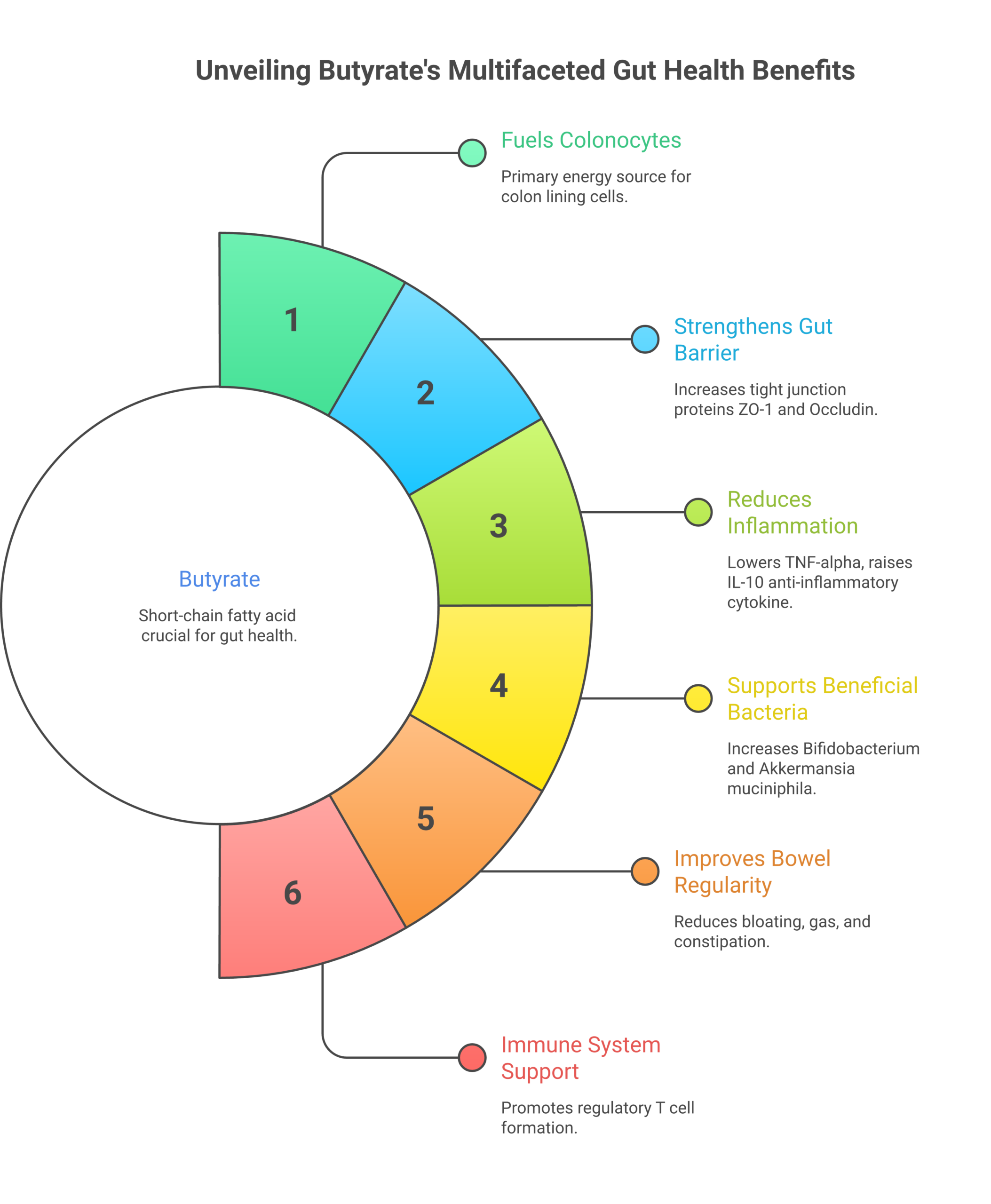
- Fuels colonocytes: Butyrate supplies roughly 70% of the energy needs of colon lining cells, according to a widely cited figure in gastroenterology literature.
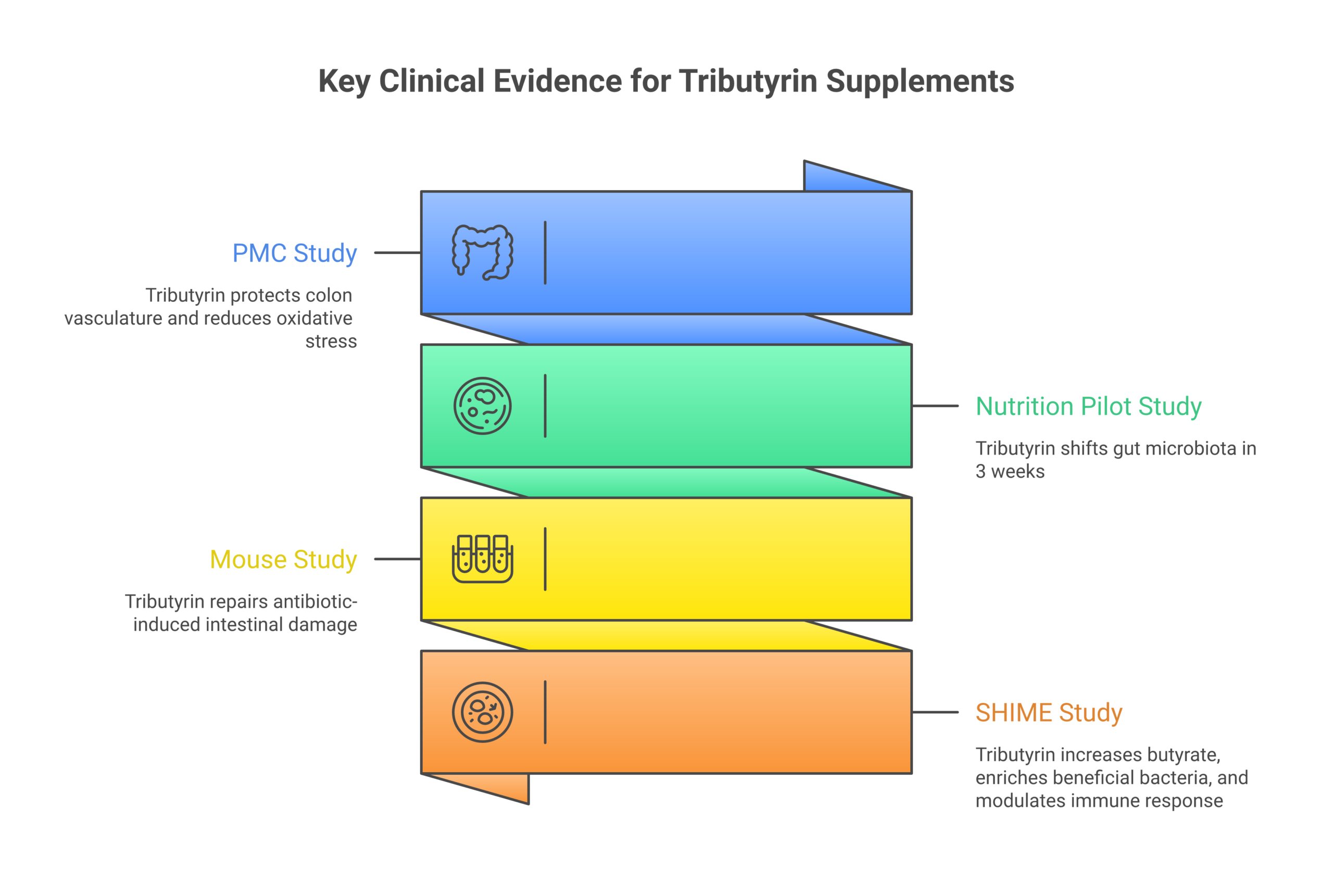
- Tightens the gut barrier: A 2023 study in PLOS ONE showed that tributyrin supplementation significantly increased expression of tight junction proteins ZO-1 and Occludin in antibiotic-damaged mouse intestines, while also boosting MUC2 mucus production.
- Lowers inflammatory markers: The 2025 Frontiers in Nutrition SHIME study found that CoreBiome tributyrin significantly increased IL-10 (an anti-inflammatory cytokine) while decreasing TNF-alpha (a pro-inflammatory marker).
- Supports beneficial bacteria: The same SHIME study showed significant enrichment of Bifidobacterium longum, Bacteroides fragilis, and Akkermansia muciniphila after three weeks of tributyrin supplementation.
- Promotes regulatory T cell formation: Butyrate signals the immune system to produce regulatory T cells, which help prevent autoimmune overreaction in the gut.
The problem? Most people don’t produce enough butyrate on their own. The average American consumes only 15 grams of fiber daily, well below the USDA recommendation of 28-34 grams. Low fiber intake means fewer butyrate-producing bacteria and less butyrate reaching the colon. This is where supplementation fills the gap.
Butyrate Supplement Forms Compared: Tributyrin vs Sodium Butyrate vs Calcium Butyrate vs Microencapsulated
There are four main ways supplement companies deliver butyrate. Each has different absorption characteristics, colon delivery rates, and practical trade-offs.
Sodium Butyrate
Sodium butyrate is a salt that dissolves immediately in water. The moment it hits your stomach acid, it releases 100% of its butyrate. That sounds efficient until you realize butyrate’s target is your colon, not your stomach. By the time sodium butyrate passes through the stomach and duodenum, nearly all the butyrate has already been absorbed into the bloodstream, missing the lower gut entirely. Sodium butyrate also has a strong sulfurous odor often compared to rancid butter or spoiled eggs. Many users report burping up the taste for hours after swallowing a capsule.
Typical dose: 300-600 mg per capsule. Colon delivery: Minimal without coating technology. Odor: Strong and unpleasant.
Calcium and Calcium-Magnesium Butyrate
Mineral-buffered butyrate forms use calcium or a calcium-magnesium blend to stabilize butyric acid. BodyBio, one of the better-known brands in this category, delivers 600 mg per capsule. These forms are more stable than plain sodium butyrate and have a less offensive smell. But the fundamental delivery problem remains: the butyrate still releases primarily in the upper GI tract. Some reaches the small intestine, but colon delivery is limited unless the manufacturer adds an enteric coating or microencapsulation layer.
Typical dose: 600-1,200 mg per serving. Colon delivery: Partial, depends on coating. Odor: Moderate.
Microencapsulated Butyrate
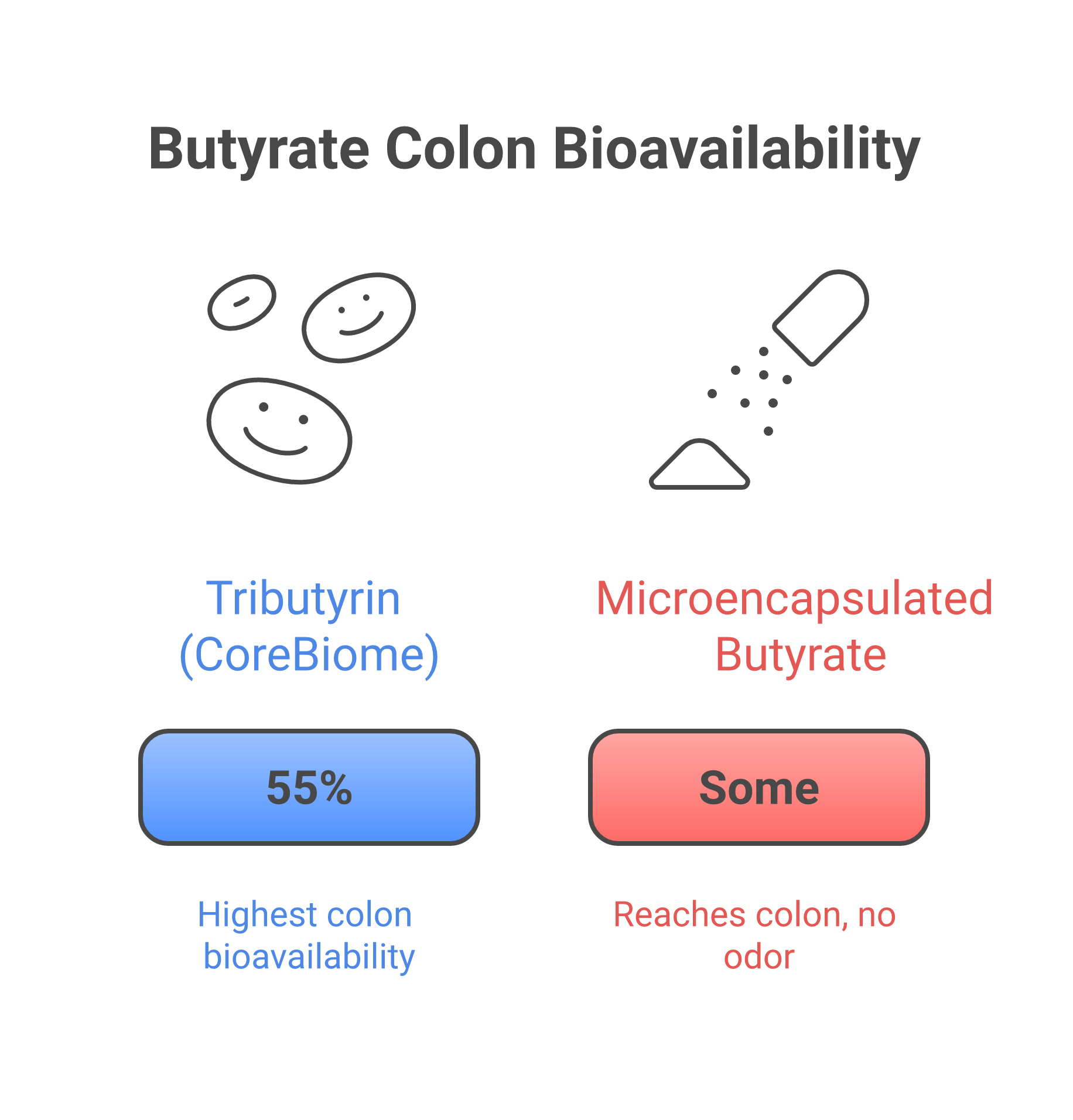
Some manufacturers coat sodium butyrate or calcium butyrate in a fat or polymer shell designed to survive stomach acid and dissolve in the small intestine. This is an improvement over uncoated forms, but the release location is still primarily the small intestine, not the colon. The coating quality varies widely between manufacturers, and there is limited published data on how much butyrate actually reaches the colon with most microencapsulated products.
Typical dose: 300-600 mg per capsule. Colon delivery: Some, varies by coating. Odor: Minimal.
Tributyrin (CoreBiome)
Tributyrin is structurally different from the other forms. Instead of a salt, it is a triglyceride. This means it does not dissolve in stomach acid. It requires pancreatic lipase, an enzyme active in the small intestine and beyond, to release its butyrate. The release is gradual and continues as the tributyrin moves through the intestinal tract. The 2025 Frontiers in Nutrition study confirmed that 51-59% of CoreBiome tributyrin survived upper GI transit intact, reaching the colon where it then released butyrate and increased butyrate concentrations in both proximal and distal colon compartments.
Typical dose: 300-1,000 mg per capsule. Colon delivery: Clinically confirmed, 51-59% upper GI survival. Odor: None.
Head-to-Head Summary
| Feature | Sodium Butyrate | Ca/Mg Butyrate | Microencapsulated | Tributyrin (CoreBiome) |
|---|---|---|---|---|
| Release location | Stomach | Upper GI | Small intestine | Small intestine + colon |
| Colon delivery | Minimal | Limited | Variable | 51-59% confirmed |
| Odor | Strong | Moderate | Low | None |
| Clinical colon data | No | No | Limited | Yes (SHIME 2025) |
| Stability | Low | Medium | Medium-high | High |
| Requires refrigeration | Sometimes | No | No | No |
CoreBiome: What Makes This Patented Tributyrin Different
CoreBiome is manufactured by Compound Solutions and is protected by multiple patents. It is, as of March 2026, the only tributyrin ingredient with published clinical data confirming bioavailability in the colon. Several other companies sell generic tributyrin, but none have peer-reviewed studies demonstrating colon delivery.
Here is what sets CoreBiome apart from generic tributyrin:
- Published SHIME data (2025): The Triple-L-SHIME study, published in Frontiers in Nutrition, tested CoreBiome specifically, not generic tributyrin. Three weeks of daily supplementation increased butyrate levels in both proximal and distal colon compartments across all three healthy donors.
- Microbiome enrichment: The same study documented significant increases in Bifidobacterium longum, Bacteroides fragilis, and Akkermansia muciniphila. These species are associated with metabolic health, reduced inflammation, and stronger gut barrier function.
- Immune modulation data: CoreBiome fermentation products showed protective effects against inflammation-induced barrier disruption, with increased IL-10 and decreased TNF-alpha in cell culture experiments.
- GRAS status: CoreBiome holds Generally Recognized As Safe status, is vegan, non-GMO, and produced by fermentation in the USA.
- Formulation flexibility: It can be formulated into capsules, softgels, powders, and gummies without losing stability, unlike sodium butyrate which degrades in many delivery formats.
I want to be clear about the evidence level here. The SHIME study is an in vitro model, not a human clinical trial. It is a validated, respected model used widely in microbiome research, but it does not replace randomized controlled trials in people. Compound Solutions has stated they have an ongoing clinical study pipeline, and a 2021 pilot study published in the Journal of the Academy of Nutrition and Dietetics did confirm that three weeks of tributyrin supplementation shifted gut microbiota composition in human subjects. But we are still waiting for larger human trials specifically on CoreBiome.
Dosage: How Much Tributyrin Should You Take?
The clinical dosing range for butyrate supplements generally falls between 150-1,000 mg per day. For tributyrin specifically, published research and practitioner recommendations suggest:
- General gut maintenance: 300-500 mg daily
- Active gut issues (IBS, post-antibiotic recovery): 600-1,200 mg daily
- Practitioner-guided therapeutic use: Up to 1,500-2,000 mg daily in some cases
The 2023 mouse study on antibiotic-induced intestinal damage found that a lower dose was actually more effective than a higher dose for restoring microbial diversity, which suggests more is not always better with tributyrin. The low-dose group showed superior restoration of beneficial bacteria including Muribaculaceae and Bifidobacterium populations.
Most CoreBiome-based products on the market deliver 300 mg of tributyrin per capsule. Taking one to two capsules daily puts you in the 300-600 mg range, which aligns with the general maintenance dose. If you are working with a gastroenterologist or functional medicine practitioner for specific conditions, they may recommend a higher dose.
Take tributyrin with food. Because pancreatic lipase is the enzyme that releases butyrate from the tributyrin structure, and lipase is secreted in response to dietary fat, taking your supplement alongside a meal that contains some fat will improve absorption.
Who Benefits Most from Tributyrin Supplementation?
Tributyrin is not a universal supplement. Certain groups are more likely to notice meaningful results:
- People recovering from antibiotics: Antibiotics destroy butyrate-producing bacteria. The 2023 PLOS ONE study showed that tributyrin repaired antibiotic-induced intestinal damage, restored tight junction proteins, and rebuilt beneficial bacterial populations in mice within 11 days of supplementation.
- Those with IBS or IBD symptoms: Butyrate is well-studied for its anti-inflammatory effects in the colon. A clinical study on postbiotic supplementation found significantly less bloating, abdominal pain, and more regular bowel movements in adults with IBS.
- People with suspected leaky gut: If you experience brain fog, food sensitivities, or systemic inflammation alongside digestive issues, butyrate’s ability to strengthen tight junctions (ZO-1, Occludin) and boost mucus production (MUC2) directly addresses gut permeability.
- Low-fiber dieters: If your daily fiber intake is below 25 grams, your gut bacteria are likely producing insufficient butyrate on their own. Tributyrin supplements bridge that gap while you work on increasing fiber from whole foods like high-fiber foods that support gut health.
- Post-antibiotic gut rebuilding: After finishing a course of antibiotics, combining tributyrin with a postbiotic approach can accelerate recovery of your microbiome.
Red Flags in Butyrate Supplements: What to Avoid
Not every butyrate product is worth your money. Here are specific warning signs:
- No named ingredient source: If the label just says “butyrate” or “butyric acid” without specifying the form (sodium butyrate, tributyrin, etc.) or the branded ingredient (CoreBiome, ButyraGen, etc.), you have no way to verify quality or bioavailability.
- Claims without clinical references: Any supplement claiming “clinically proven” colon delivery should be able to point to a specific published study. As of March 2026, CoreBiome is the only tributyrin with peer-reviewed colon bioavailability data.
- Excessive proprietary blends: If tributyrin is buried inside a “proprietary gut health blend” with 8 other ingredients and no individual dosing, you likely aren’t getting a therapeutic amount.
- No third-party testing: Look for products with third-party verification from organizations like NSF, USP, or ConsumerLab. Butyrate supplements are not FDA-evaluated for efficacy, so independent testing is your quality safeguard.
- Strong smell through the bottle: If you can smell butyrate through a sealed bottle, the formulation is unstable. CoreBiome-based products should have no odor.
For a detailed guide on evaluating postbiotic quality beyond just the butyrate source, see our breakdown of what to look for in a superior postbiotic supplement.
The Bigger Picture: Tributyrin Within a Gut Health Protocol
Tributyrin is not a standalone fix. It works best as part of a broader gut health strategy:
- Diet first: Increase fiber from diverse whole food sources. Aim for 28-34 grams daily from vegetables, legumes, whole grains, and fruits. These fibers feed your existing butyrate-producing bacteria.
- Tributyrin supplementation: Provides direct butyrate to the colon while your dietary changes take effect (gut microbiome shifts typically require 2-4 weeks of consistent dietary change).
- Avoid unnecessary antibiotics: Each course of broad-spectrum antibiotics reduces butyrate-producing bacteria. When antibiotics are medically necessary, tributyrin supplementation during and after the course can help limit damage.
- Monitor your response: Track bloating, bowel regularity, and energy levels for the first 4-6 weeks. Most people notice changes within 2-3 weeks if tributyrin is addressing their specific issue.
For a deeper look at how postbiotics compare to probiotics and prebiotics in a gut health protocol, read our guide on why postbiotics and butyrate may be better than probiotics.
Browse all of our gut health supplements reviews and guides for more research-backed recommendations.
You may also want to read our guide on natural cough remedies.
Frequently Asked Questions About Tributyrin and CoreBiome
What is the difference between tributyrin and sodium butyrate?
Tributyrin is a triglyceride that requires pancreatic lipase to release butyrate gradually through the intestinal tract. Sodium butyrate is a salt that dissolves immediately in stomach fluid, releasing all its butyrate before it reaches the colon. A 2025 SHIME study showed that 51-59% of CoreBiome tributyrin survived upper GI transit intact, while sodium butyrate releases 100% upon dissolution in the stomach.
How long does it take for tributyrin to work?
Most users report noticeable improvements in bloating, bowel regularity, and digestive comfort within 2-3 weeks. The 2025 SHIME study and the 2021 pilot study in the Journal of the Academy of Nutrition and Dietetics both used a three-week supplementation period and documented measurable changes in microbiota composition within that timeframe.
Can I take tributyrin with probiotics?
Yes. Tributyrin and probiotics work through different mechanisms. Probiotics introduce new bacterial strains, while tributyrin feeds your existing colon cells and beneficial bacteria. CoreBiome is specifically noted as compatible with probiotic supplements by its manufacturer, Compound Solutions. Taking them together may produce complementary benefits.
Is tributyrin safe during pregnancy?
There are no published safety studies on tributyrin supplementation during pregnancy or breastfeeding. While tributyrin occurs naturally in breast milk (3.6-3.8% of milk fat), supplemental doses have not been evaluated in pregnant women. Consult your OB-GYN or midwife before starting any new supplement during pregnancy.
What is the best time of day to take tributyrin?
Take tributyrin with a meal that contains some dietary fat. Pancreatic lipase, the enzyme that releases butyrate from the tributyrin molecule, is secreted in response to fat in your food. Morning or evening does not matter as long as you take it with food.
Does tributyrin help with weight loss?
Animal studies have shown that butyrate supplementation reduced weight gain, improved insulin sensitivity, and decreased adipose tissue inflammation in mice on high-fat diets. However, no human clinical trials have confirmed weight loss as a direct outcome of tributyrin supplementation. Butyrate may indirectly support metabolic health by reducing gut inflammation and improving gut barrier function, but it is not a weight loss supplement.
How does CoreBiome compare to ButyraGen?
CoreBiome and ButyraGen are both branded butyrate ingredients, but they use different delivery approaches. CoreBiome is a tributyrin (butyrate triglyceride) that delivers butyrate through enzymatic release. ButyraGen is a newer ingredient that completed a six-week randomized, double-blind, placebo-controlled study with nearly 600 adults showing reductions in belly pain, gas, bloating, and mild constipation at a 200 mg dose. Both have clinical backing, but their mechanisms and study designs differ.
Are there side effects of tributyrin supplements?
Side effects are uncommon at standard doses (300-1,000 mg daily). Some people experience mild gas or loose stools during the first few days as their gut adjusts. These effects typically resolve within a week. No serious adverse reactions have been reported in published tributyrin studies at doses up to 2,000 mg per day. If you have a diagnosed gastrointestinal condition, work with your doctor to determine appropriate dosing.
For side-by-side comparisons of top-rated postbiotic products containing CoreBiome, see our expert postbiotic rankings. You can also browse our complete gut health supplement reviews for additional options.