

The best skincare for women over 50 follows three steps the American Academy of Dermatology recommends for menopausal skin: a broad-spectrum sunscreen with SPF 30 or higher every day, a moisturizer with hyaluronic acid or glycerin for dryness, and a product with retinol or peptides, which can increase collagen. The AAD notes that skin loses about 30% of its collagen during the first five years of menopause.
Written by the Editorial Team. Updated March 2026. Part of the Consumer Health Guide research library. Medically reviewed by Matthew Olesiak, MD, on September 24, 2026.
If you’re a woman over 50, your skin has changed. Not gradually, not subtly, but in measurable, biological ways that most skincare marketing completely ignores. The products you used at 40 probably aren’t doing much for you now. Hormonal shifts during and after menopause alter your skin’s structure, moisture levels, and repair ability. But the good news is real. Targeted ingredients and a consistent routine can slow visible aging, restore hydration, and rebuild your skin barrier. This guide breaks down exactly what happens to your skin after menopause, which ingredients have actual clinical backing, and the routines you can start today.
How Your Skin Changes After 50: The Science of Menopause and Aging
The skin you had at 40 is not the skin you have at 55. That’s not a cosmetic observation. It’s a biological fact.
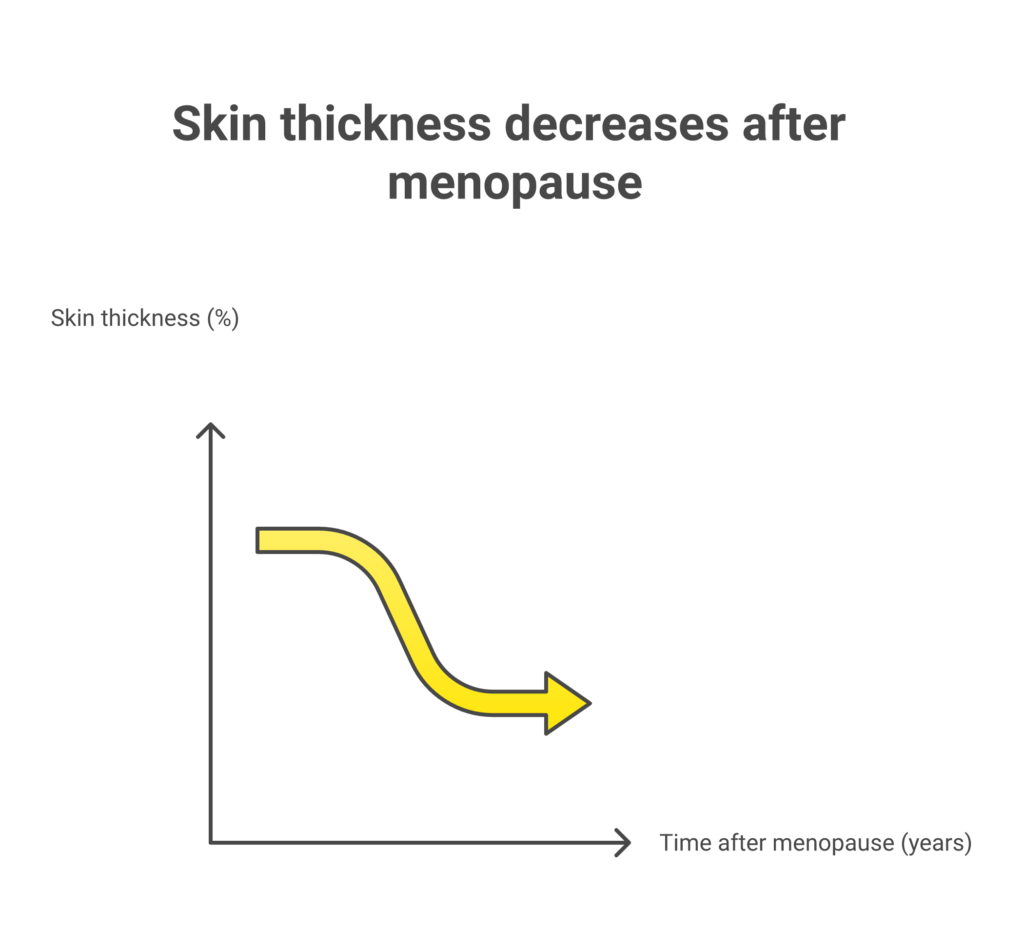
Estrogen binds to fibroblast receptors in the dermis and stimulates type I and type III collagen, the proteins behind skin firmness and elasticity. When estrogen drops during menopause, that stimulation slows dramatically. And the numbers are stark.
According to the American Academy of Dermatology, skin loses about 30% of its collagen during the first five years of menopause. After that, collagen keeps declining at about 2% per year for the next 20 years. A 1987 study in Obstetrics and Gynecology (Brincat et al.) found that skin collagen content and skin thickness fell by 1 to 2% per year after menopause.
These aren’t subtle shifts. You’ll see them as:
- Deeper wrinkles and fine lines, especially around the eyes and mouth
- Loss of firmness along the jawline and cheeks
- Increased dryness as sebum production drops
- More visible age spots and uneven skin tone
- Thinner, more fragile skin that bruises easily
- Slower wound healing
The American Academy of Dermatology (AAD) confirms that reduced estrogen also tanks your skin’s ability to retain moisture. Glycosaminoglycans, the molecules that hold water in the dermis, decline right alongside estrogen. The result? Skin that feels tight, looks dull, and develops texture changes you probably didn’t deal with before. (see skin aging prevention) (see anti-aging skincare research)
Understanding these changes matters because it shapes everything else. Once you know what’s happening at the cellular level, choosing the right ingredients gets a lot simpler.
Key Ingredients for Mature Skin: What Actually Works
Not every ingredient marketed as “anti-aging” has clinical backing. These are the ones with published clinical support.
Retinoids (Retinol and Tretinoin)
Retinoids are still the most studied topical ingredient for aging skin. Full stop. A meta-analysis of eight randomized controlled trials published in PMC found that tretinoin 0.05% produced visible improvement in fine wrinkling in 76% of subjects, compared to 55% in the placebo group (p=0.002). Over-the-counter retinol is milder but still shows measurable effects on fine lines when used consistently for 12 or more weeks.
If you’re over 50, start with a low concentration (0.25% retinol) and apply every other night. Your skin’s barrier is thinner now, so gradual introduction prevents irritation. Build up to nightly use over 6 to 8 weeks. Don’t rush this. Start low.
Vitamin C (L-Ascorbic Acid)
Vitamin C acts as a cofactor for prolyl and lysyl hydroxylase, enzymes that cross-link and stabilize collagen fibers. A double-blind clinical study in Experimental Dermatology (Traikovich, 1999) found that topical vitamin C applied for 12 weeks produced clinically visible improvement in wrinkling, with biopsy evidence of new collagen formation in treated skin.
Look for serums with 10% to 20% L-ascorbic acid at a pH below 3.5. Apply in the morning before sunscreen. Vitamin C also helps fade age spots and hyperpigmentation by inhibiting tyrosinase, the enzyme responsible for melanin production. Here’s what most people miss: vitamin C degrades fast once exposed to air and light. If your serum has turned brown or dark orange, it’s oxidized. Throw it out.
Niacinamide (Vitamin B3)
This one addresses a core problem of menopausal skin: barrier dysfunction. Research in Experimental Dermatology (Tanno et al., 2000) showed that niacinamide increased ceramide biosynthesis by 4.1 to 5.5 times compared to untreated controls. That’s a huge jump. Ceramides are the lipids holding your skin barrier together, and they decline with age.
A concentration of 2% to 5% works for most people. Niacinamide rarely causes irritation and pairs well with almost anything else in your routine. It also cuts redness and blotchiness, which are common complaints for women with menopausal skin sensitivity.
Hyaluronic Acid
Hyaluronic acid (HA) can hold up to 1,000 times its weight in water. As your skin’s natural HA production declines with age, topical application helps restore surface hydration. It won’t rebuild collagen on its own, but it plumps fine lines temporarily and creates a smoother texture that lets other active ingredients absorb more evenly.
Use a serum with multiple molecular weights (low, medium, and high) for both surface and deeper hydration. Apply to damp skin. This matters more than people think. Applying HA to dry skin in a dry climate can actually pull moisture out of your skin instead of into it.
Peptides
Peptides are short chains of amino acids that signal your skin to produce more collagen. Matrixyl (palmitoyl pentapeptide-4) is one of the most studied, with research showing it can stimulate collagen synthesis in aging skin. The AAD recommends products containing retinol or peptides specifically for postmenopausal collagen support.
Ceramides
Your skin barrier loses ceramides as estrogen declines. Topical ceramides (look for ceramide NP, AP, and EOP on ingredient lists) help fill those gaps. They work best combined with cholesterol and fatty acids in a ratio that mimics your skin’s natural lipid structure. CeraVe and similar barrier-repair moisturizers use this approach. Simple, effective, affordable.
SPF (Non-Negotiable)
Sun damage accounts for up to 80% of visible facial aging, according to research in Clinical, Cosmetic and Investigational Dermatology (Flament et al., 2013). I’ll say that again: 80%. A broad-spectrum SPF 30 or higher is the single most effective anti-aging product you can use. Apply every morning. Cloudy days, indoor days near windows, all of it. No exceptions.
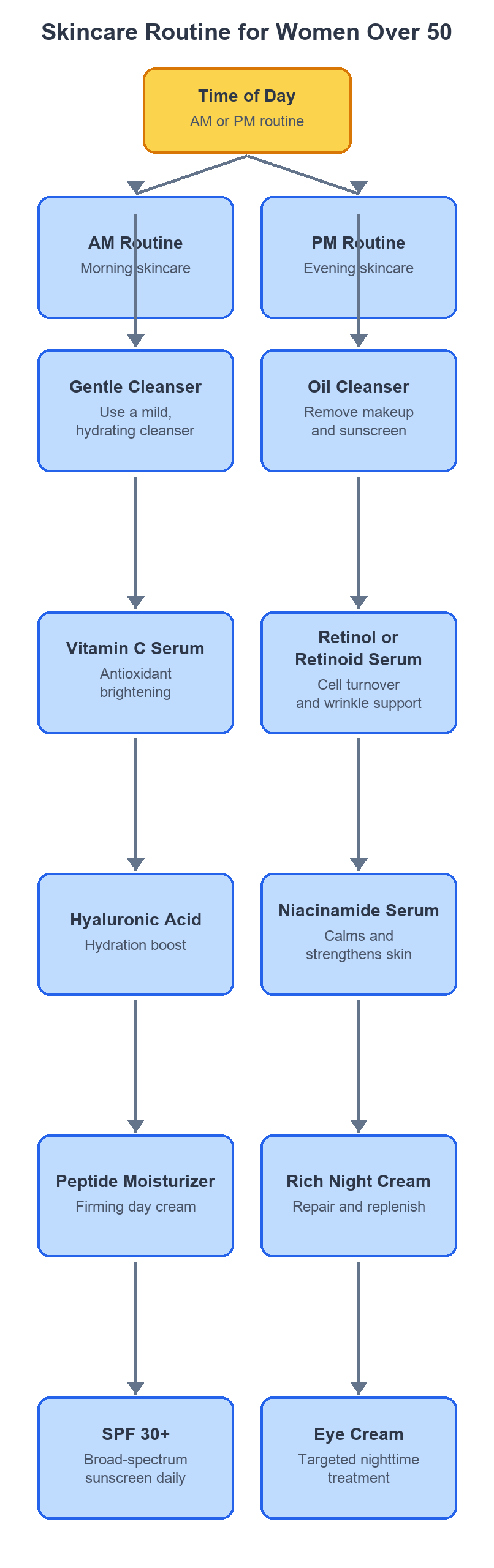
Morning Routine for Skin Over 50
Keep your morning routine focused on protection and hydration. You don’t need heavy exfoliation first thing.
- Gentle cleanser. Use a cream or oil-based cleanser that doesn’t strip your skin. Skip foaming cleansers with sulfates. They remove the natural oils your skin is already struggling to produce.
- Vitamin C serum. Apply 3 to 4 drops of a 10% to 20% L-ascorbic acid serum to clean, dry skin. Wait 1 to 2 minutes before the next step.
- Hydrating serum or essence. A hyaluronic acid serum applied to slightly damp skin locks in moisture throughout the day.
- Moisturizer with ceramides. Choose a formula containing ceramides, cholesterol, and fatty acids to reinforce your barrier.
- Sunscreen SPF 30+. Apply a quarter-teaspoon amount to your face and neck. Reapply every two hours if you’re outdoors.
Total time: about 5 minutes. That’s it. Consistency matters more than complexity, so keep this step simple.
Evening Routine for Mature and Menopausal Skin
Your evening routine is where repair and renewal happen. Skin cell turnover peaks at night, so this is the time for your most active ingredients.
- Double cleanse. Start with an oil-based cleanser to remove sunscreen and makeup. Follow with a gentle water-based cleanser. This two-step process cleans without over-stripping.
- Treatment serum. On retinol nights (start with 2 to 3 nights per week), apply your retinol product. On off nights, use a peptide serum or niacinamide serum.
- Eye cream. The skin around your eyes is thinner than the rest of your face and loses collagen faster. Use a dedicated eye cream with peptides or caffeine to address fine lines and puffiness.
- Night cream or sleeping mask. Go richer than your daytime product. Look for shea butter, squalane, or ceramides. Your skin loses more moisture overnight, and a heavier formula helps prevent transepidermal water loss (TEWL).
- Facial oil (optional). If your skin is very dry, a few drops of rosehip or argan oil over your night cream can seal in moisture. I personally prefer rosehip for its vitamin A content, but either works.
Best Products by Concern: Targeted Solutions for Women Over 50
For Wrinkles and Fine Lines
Retinol is your primary tool here. Start with a low-strength formula (0.25% to 0.5%) and build tolerance. Pair it with a peptide-rich moisturizer on alternating nights. For deeper wrinkles, prescription tretinoin (0.025% to 0.05%) offers stronger results but requires a dermatologist.
If you’re researching wrinkle cream options, look for products that combine retinol with hydrating ingredients like hyaluronic acid or squalane to offset potential dryness.
For Dryness and Dehydration
Menopausal skin loses moisture from two directions: reduced sebum production and declining hyaluronic acid levels. Layer your hydration. A hyaluronic acid serum under a ceramide-rich moisturizer, sealed with an occlusive like petroleum jelly or squalane at night.
Avoid products with high concentrations of alcohol (listed as alcohol denat, SD alcohol, or isopropyl alcohol). They strip already-weakened barriers. Fragrance-free formulas reduce the risk of irritation on sensitized menopausal skin.
For Age Spots and Hyperpigmentation
Age spots (solar lentigines) come from decades of UV exposure combined with hormonal shifts that disrupt melanin distribution. The ingredients that actually work: vitamin C (10% to 20%), tranexamic acid, alpha arbutin, and azelaic acid (15% to 20%).
If you’re dealing with dark spots specifically, our guide on what to look for in a dark spot remover covers the clinical evidence behind each ingredient. Before you buy one, our guide to dark spot remover safety explains which ingredients carry the most risk. And here’s the part people skip: consistent sunscreen use is critical. Without daily SPF, dark spots come back regardless of which treatment you pick.
For Loss of Firmness and Sagging
Sagging comes from collagen and elastin loss in the deeper layers of your skin. Topical products can help, but let’s be honest about the limits. Peptides (especially Matrixyl and copper peptides) signal collagen production. Retinol accelerates cell turnover and thickens the dermis over time.
For more pronounced sagging, especially along the jawline and neck, professional treatments like radiofrequency microneedling or ultrasound therapy (Ultherapy) deliver stronger results. Worth discussing with a board-certified dermatologist if topicals alone aren’t cutting it.
For Sensitive or Reactive Skin
Menopausal skin is often more reactive than it was in earlier decades. If you’re experiencing redness, stinging, or flushing, simplify everything. Gentle cleanser, ceramide moisturizer, sunscreen. That’s your whole routine until things calm down.
Then introduce one active ingredient at a time. Start with niacinamide (it calms inflammation) before adding retinol. And whatever you do, don’t layer vitamin C, retinol, and an exfoliating acid on the same night. That’s a recipe for irritation on mature skin.
Skincare Mistakes to Avoid After 50
Some habits that worked in your 30s and 40s can actually backfire on postmenopausal skin. Here are common ones:
Over-exfoliating. Your skin’s cell turnover has already slowed. Scrubbing with physical exfoliants or using strong chemical peels too often damages an already-thin barrier. Limit chemical exfoliation (AHAs like glycolic acid) to once or twice a week, and skip abrasive scrubs entirely.
Skipping sunscreen indoors. UVA rays penetrate windows. If you sit near a window during the day, you’re getting UV exposure. Wear SPF every morning regardless.
Using the same products you used at 30. Your skin’s needs have changed. That lightweight gel moisturizer that worked on oily skin at 35? It won’t provide enough hydration at 55. Reassess your routine every few years as your skin keeps evolving.
Ignoring your neck and chest. These areas age just as fast as your face but get neglected constantly. Extend every product, cleanser, serum, moisturizer, SPF, to your neck and decolletage.
Starting too many new products at once. Add one new active ingredient every 2 to 4 weeks. If your skin reacts, you’ll know exactly what caused the problem.
Expecting overnight results. Retinol takes 8 to 12 weeks to show visible improvement. Vitamin C takes 4 to 8 weeks. Months of consistency produce real change, not days. Give products a fair trial before switching.
Nutrition, Gut Health, and Your Skin After 50
What you eat affects your skin more than most people realize. And this connection gets stronger after menopause.
Research on the gut-skin axis shows a two-way relationship between your gut microbiome and skin health. A 2022 review in Gut Microbes found that gut dysbiosis (an imbalance in intestinal bacteria) increases systemic inflammation through elevated TNF-alpha, IL-1, and IL-6. These inflammatory molecules speed up skin aging, weaken the skin barrier, and make conditions like rosacea and eczema worse.
Here’s where it gets interesting. A double-blind, placebo-controlled study of 110 middle-aged subjects found that 12 weeks of oral probiotic supplementation (L. plantarum HY7714) improved skin elasticity and increased hydration compared to placebo. That’s not a supplement company saying their product works. That’s a controlled trial.
For practical dietary steps that support skin health from the inside, our guide on the best foods for gut health covers fermented foods, prebiotic fibers, and the specific nutrients that support a healthy gut-skin connection.
Key nutritional priorities for skin over 50:
- Omega-3 fatty acids (from fatty fish, walnuts, flaxseed) reduce inflammation and support the skin’s lipid barrier
- Vitamin C-rich foods (bell peppers, citrus, strawberries) support internal collagen synthesis
- Protein (aim for 0.8 to 1g per pound of lean body mass) provides the amino acids your body needs to build collagen
- Fermented foods (yogurt, kimchi, sauerkraut, kefir) support gut microbiome diversity
- Phytoestrogens (soy, flaxseed, chickpeas) may offer mild estrogenic effects that benefit skin, though research is still developing on this one
Hydration matters too. Aim for at least 8 glasses of water daily. Dehydrated skin looks older, plain and simple. And your skin’s ability to retain moisture internally decreases with age, so you’re fighting an uphill battle if you’re not drinking enough.
When to See a Dermatologist
Some skin changes after 50 are normal. Others need professional attention. See a board-certified dermatologist if you notice:
- New moles or changes to existing moles (shape, color, size, or border)
- Skin growths that bleed, itch, or don’t heal
- Persistent redness, rashes, or irritation that doesn’t respond to basic skincare
- Severe dryness or itching that disrupts your daily life
- Questions about prescription-strength retinoids or hormone replacement therapy (HRT) for skin
A dermatologist can also recommend in-office treatments like chemical peels, laser resurfacing, or microneedling that go beyond what topical products can do. If you’ve been doing everything right for 3 to 6 months and you’re not seeing improvement, that’s a sign it’s time to get professional input.
Related Anti-Aging Guides
Postmenopausal skin and macular health both suffer from the same underlying issue: rising oxidative stress as estrogen falls. Carotenoids, vitamin C, and omega-3s show up in research on both. After you have a topical routine in place, our companion guide on nutrient support for aging eyes is worth reading because the overlap with anti-aging skincare is significant.
Frequently Asked Questions
What is the best night cream for women over 60?
Look for a night cream with ceramides, peptides, and either retinol or bakuchiol (a plant-based retinol alternative if you have sensitive skin). Rich, occlusive formulas work best because they prevent overnight moisture loss. Squalane, shea butter, and niacinamide all help restore the skin barrier while you sleep. Honestly, the brand matters less than the ingredients. Pick one that has the right actives and use it every night for a couple of months before deciding if it’s working.
Is retinol safe for menopausal skin?
For most people, yes, when it is introduced gradually. The American Academy of Dermatology suggests the least intense formula you can find, used every other night at first. Always follow with a ceramide-rich moisturizer to offset potential dryness. If you get persistent irritation, switch to bakuchiol or ask your dermatologist about a lower-dose prescription retinoid. Retinol is still the gold standard for stimulating collagen production in aging skin, and there’s decades of clinical data backing that up.
How does menopause affect your skin?
Menopause triggers a sharp drop in estrogen, which directly reduces collagen production. According to the American Academy of Dermatology, skin loses about 30% of its collagen during the first five years of menopause, then about 2% a year for the next 20 years. This leads to thinner skin, deeper wrinkles, increased dryness, loss of firmness, and more visible age spots. Sebum production drops too, which means your skin barrier becomes less effective at holding in moisture. It’s a lot of changes happening at once, which is why a targeted routine matters so much.
Can you reverse wrinkles after 50?
You can reduce the appearance of wrinkles, but “reversing” them entirely with topical products alone isn’t realistic. Clinical trials reviewed in Clinical Interventions in Aging (Mukherjee et al., 2006) found that prescription tretinoin improved fine wrinkling in photoaged skin. Vitamin C serums promote new collagen formation. For deeper wrinkles, professional treatments like fractional laser or microneedling stimulate collagen remodeling in the deeper dermis. The best approach? Combine daily sunscreen, retinoids, and vitamin C. That’s what the clinical evidence supports.
What ingredients should women over 50 avoid in skincare?
Skip products with high concentrations of denatured alcohol (alcohol denat, SD alcohol), which strips the skin barrier. Sodium lauryl sulfate (SLS) in cleansers is too harsh for menopausal skin. Synthetic fragrances can trigger sensitivity reactions that get worse with age. Strong chemical exfoliants at high concentrations can over-exfoliate thinner mature skin. And physical scrubs with rough particles cause micro-tears. If a product stings or burns when you apply it, it’s too strong for your current skin.
How often should you exfoliate after 50?
Once or twice per week is enough for most women over 50. Use a gentle chemical exfoliant (such as lactic or mandelic acid) rather than physical scrubs. Your skin’s natural cell turnover has slowed, so mild exfoliation helps clear dead cells and improve product absorption. But your barrier is also thinner and more fragile, so daily exfoliation can cause damage, redness, and increased sensitivity. Pay attention to how your skin responds. If it looks red or feels tight after exfoliating, cut back.
Does collagen supplementation help aging skin?
There’s some evidence for it, but it’s not a slam dunk. A 2019 systematic review in the Journal of Drugs in Dermatology (Choi et al.) covered 11 randomized trials with 805 patients and described the early results for skin aging as promising. But results vary by study quality, and collagen supplements aren’t a substitute for topical treatments and sun protection. Think of them as one piece of the puzzle, not the whole solution.
Building Your Personalized Routine
There’s no single perfect routine for every woman over 50. Your skin is shaped by genetics, sun exposure history, hormonal status, medications, diet, and environment. The framework above gives you a starting point.
Begin with the basics: a gentle cleanser, a ceramide moisturizer, and daily SPF 30. Once your skin is comfortable with that foundation, add one active ingredient at a time. Retinol and vitamin C have the strongest clinical evidence for aging skin. Niacinamide and peptides offer additional benefits without the irritation risk.
Track your progress with photos taken in the same lighting every 4 weeks. Visible changes take time. I can’t stress this enough. The products that produce real results are the ones you use consistently for months, not the ones you try for a week and abandon because you didn’t see instant transformation.
For in-depth reviews of wrinkle creams and anti-aging products, visit our verified review section, where we evaluate ingredients, clinical evidence, and value for money. You can also browse our full wrinkle creams category for more guides and product comparisons.
Medical Disclaimer: This article is for informational purposes only and does not constitute medical advice. Always consult a qualified healthcare provider or board-certified dermatologist before starting new skincare treatments, especially prescription retinoids or hormone replacement therapy. Individual results vary based on skin type, medical history, and other factors.
Further Reading from Consumer Health Guide
If you want to go deeper, our guide to skincare ingredients that work for men covers what most product pages skip. For readers comparing options, see our breakdown of wrinkle reduction products that hold up to evidence. A useful companion read is best collagen supplements.
We also looked closely at smile line and mouth wrinkle guide in a separate guide. For the related question, check wrinkle smoothing products and routines. You can dig into is liquid or powder collagen better if that overlaps with what you’re researching.
Pair this with best retinol products for a fuller picture. Our notes on collagen benefits and sources address an adjacent topic worth knowing.