
Reviewed by Jonathan Bailor, NYT bestselling author, wellness researcher, and founder of SANE Solution. Updated March 2026. Part of the Consumer Health Guide research library.
I’ll be honest: most guys don’t think about anti-aging until they catch a glimpse of themselves in harsh bathroom lighting and wonder when their forehead got those lines. The best anti-aging cream for men is one that accounts for how male skin actually works. Thicker dermal layers. Higher oil production. A collagen decline pattern that kicks in earlier than you’d expect. If you want the short version, grab a moisturizer with retinol, niacinamide, and broad-spectrum SPF, then use it every day. That single step puts you ahead of the majority of men who do absolutely nothing until deep lines have already set in.
But picking the right product is only part of it. Men’s skin has specific biological traits that change how anti-aging ingredients perform, and most skincare guides gloss over those differences because they were written for women. I’ve spent years digging through the clinical research on male skin aging, and this guide covers what actually matters for you: the science, the ingredients worth your money, a routine you can stick with (spoiler: it takes about 90 seconds), and the mistakes that speed up wrinkles faster than age alone. (see skin aging prevention) (see anti-aging skincare research)
How Men’s Skin Differs from Women’s Skin
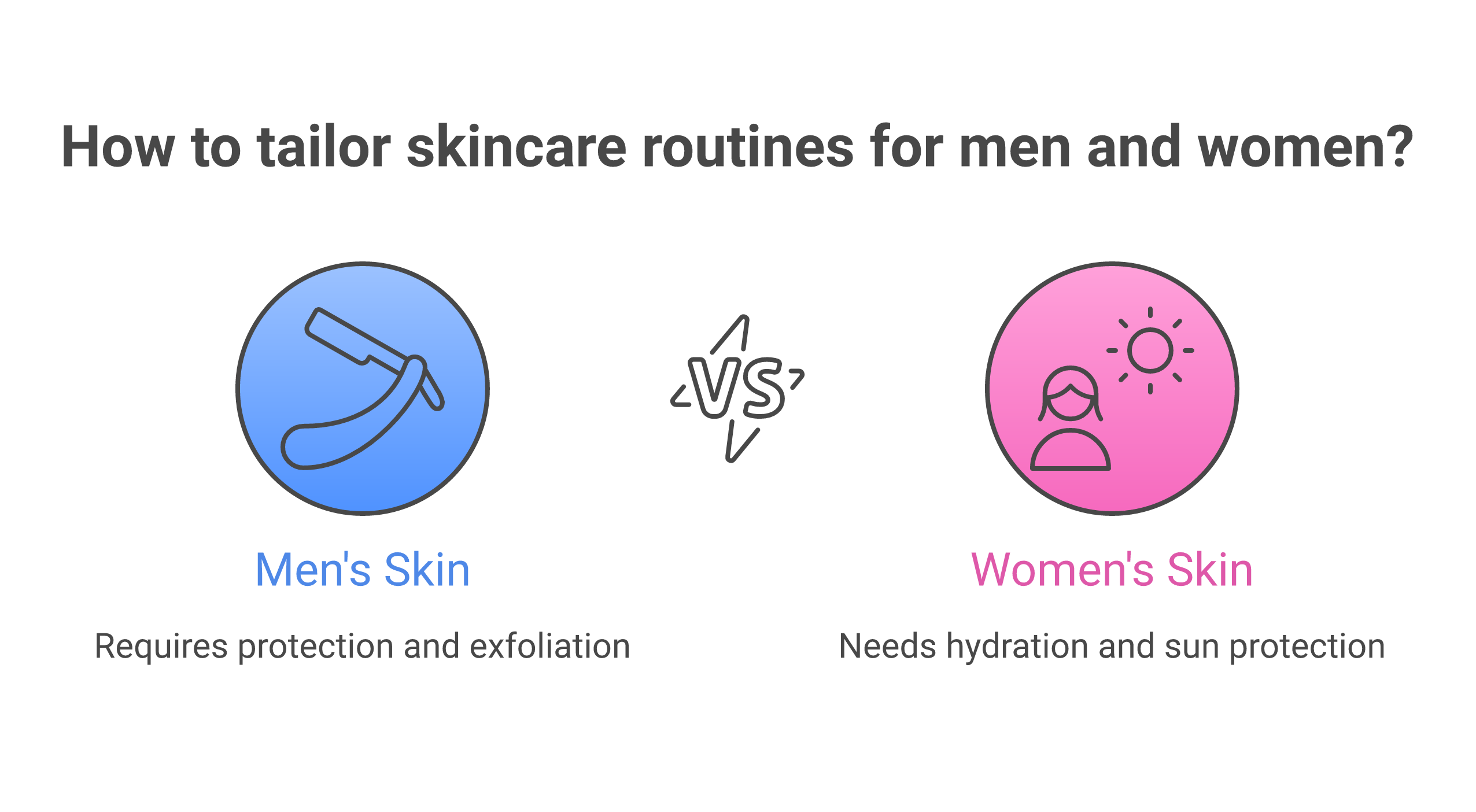
Here’s something that surprised me when I first looked at the research. Male skin is about 25% thicker than female skin, according to a 2018 review in the Journal of Clinical and Aesthetic Dermatology. Testosterone drives that extra dermal density. In your 20s and 30s, that thickness acts like built-in scaffolding. Good news, right? Sort of. The catch is that when wrinkles finally do show up on thicker skin, they tend to be deeper and harder to reverse. So men get a longer runway, but a rougher landing.
Collagen decline follows a different timeline too. Shuster et al. found (published in PubMed) that men’s skin thickness decreases in a straight line starting around age 20. Women hold relatively steady until menopause hits around 50, then experience a sharper drop. Men lose roughly 1% of their collagen per year after 30. Because that loss is so gradual, you don’t notice it. Then one morning you look ten years older than you did five years ago. That’s the sneaky part.
Oil production is another big difference. Male skin pumps out significantly more sebum, which is why guys deal with larger pores and more breakouts but fewer dry-skin wrinkles in their younger years. That oilier baseline means you probably need lighter, non-comedogenic formulas rather than the thick creams marketed to women. A $15 drugstore gel moisturizer will often outperform an $85 department store cream on male skin simply because it doesn’t clog your pores.
And then there’s shaving. Daily razor use creates a real paradox. The blade acts as a mild exfoliant, scraping away dead cells, which can keep skin looking smoother short-term. But repeated shaving also damages the skin barrier, triggers micro-inflammation, and causes ingrown hairs that speed up visible aging around the jaw, neck, and lower cheeks. A 2022 review in Dermatologic Surgery described this as “inflammaging,” where chronic low-grade irritation from shaving accelerates collagen breakdown in those specific areas.
Key Anti-Aging Ingredients That Work for Men
Not every ingredient on the label matters equally. Some are backed by decades of clinical trials. Others are marketing fluff. Here are the ones that actually have the research behind them, ranked by strength of evidence.
Retinol (Vitamin A)
Retinol is the gold standard, full stop. A 2024 network meta-analysis in Scientific Reports ranked retinoids (including retinol and prescription tretinoin) as the most effective topical treatments for reducing fine wrinkles and dark spots. It works by speeding up cell turnover and pushing your dermis to produce more collagen. Start low, 0.25% to 0.5%, and apply at night since retinol makes skin more sensitive to UV. Men with oilier skin tend to handle retinol well, but expect some dryness or mild peeling during weeks one through four. That adjustment period is normal. Push through it.
Niacinamide (Vitamin B3)
I’m a big fan of niacinamide for men specifically. At 5% concentration, it reduces fine lines, evens out texture, fades dark spots, and strengthens your skin barrier. Bissett et al. published a study in Dermatologic Surgery (2005) showing that 5% niacinamide improved wrinkles, texture, and redness over 12 weeks. But here’s the part most guides skip: niacinamide also cuts excess oil production without drying you out, per research in the Journal of Cosmetic and Laser Therapy. For men dealing with both oily skin and early aging signs, that’s a two-for-one.
Hyaluronic Acid
Hyaluronic acid is a humectant that holds up to 1,000 times its weight in water. It plumps skin and smooths fine lines by flooding your outer skin layers with moisture. It won’t rebuild collagen, but it makes what you have look better. If you’re the kind of guy who has never owned a moisturizer (and I’ve talked to plenty who fit that description), a hyaluronic acid serum is a painless entry point. It absorbs fast and leaves zero greasy residue.
Vitamin C (L-Ascorbic Acid)
Vitamin C neutralizes free radical damage from UV and pollution. At 10% to 20% concentration, it brightens skin tone, fades spots, and supports collagen synthesis. A 2017 review in Nutrients confirmed that topical vitamin C at clinical doses measurably reduces photodamage markers. Apply it in the morning before sunscreen. Think of it as a second layer of UV defense that also repairs some existing damage.
Peptides
Peptides are short amino acid chains that tell your skin cells to make more collagen and elastin. Copper peptides in particular have solid research backing their role in wound healing and collagen stimulation. They’re gentler than retinol, which makes them a smart choice if your skin is reactive or sensitive. Look for palmitoyl tripeptide-1 or copper tripeptide-1 on the label.
SPF (Sunscreen Filters)
UV radiation accounts for 80-90% of visible skin aging. That number comes from a review in Clinical, Cosmetic and Investigational Dermatology, and it’s not disputed. Sunscreen is not optional. It is the single most effective anti-aging product you can buy. And yet men consistently underuse it compared to women, which shows up in higher rates of skin cancer and more severe photoaging on the face, neck, and ears. SPF 30 or higher, every morning, even on overcast days. No exceptions.
Building a Simple Anti-Aging Routine for Men
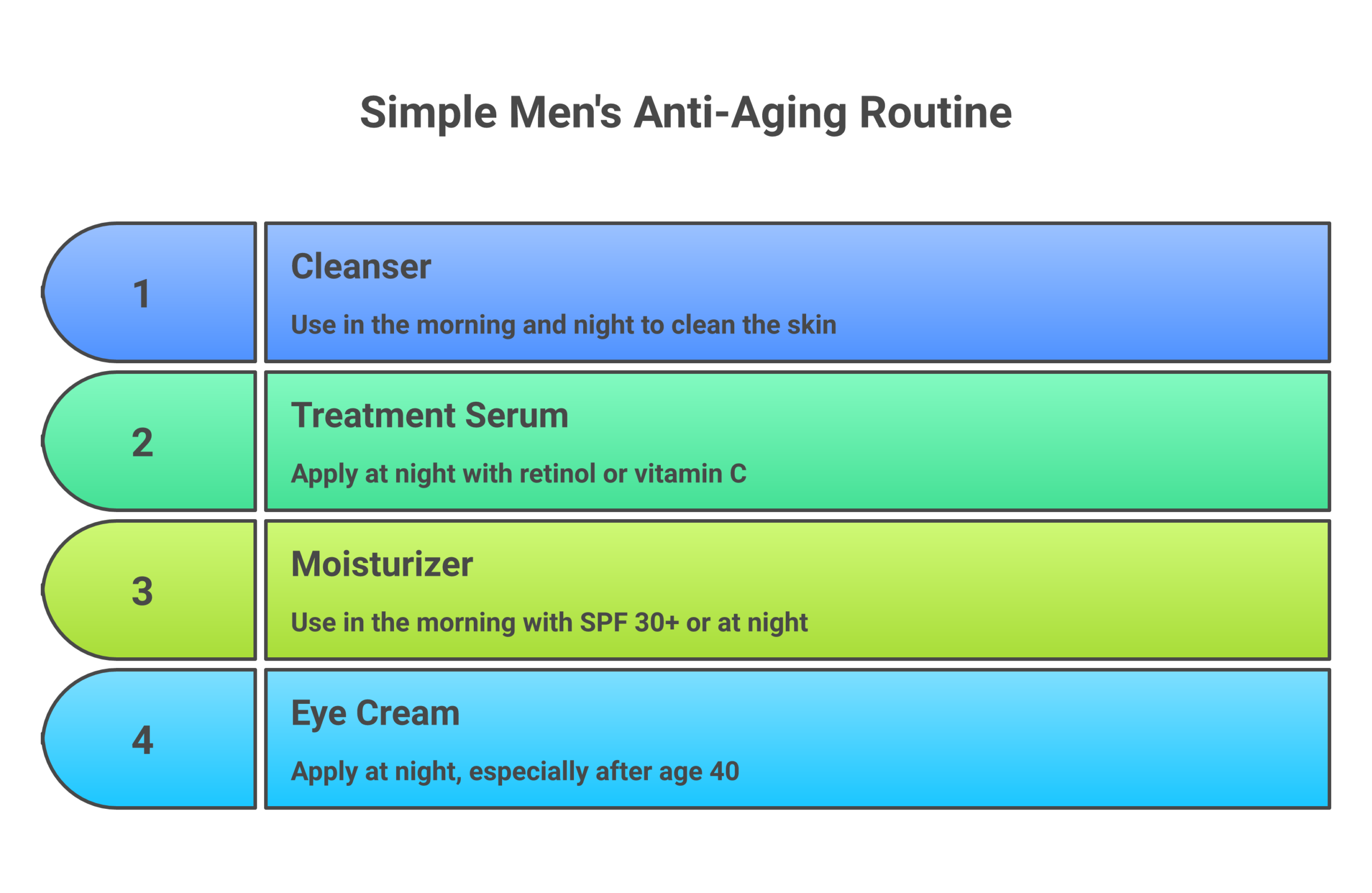
The best routine is the one you’ll actually do. I’ve tried the “splash water on my face and walk out the door” approach. It doesn’t hold up past 35. But I’ve also seen guys buy 12 products, use them for a week, then quit because the whole thing felt like a chore. Four products, used consistently, cover everything you need.
Step 1: Cleanser (Morning and Night)
Grab a gentle, pH-balanced cleanser (aim for around pH 5.5). It removes dirt, oil, and dead cells without wrecking your skin barrier. Ditch the bar soap. Bar soap runs alkaline, usually pH 9-10, and disrupts the acid mantle that keeps your skin healthy. Gel or foam cleansers work well for men’s typically oilier skin. Thirty to sixty seconds of washing with lukewarm water. Done.
Step 2: Treatment Serum (Night)
Apply a retinol serum (0.25% to 0.5% to start, working up to 1% over time) or a niacinamide serum (5%) after cleansing at night. If active ingredients are new territory for you, start with niacinamide for the first month, then add retinol on alternating nights. Give your skin at least six to eight weeks before you judge results. Skin cell turnover isn’t instant, and most guys bail too early.
Step 3: Moisturizer (Morning and Night)
Go lightweight and non-comedogenic. For morning, pick one with built-in SPF 30+ so you combine two steps into one. For night, a plain moisturizer with hyaluronic acid or ceramides helps repair your barrier while you sleep. Men who shave daily should stick with fragrance-free options. Fragrance on freshly shaved skin is a recipe for irritation.
Step 4: Sunscreen (Morning, Non-Negotiable)
If your morning moisturizer doesn’t include SPF, apply a separate broad-spectrum sunscreen (SPF 30 minimum) as your last skincare step before you leave the house. Reapply every two hours if you’re spending time outdoors. This single habit prevents more visible aging than every other product combined. I know I keep hammering this point. It’s because it matters that much.
Weekly Addition: Exfoliation (1-2 Times Per Week)
Use a chemical exfoliant with salicylic acid (BHA) or glycolic acid (AHA) once or twice a week. BHAs work especially well for oilier, acne-prone male skin because they get inside pores. AHAs are better for surface texture and sun spots. One rule: don’t exfoliate on the same nights you use retinol. Your skin can only take so much at once.
Best Anti-Aging Products for Men by Category
I’m not going to tell you there’s one magic product. There isn’t. But here’s what to look for in each category based on the ingredient research above. For detailed product comparisons and verified customer reviews, check out our complete wrinkle cream reviews.
Best All-in-One Anti-Aging Moisturizer
Look for retinol or retinyl palmitate + hyaluronic acid + niacinamide in a single formula. An all-in-one saves time and cuts the risk of ingredient clashes. Products in the $10-$25 per ounce range tend to balance quality with value. A friend of mine spent $90 on a “luxury” men’s anti-aging cream that had nearly the same ingredient list as a $17 drugstore option. Don’t fall for fancy packaging. Also, “dermatologist-tested” means the formula was tested on skin under a dermatologist’s supervision. “Dermatologist-recommended” is a looser marketing term with no standard definition.
Best Retinol Serum for Men
Look for 0.3% to 1.0% retinol in a stable, airless pump bottle. Retinol breaks down when exposed to air and light, so if it comes in a jar you dip your fingers into, skip it. Avoid products that mix retinol with AHAs in the same bottle. The combo causes too much irritation for most people. Apply two to three times per week at first, then build to nightly use as your skin adjusts.
Best Eye Cream for Men
The skin around your eyes is thinner than the rest of your face, even in men, so it shows fine lines first. Look for caffeine (it constricts blood vessels and reduces puffiness), peptides (collagen stimulation without the irritation of retinol near the eyes), and vitamin K (helps fade dark circles). Apply with your ring finger. Seriously. Your ring finger has the lightest touch, which is what that delicate skin needs.
Best Sunscreen for Daily Wear
The number one reason men skip sunscreen? They hate the greasy feel or the white ghost-face look. I get it. Look for SPF 30-50, broad-spectrum (UVA + UVB), and a “dry touch” or “matte finish” formula. Mineral sunscreens (zinc oxide, titanium dioxide) are gentler on sensitive skin but can leave a slight white cast. Chemical sunscreens (avobenzone, octinoxate) absorb more cleanly. Either works, as long as you use enough. About a nickel-sized amount for the face, a quarter-sized amount if you’re including neck and ears.
Shaving and Skin Aging: What Men Need to Know
This is one topic that women’s skincare guides will never cover, and it matters more than most guys realize. Each pass of the razor strips the top layer of dead cells (that’s the exfoliation benefit) but also creates micro-tears in the barrier. Do that five or six times a week for 20 years, and you’ve got uneven texture, razor bumps, and accelerated aging across the lower face.
Here’s how to minimize the damage:
- Shave after a warm shower, when hair is softest and skin is hydrated. Less force needed, fewer micro-tears.
- Use a sharp blade. Dull razors force you into multiple passes, multiplying irritation. Replace cartridges every 5-7 shaves.
- Shave with the grain (the direction hair grows). Going against it gives a closer cut but causes significantly more barrier damage and ingrown hairs.
- Apply a fragrance-free post-shave balm with aloe vera or allantoin right after. Skip the alcohol-based aftershaves. They dry out skin and trigger rebound oil production.
- Space shaves out when you can. Every other day instead of daily gives the barrier 48 hours to recover. If your workplace allows stubble, take advantage of that.
Men who switch to electric razors or trimmers deal with less direct skin trauma, though they sacrifice closeness. If slowing down aging is a priority for you, the trade-off is often worth it on the neck and jawline, where skin is thinner and more vulnerable to irritation damage.
Common Anti-Aging Mistakes Men Make
Most men don’t have a skincare routine at all, and the ones who do often sabotage themselves without knowing it. I’ve seen every one of these mistakes firsthand.
1. Skipping Sunscreen
This is the big one. The Skin Cancer Foundation reports that men over 50 are more than twice as likely as women to develop melanoma. Part of that is behavioral: men are less likely to wear sunscreen, hats, or seek shade. Since UV drives 80-90% of visible aging, skipping SPF erases the benefit of every other product you own. I can’t say this enough.
2. Using Body Soap on the Face
Bar soap strips your skin’s natural oils and wrecks the acid mantle. Your face needs a pH-balanced cleanser designed for facial skin. This is a cheap fix, maybe $8-$12 for a solid facial cleanser, and it makes a noticeable difference in texture within a few weeks.
3. Ignoring the Neck and Hands
So many guys apply moisturizer and sunscreen to their face and stop at the jawline. Meanwhile, the neck, ears, and backs of the hands age just as visibly and catch just as much sun. Whatever you put on your face, extend it down to the neck and onto your hands. Takes five extra seconds.
4. Starting Too Late
Prevention beats reversal every time, and it costs a fraction of the price. Men in their 20s tend to think anti-aging is a concern for their 40s. But collagen decline starts in the early 20s, and UV damage stacks up over years. A friend of mine started retinol at 42 and saw real improvement, but he openly says he wishes he’d started at 25. A basic routine (cleanser, SPF moisturizer, retinol) by age 25 can delay visible aging by years. As of 2026, you can put that whole routine together for under $40.
5. Overdoing Active Ingredients
Here’s what happens when a guy finally decides to take skincare seriously. He goes from zero products to five actives in one week. Retinol Monday, AHA Tuesday, BHA Wednesday, vitamin C Thursday, all of them Friday. His skin barrier collapses. Redness everywhere. Peeling. Sensitivity so bad that even water stings. I’ve watched it happen more than once. The fix is boring but effective: introduce one new active every four to six weeks. Build gradually. Your skin needs time to adapt, and there’s no shortcut around that.
Lifestyle Factors That Affect Male Skin Aging
Here’s where I have to be straight with you. The best $200 serum on the market won’t save you if you’re sleeping four hours a night, eating garbage, and stress-scrolling until 2 AM. Products handle maybe 40% of the equation. The rest? It’s on you.
Sleep
I used to think “beauty sleep” was just something people said. Then I read the 2015 study from University Hospitals Case Medical Center (funded by Estee Lauder, yes, but the methodology was solid). Poor sleepers had more fine lines, patchier pigmentation, and noticeably less elastic skin than good sleepers of the same age. The reason is straightforward: your body does most of its collagen production and cell repair between 10 PM and 2 AM. Miss that window consistently, and the repair work doesn’t get done.
Seven to nine hours. That’s the target. I know that sounds impossible for some guys, especially if you’ve got young kids or a demanding job. But even moving from five hours to six and a half makes a measurable difference over a year.
Nutrition
I’ll keep this simple because nutrition advice gets complicated fast. Two things matter most for your skin. First, cut back on refined sugar. Sugar triggers glycation, where glucose molecules attach to your collagen fibers and make them stiff. Stiff collagen can’t flex. It breaks. That’s how you get deep creases that weren’t there last year.
Second, eat more fatty fish. Salmon, sardines, mackerel. The omega-3s in these fish reduce inflammation in skin tissue. Berries and dark leafy greens help too, since they’re packed with antioxidants that neutralize the free radicals UV creates. Your gut plays a role here as well. For more on that connection, see our guide on the best foods for gut health.
Hydration
When you’re dehydrated, fine lines look deeper. Not because they are deeper, but because your skin cells are literally shrunken. The “eight glasses a day” rule is a rough starting point, not gospel. If you lift weights, run, or live in Arizona, you need more than someone sitting in an air-conditioned office in Seattle.
Here’s a practical test: pinch the skin on the back of your hand. If it snaps back immediately, you’re fine. If it takes a second or two to flatten, drink more water. And if you’re using hyaluronic acid topically, hydration matters even more, because HA pulls moisture into skin cells. If there’s no moisture available in your body, it has nothing to pull.
Smoking and Alcohol
I’m not going to lecture you. You already know smoking is bad. But the skin-specific data is worth mentioning. A 2019 study in the Journal of the European Academy of Dermatology and Venereology compared facial wrinkling in smokers versus non-smokers of the same age. The smokers looked measurably older. Not “a little” older. Measurably, quantifiably older, with deeper nasolabial folds and more crow’s feet.
Alcohol is subtler. A beer or two won’t wreck your skin. But heavy drinking dehydrates you, dilates facial blood vessels (that’s where the permanent redness comes from in long-term drinkers), and destroys sleep quality. Three drinks before bed means you skip most of your deep sleep cycles, which is when collagen repair happens. If you quit smoking today, your skin starts improving within weeks. Alcohol is slower to show results, but cutting back to a few drinks per week makes a visible difference over a few months.
Stress
This one might surprise you. Chronic stress floods your system with cortisol, and cortisol directly breaks down collagen fibers. It also weakens your skin barrier, which is why breakouts tend to cluster around high-stress periods. The research on this is solid, published across multiple endocrinology journals over the past decade.
You don’t need to meditate on a mountaintop. Twenty minutes of exercise, a walk without your phone, even just sitting somewhere quiet for ten minutes. Anything that pulls your cortisol down gives your skin a chance to recover. I’ve noticed the difference myself during stretches where I actually prioritize downtime versus stretches where I’m running on caffeine and adrenaline. It shows up in my face within a couple of weeks.
Related Anti-Aging Guides
Men lose skin collagen at roughly one percent per year after 30, but topical creams only address the surface. Internal antioxidant status matters too, particularly the carotenoids that also support vision and prostate health. If your routine is dialed in but you want to round out internal support, our guide to antioxidants for vision and overall aging covers an overlapping nutrient set worth knowing.
Frequently Asked Questions
At what age should men start using anti-aging products?
Most dermatologists say to start a basic routine (cleanser, moisturizer with SPF) in your early 20s and add retinol by your mid-to-late 20s. Collagen loss begins around age 20, so earlier prevention pays off long-term. You don’t need expensive products at that age. Sunscreen alone gives you the most value per dollar at any age, honestly.
Can men use the same anti-aging creams as women?
Yes. Retinol, niacinamide, hyaluronic acid, vitamin C, they all work the same regardless of sex. The main difference is texture. Men’s skin runs oilier, so lighter, gel-based, or fast-absorbing formulas feel more comfortable and are less likely to cause breakouts. Those “for men” labels on packaging? Mostly marketing. Check the ingredient list, not the branding.
Is retinol safe for men’s skin?
Safe and effective when you use it correctly. Start low (0.25-0.5%), apply at night, and always wear sunscreen during the day because retinol increases UV sensitivity. You’ll probably experience mild dryness, flaking, and redness during the first few weeks. Normal. It resolves as your skin adjusts over four to six weeks. Men with very sensitive or rosacea-prone skin should talk to a dermatologist before starting.
Do men need a separate eye cream?
Depends on what’s bothering you. Dark circles, puffiness, crow’s feet? A dedicated eye cream with caffeine and peptides can help. The skin around the eyes is thinner and more delicate than the rest of the face, so full-strength retinol near the eyes can backfire with irritation. If your overall moisturizer is gentle enough, you can dab a thin layer around the eye area. But dedicated eye products are formulated specifically for that zone, and some guys do see a difference.
How long does it take to see results from anti-aging products?
Skin cell turnover takes roughly 28 days, so most products need four to six weeks of daily use before you see anything. Retinol typically shows measurable improvements in lines and texture within eight to twelve weeks. Sunscreen’s anti-aging benefits are cumulative, compounding over months and years. Don’t switch products every two weeks because you aren’t seeing instant results. That’s the most common mistake I see guys make with skincare.
Does shaving help or hurt anti-aging efforts?
Both, honestly. The razor scrapes off dead cells (mild exfoliation), which keeps the lower face looking smoother. But daily shaving also damages the barrier, triggers micro-inflammation, and creates ingrown hairs. Best approach: sharp blade, with the grain, soothing post-shave balm. And shave every other day if your job allows it. That 48-hour rest period makes a real difference for skin recovery.
What is the single most important anti-aging step for men?
Daily sunscreen. SPF 30+, broad-spectrum. UV radiation causes up to 80-90% of visible skin aging per dermatology research in Clinical, Cosmetic and Investigational Dermatology. Every other anti-aging product performs better when paired with sun protection, and no product can fully undo UV damage once it has happened. If you only do one thing for your skin, make it sunscreen. Everything else is secondary.
For more anti-aging product comparisons and verified customer reviews, visit our wrinkle cream reviews page, or browse the full wrinkle creams category on Consumer Health Guide.
Medical Disclaimer: This article is for informational purposes only and does not constitute medical advice. The content has been reviewed for accuracy but is not a substitute for professional dermatological consultation. Always consult a qualified healthcare provider before starting any new skincare regimen, especially if you have existing skin conditions, allergies, or are taking medications. Individual results may vary. Product mentions are for educational purposes and do not represent endorsements.
Further Reading from Consumer Health Guide
If you want to go deeper, our guide to dermatologist-reviewed wrinkle creams covers what most product pages skip. For readers comparing options, see our breakdown of hydrolyzed collagen peptides. A useful companion read is dark spot products that actually work.
We also looked closely at best eye cream for dark circles in a separate guide. For the related question, check fine line eye creams. You can dig into anti-aging products for mature skin if that overlaps with what you’re researching.
Pair this with removing brown spots on the body for a fuller picture. Our notes on how to fade mouth lines address an adjacent topic worth knowing. For wider context, see fine line and wrinkle removal.
If symptoms or causes matter to you, our liquid vs powder supplement absorption guide is a good next step. See also: how retinol smooths fine lines. Related Consumer Health Guide research: natural ways to support collagen.