
Reviewed by Jonathan Bailor, NYT bestselling author, wellness researcher. Updated March 2026. Part of the Consumer Health Guide research library.
The best ingredients for fading dark spots are vitamin C (L-ascorbic acid), niacinamide, retinoids, alpha arbutin, tranexamic acid, azelaic acid, and kojic acid. Each one targets melanin production through a different biological pathway, which is why dermatologists often recommend combining two or three of them for faster, more visible results.
I’ve spent over a decade reviewing clinical research on skin health, and one pattern keeps showing up: people waste months on products that contain the wrong form of an active ingredient, or the right form at a useless concentration. This guide breaks down exactly what works, what doesn’t, and how to read a label so you stop guessing.
How Dark Spots Form: The Tyrosinase Pathway
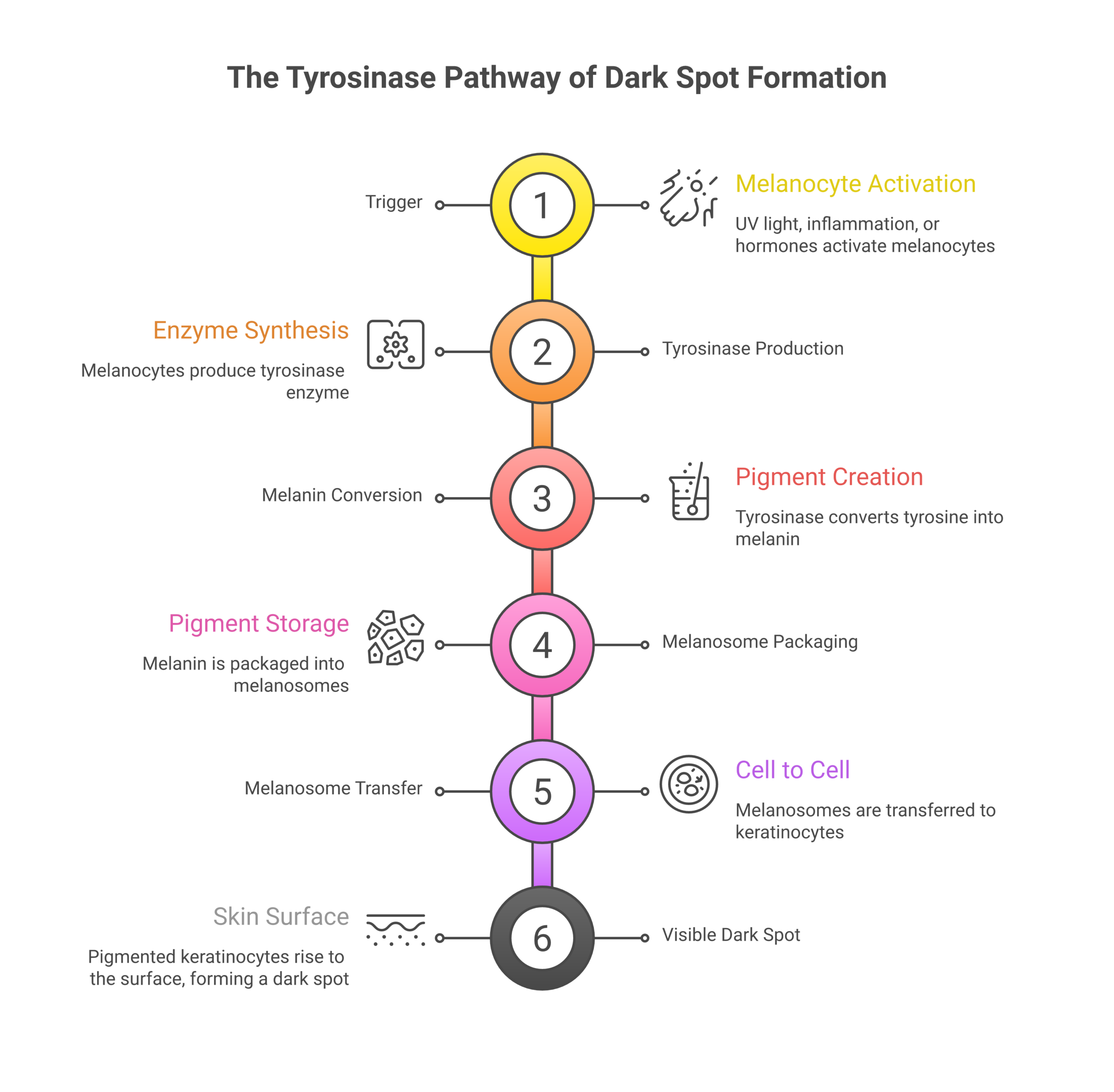
Before we talk about ingredients, you need to understand the biology. Dark spots (also called hyperpigmentation) form when melanocytes, the pigment-producing cells in your skin, go into overdrive. The trigger can be UV exposure, hormonal changes, inflammation from acne, or physical injury to the skin. (see dark spot treatment guidelines) (see hyperpigmentation research)
Here’s the simplified chain of events:
- A trigger (UV light, inflammation, hormones) activates melanocytes.
- Melanocytes produce an enzyme called tyrosinase.
- Tyrosinase converts the amino acid tyrosine into melanin.
- Melanin is packaged into melanosomes and transferred to surrounding skin cells (keratinocytes).
- Those keratinocytes rise to the skin surface, creating the visible dark spot.
Effective dark spot ingredients interrupt this chain at one or more steps. Some block tyrosinase directly. Others prevent melanin transfer. Still others speed up cell turnover so pigmented cells shed faster. The strongest treatment strategies hit multiple steps at once.
Vitamin C (L-Ascorbic Acid): The Most Studied Brightener
Vitamin C is the single most researched topical ingredient for hyperpigmentation. A 2019 review in the Journal of Clinical and Aesthetic Dermatology confirmed that L-ascorbic acid inhibits tyrosinase, reduces oxidative stress in melanocytes, and provides photoprotection against UV-induced pigmentation.
Skin health starts from the inside. Gut inflammation can worsen hyperpigmentation and slow healing. Our postbiotic supplement guide explains which supplements support the gut-skin connection.
But form matters enormously. L-ascorbic acid is the most potent form, and it works best at concentrations between 10% and 20% in formulas with a pH of 2.5 to 3.5. Below 10%, you’re unlikely to see meaningful brightening. Above 20%, irritation goes up without additional benefit.
If your skin can’t tolerate L-ascorbic acid, look for these stable derivatives on the label:
- Magnesium ascorbyl phosphate (MAP): water-soluble, gentle, effective at 5% to 10%
- Ascorbyl glucoside: stable in water-based formulas, converts to ascorbic acid on the skin
- THD ascorbate (tetrahexyldecyl ascorbate): oil-soluble, penetrates deeper, less irritating
One practical tip: vitamin C oxidizes quickly when exposed to air and light. If your serum has turned dark orange or brown, it has degraded and won’t work. Store it in a dark cabinet and replace it every 2 to 3 months after opening.
Niacinamide (Vitamin B3): The Gentle Workhorse
Niacinamide works through a completely different mechanism than vitamin C. Instead of blocking melanin production, it prevents the transfer of melanosomes from melanocytes to keratinocytes. A 2002 study in the British Journal of Dermatology found that 5% niacinamide reduced hyperpigmentation significantly after 8 weeks compared to vehicle alone.
What I appreciate about niacinamide is its tolerability. It doesn’t cause photosensitivity, it strengthens the skin barrier, and it pairs well with almost every other active ingredient. Products with 5% to 10% niacinamide are the sweet spot. You can use it morning and evening without worrying about interactions with your other treatments.
Niacinamide also reduces inflammation, which matters because post-inflammatory hyperpigmentation (PIH) from acne or irritation is one of the most common forms of dark spots, especially in melanin-rich skin tones.
Retinoids: Accelerating Cell Turnover
Retinoids (vitamin A derivatives) don’t directly inhibit tyrosinase. They work by dramatically speeding up epidermal cell turnover, which pushes pigmented cells to the surface and sheds them faster. A 2006 study in the Journal of Cosmetic Dermatology showed that 0.1% retinol significantly improved mottled hyperpigmentation after 12 weeks.
The retinoid family includes several options at different strength levels:
- Retinyl palmitate: weakest, best for very sensitive skin
- Retinol: OTC standard, effective at 0.25% to 1.0%
- Retinaldehyde: one conversion step from retinoic acid, less irritating than tretinoin
- Adapalene 0.1%: prescription-strength, now OTC (Differin), strong evidence for PIH
- Tretinoin 0.025% to 0.1%: prescription only, the gold standard for proven efficacy
Start low and go slow. Begin with 0.25% retinol two to three nights per week, and increase frequency over 4 to 6 weeks as your skin adjusts. Retinoids cause photosensitivity, so you must wear SPF 30 or higher daily while using them.
Alpha Arbutin: A Safer Alternative to Hydroquinone
Alpha arbutin is a naturally occurring compound found in bearberry, cranberry, and blueberry plants. It works by slowly releasing hydroquinone in controlled, small amounts, giving you the melanin-inhibiting effect with a much better safety profile.
A 2004 study in the journal Pigment Cell Research confirmed that alpha arbutin inhibits tyrosinase activity in a dose-dependent manner without the cytotoxicity associated with hydroquinone. Look for concentrations of 1% to 2% in serums. Alpha arbutin is widely used in Japanese and Korean skincare formulations and has decades of safe use data behind it.
On the label, make sure it says “alpha arbutin,” not just “arbutin.” The alpha form is significantly more effective than the beta form.
Kojic Acid: The Fungal-Derived Tyrosinase Blocker
Kojic acid is produced during the fermentation of rice (it’s a byproduct of sake production) and is one of the most effective natural tyrosinase inhibitors available. Concentrations between 1% and 4% are typical in skincare products.
The ingredient has strong clinical support. A 2019 systematic review in Cosmetics found that kojic acid demonstrated consistent depigmenting effects across multiple controlled trials, both as a standalone and in combination with other actives like glycolic acid.
The downside: kojic acid can cause contact dermatitis in some people, and it oxidizes easily (turning brown in the bottle). Products that combine kojic acid with kojic dipalmitate, a more stable ester form, tend to maintain potency longer. If you notice irritation, scale back to every other day or look for formulas that pair it with soothing ingredients like centella asiatica.
Tranexamic Acid: The Newer Player With Strong Evidence
Tranexamic acid was originally developed as an oral medication to control bleeding, but dermatologists discovered it also reduces melanin synthesis by blocking the interaction between keratinocytes and melanocytes through the plasminogen/plasmin pathway.
A 2020 randomized controlled trial in the Journal of the American Academy of Dermatology found that topical 5% tranexamic acid significantly improved melasma severity after 12 weeks. What makes tranexamic acid particularly useful is that it works well on melasma, a form of hyperpigmentation that is notoriously difficult to treat because it’s hormonally driven.
Look for concentrations of 2% to 5% in serums or toners. Tranexamic acid is well-tolerated, doesn’t cause photosensitivity, and pairs safely with vitamin C, niacinamide, and retinoids. For stubborn melasma, some dermatologists prescribe oral tranexamic acid (250 mg twice daily), though this requires medical supervision due to potential clotting risks.
Azelaic Acid: The Rosacea-Friendly Brightener
Azelaic acid is a dicarboxylic acid produced naturally by a yeast called Malassezia that lives on human skin. It inhibits tyrosinase, reduces inflammation, and kills acne-causing bacteria, making it a triple-threat ingredient for people dealing with dark spots AND breakouts or rosacea.
A 2011 review in the American Journal of Clinical Dermatology confirmed that 20% azelaic acid is as effective as 4% hydroquinone for melasma, with fewer side effects. OTC products typically contain 10% azelaic acid, while prescription formulas (like Finacea) go up to 15% to 20%.
If you have rosacea-related redness alongside dark spots, azelaic acid should be your first choice. It’s one of the few brightening ingredients that actually improves rosacea rather than aggravating it. Learn more in our guide to choosing the best dark spot remover for women.
AHAs: Glycolic Acid and Lactic Acid for Exfoliation
Alpha hydroxy acids work differently from tyrosinase inhibitors. They dissolve the bonds between dead skin cells (a process called desquamation), which accelerates the shedding of pigmented surface cells and improves the penetration of other brightening actives applied afterward.
Glycolic acid has the smallest molecular size among AHAs, so it penetrates most effectively. Concentrations of 5% to 10% in leave-on products are standard for at-home use. Higher concentrations (20% to 70%) are used in professional chemical peels.
Lactic acid is a better option for sensitive or dry skin. It has a larger molecular size (slower penetration, less irritation) and provides hydrating benefits through its humectant properties. A 2016 study in the International Journal of Dermatology found that 82% lactic acid peels significantly reduced melasma severity scores after just two sessions.
Use AHAs in the evening, and always apply sunscreen the next morning. AHAs increase photosensitivity for up to a week after use.
Hydroquinone: Effective but Controversial
Hydroquinone is the most potent topical tyrosinase inhibitor available, and it works. A 2020 review in Dermatology and Therapy confirmed that 2% to 4% hydroquinone remains the most effective single-agent treatment for melasma and lentigines.
So why the controversy? Long-term use (beyond 3 to 6 months continuously) carries risks:
- Ochronosis: a paradoxical darkening of the skin, most commonly reported in people with darker skin tones who use high concentrations for extended periods
- Rebound hyperpigmentation: when you stop using it, dark spots can return worse than before
- Mercury contamination: some imported, unregulated skin-lightening products have been found to contain mercury alongside or instead of hydroquinone. The FDA has issued multiple warnings about this
If you choose hydroquinone, use it under a dermatologist’s guidance, limit use to 3-month cycles with breaks in between, and never buy unregulated products from overseas sellers. The FDA allows 2% hydroquinone OTC in the US, but many dermatologists now prefer the alternatives listed above because they carry less long-term risk.
Licorice Root Extract: The Botanical Tyrosinase Inhibitor
Licorice root extract contains two active compounds that fight dark spots: glabridin (which inhibits tyrosinase) and liquiritin (which disperses existing melanin). A 2003 study in the Journal of Agricultural and Food Chemistry found that glabridin reduced melanin production by up to 50% in cell cultures without causing cell death.
Licorice root is one of the gentlest brightening ingredients available, which makes it a good choice for people who react to stronger actives like glycolic acid or retinoids. You’ll find it in many K-beauty and J-beauty brightening products, often combined with arbutin and niacinamide for a multi-pathway approach.
Sunscreen: The Non-Negotiable Companion
No dark spot treatment works if you skip sunscreen. None. Every single brightening ingredient on this list becomes partially or fully useless without UV protection, because UV exposure is the primary trigger for melanin overproduction.
Clinical research has shown that daily broad-spectrum sunscreen use alone can measurably improve melasma severity over several months, even without any other treatment. When sunscreen is combined with a brightening active, the improvement rate increases substantially.
For active dark spot treatment, use a broad-spectrum SPF 50 that blocks both UVA and UVB. Mineral sunscreens with zinc oxide are ideal because they also protect against visible light (HEV/blue light), which a 2010 study in the Journal of Investigative Dermatology showed can trigger hyperpigmentation in skin types III to VI. Apply a full quarter-teaspoon for the face, and reapply every 2 hours during sun exposure.
How to Read Dark Spot Product Labels
Ingredient labels list compounds in descending order of concentration. Here’s how to evaluate a dark spot product quickly:
- Check the active ingredient panel first. In the US, drug-fact products (like those with 2% hydroquinone) must list active ingredients and their exact percentages at the top.
- Look for the specific form, not just the category. “Vitamin C” on the front label could mean L-ascorbic acid (effective) or ascorbyl palmitate (weak). The ingredient list on the back tells the truth.
- Position on the list indicates concentration. If niacinamide appears after water and a few solvents, it’s likely present at a meaningful concentration. If it’s listed near the bottom alongside preservatives and fragrance, it’s probably below 1%, which is cosmetic marketing, not treatment.
- Watch for fragrance and alcohol. Both can trigger inflammation, which worsens hyperpigmentation. Look for “fragrance-free” (not “unscented,” which can still contain masking fragrance) and avoid formulas where denatured alcohol or SD alcohol appears high on the list.
Red Flags to Avoid
Not all dark spot products are safe. The FDA has identified specific dangers in the skin-lightening market:
- Mercury in imported creams: The FDA tested skin-lightening products sold online and in small retail shops and found mercury levels up to 33,000 ppm in some products from countries with less regulatory oversight. Mercury causes neurological damage and kidney failure. If a product doesn’t have a full English ingredient list, don’t use it.
- Unlisted hydroquinone in “natural” products: Some products marketed as natural or herbal have been found to contain undisclosed hydroquinone or corticosteroids.
- No SPF recommendation: Any product claiming to fade dark spots without mentioning sun protection is either poorly formulated or irresponsible.
- Extreme claims: No topical product “removes” dark spots in 7 days. Melanin biology doesn’t work that fast. Skin cell turnover takes 28 to 45 days minimum.
Choosing Ingredients for Your Skin Type
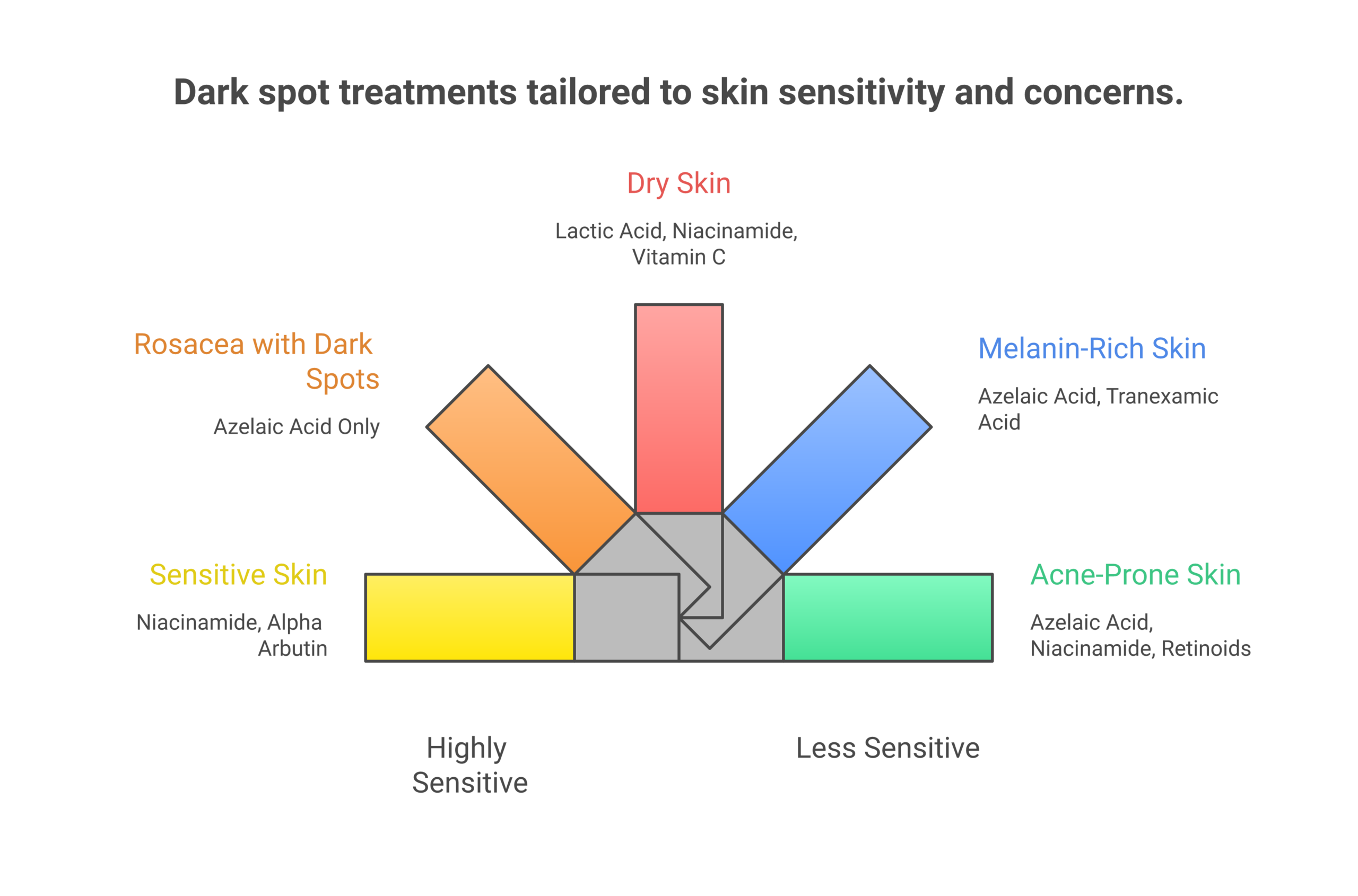
Sensitive skin: Start with niacinamide (5%) and alpha arbutin (1% to 2%). Both are well-tolerated and don’t cause photosensitivity. Avoid glycolic acid and retinoids initially.
Melanin-rich skin (Fitzpatrick types IV to VI): PIH is more common and persistent in darker skin tones. Azelaic acid (15% to 20%) and tranexamic acid (3% to 5%) are first-line recommendations because they carry minimal risk of paradoxical lightening. Use hydroquinone only under dermatologist supervision, and avoid concentrations above 2%.
Acne-prone skin: Azelaic acid treats both acne and PIH simultaneously. Pair it with niacinamide for oil control and barrier support. Retinoids are also excellent for acne-prone skin with dark spots.
Rosacea with dark spots: Azelaic acid is the safest brightening ingredient for rosacea because it doesn’t trigger flushing. Avoid AHAs and retinoids until the rosacea is well-controlled.
Dry skin: Lactic acid provides exfoliation plus hydration. Pair it with niacinamide and a vitamin C derivative like MAP rather than L-ascorbic acid, which can be drying at low pH.
There’s also growing research on the gut-skin connection, where gut health directly influences skin inflammation and pigmentation. If you’re dealing with persistent dark spots, it’s worth looking at the role of gut health in skin appearance.
Building an Effective Dark Spot Routine
Morning:
- Gentle cleanser (pH 5.0 to 5.5)
- Vitamin C serum (10% to 20% L-ascorbic acid) or niacinamide serum (5% to 10%)
- Moisturizer with alpha arbutin or licorice root
- Broad-spectrum SPF 50 sunscreen (mineral preferred)
Evening:
- Double cleanse (oil cleanser + water-based cleanser)
- Tranexamic acid toner or serum (2% to 5%)
- Retinoid (start 2 to 3 nights per week, increase to nightly)
- Moisturizer with niacinamide
On nights you skip the retinoid, you can use a glycolic or lactic acid exfoliant instead. Don’t use AHAs and retinoids on the same night unless your dermatologist specifically recommends it and your skin has built tolerance.
Results take time. Most clinical studies show measurable improvement at 8 to 12 weeks with consistent daily use. If you don’t see any change after 12 weeks at appropriate concentrations, consult a board-certified dermatologist. You may need a prescription-strength option or an in-office treatment like a chemical peel, microneedling, or laser therapy.
For product comparisons with user-verified results, see our top-rated dark spot remover reviews.
Browse all of our dark spot removers reviews and guides for more research-backed recommendations.
If you are also looking for anti-aging solutions, see our guide to the best anti-wrinkle creams and learn about retinol for wrinkles.
Beyond ingredients, antioxidant intake matters too. Vitamin C, vitamin E, and carotenoids show up in research on both skin pigmentation and macular health. The antioxidant systems overlap significantly. See our guide on antioxidants that support eye health for the overlapping nutrient list.
Frequently Asked Questions
What is the most effective ingredient for dark spots?
Vitamin C (specifically L-ascorbic acid at 10% to 20%) has the most clinical evidence for fading dark spots. For stubborn melasma, dermatologists often recommend tranexamic acid (2% to 5%) or prescription tretinoin as first-line treatments. The best results come from combining two ingredients that target different steps in the melanin pathway.
How long does it take for dark spot ingredients to work?
Most clinical studies report visible improvement in 8 to 12 weeks of consistent daily use. Full skin cell turnover takes 28 to 45 days, so any product claiming results in less than 4 weeks is either exaggerating or using a temporary optical brightener rather than actually reducing melanin production.
Can I use multiple brightening ingredients at the same time?
Yes, and dermatologists often recommend it. Niacinamide, vitamin C, and tranexamic acid can all be used in the same routine. The key rule is to separate AHAs and retinoids into different times of day (or alternate nights) to avoid over-exfoliation and irritation.
Is hydroquinone safe to use?
At 2% OTC concentration and for periods of 3 months or less, hydroquinone is considered safe by the FDA. The concerns arise with extended continuous use (beyond 6 months) and with unregulated imported products that may contain higher concentrations or mercury. A dermatologist can supervise a safe hydroquinone treatment cycle.
What ingredients should I avoid if I have sensitive skin?
Start by avoiding glycolic acid (high irritation potential), L-ascorbic acid at concentrations above 10%, and retinoids until your skin has adapted to gentler actives. Niacinamide, alpha arbutin, and azelaic acid at 10% are the best starting points for sensitive skin because they rarely cause irritation or photosensitivity.
Do dark spot removers work on all skin tones?
Yes, but ingredient selection matters more for darker skin tones. Melanin-rich skin (Fitzpatrick types IV to VI) is more prone to post-inflammatory hyperpigmentation and more sensitive to paradoxical darkening from aggressive treatments. Tranexamic acid, azelaic acid, and niacinamide are the safest first-line choices for darker skin tones. Hydroquinone above 2% should only be used under dermatologist supervision.
Why do I need sunscreen while treating dark spots?
UV radiation is the primary trigger for melanin overproduction. Without daily SPF 50, your brightening products are fighting a losing battle because the sun keeps re-activating the same pigment pathways you’re trying to suppress. A 2013 JAAD study showed that adding sunscreen to a brightening routine more than doubled the improvement compared to the brightening product alone.
Are natural ingredients as effective as synthetic ones for dark spots?
Some natural ingredients have strong clinical backing. Alpha arbutin, licorice root extract (glabridin), and kojic acid all have published studies confirming their tyrosinase-inhibiting effects. They tend to be gentler but may work more slowly than prescription options like tretinoin or hydroquinone. “Natural” doesn’t automatically mean safer or less effective, and “synthetic” doesn’t mean harsh. What matters is the clinical evidence for that specific compound.
Further Reading from Consumer Health Guide
If you want to go deeper, our guide to how to fade dark spots covers what most product pages skip. For readers comparing options, see our breakdown of fading sun-damage spots.