
Reviewed by Jonathan Bailor, NYT bestselling author, wellness researcher, and founder of SANE Solution. Updated March 2026. Part of the Consumer Health Guide research library.
A superior postbiotic supplement should contain clinically studied forms of butyrate (preferably tributyrin), carry third-party testing certifications, and deliver at least 300 mg of active postbiotic compounds per serving. That single sentence covers what 90% of shoppers need to know. But if you want to understand why those details matter, and how to spot the products that cut corners, keep reading.
I have spent years reviewing gut health research and working with formulators. One pattern stands out: the postbiotic category is growing faster than most consumers can keep up with. A 2023 Grand View Research report valued the global postbiotic market at $72.7 million, with projected annual growth above 8% through 2030. That growth attracts serious scientists and opportunistic marketers alike. This guide will help you tell the difference. (see gut microbiome research) (see probiotic safety)
What Exactly Are Postbiotics?
Postbiotics are bioactive compounds produced when beneficial gut bacteria ferment dietary fiber and other substrates. The International Scientific Association for Probiotics and Prebiotics (ISAPP) published a consensus definition in 2021 in Nature Reviews Gastroenterology & Hepatology, defining postbiotics as “a preparation of inanimate microorganisms and/or their components that confers a health benefit on the host.” That definition is important because it separates postbiotics from probiotics (live organisms) and prebiotics (the fiber that feeds them).
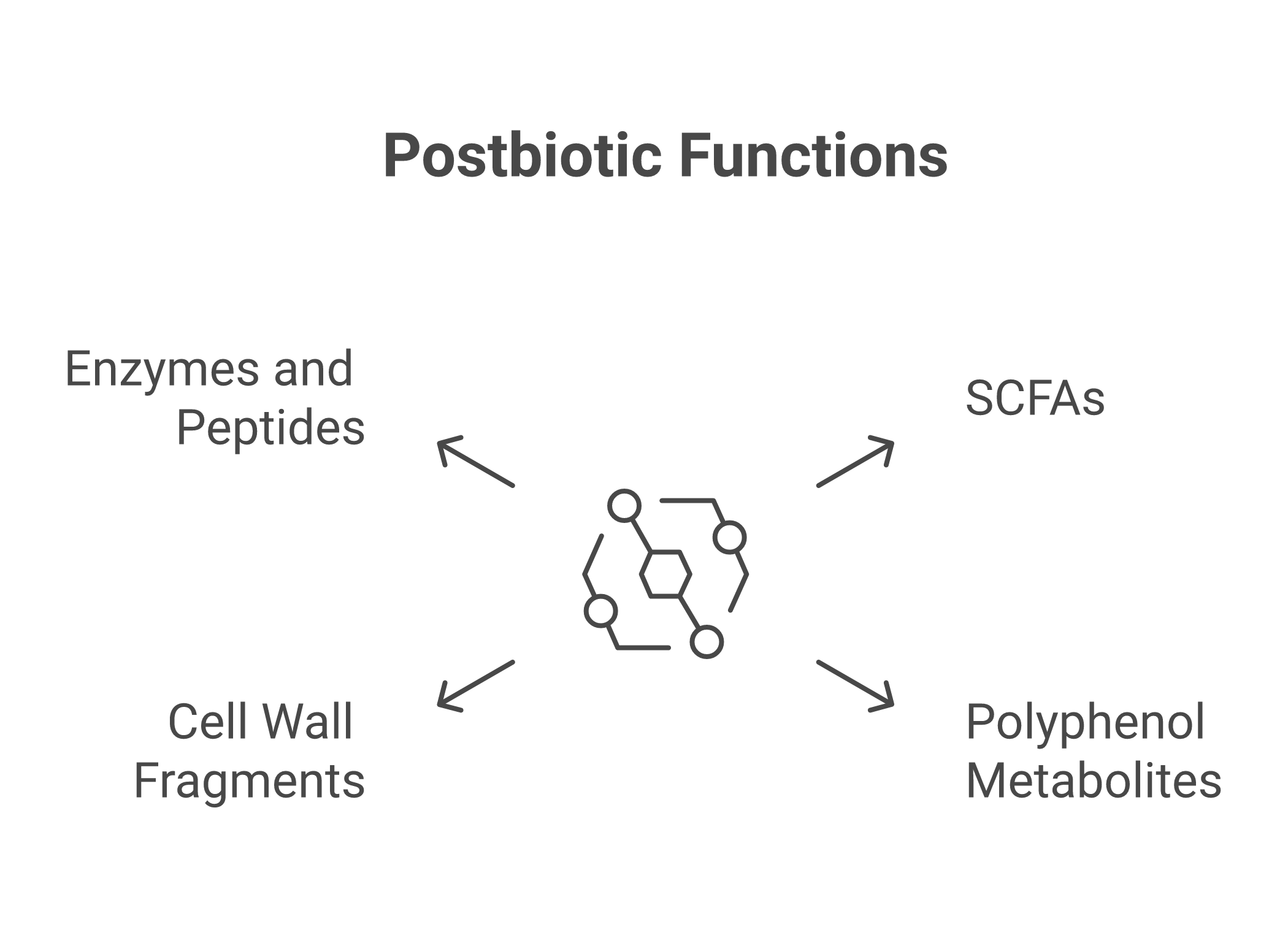
The most studied postbiotic compounds fall into a few categories:
- Short-chain fatty acids (SCFAs): butyrate, acetate, and propionate
- Enzymes and peptides: produced during bacterial metabolism
- Cell wall fragments: from heat-treated bacteria like pasteurized Akkermansia muciniphila
- Polyphenol metabolites: such as urolithin A, created when gut bacteria break down ellagic acid from pomegranates and berries
Each of these works through different mechanisms. A well-formulated supplement should specify which postbiotic compounds it contains, not hide behind vague terms like “postbiotic blend” or “proprietary complex.” If you want background on how postbiotics compare to probiotics, I covered that in depth previously.
Butyrate and Tributyrin: the Central Ingredients
Butyrate is the most researched postbiotic compound, and for good reason. It serves as the primary energy source for colonocytes (the cells lining your colon), supports the intestinal barrier, and modulates immune responses. A 2022 review in Frontiers in Nutrition confirmed that butyrate plays a direct role in managing intestinal inflammation and supporting the gut-brain axis.
Gut health also influences your skin through what researchers call the gut-skin axis. Learn which topical ingredients complement an inside-out approach in our dark spot remover ingredients.
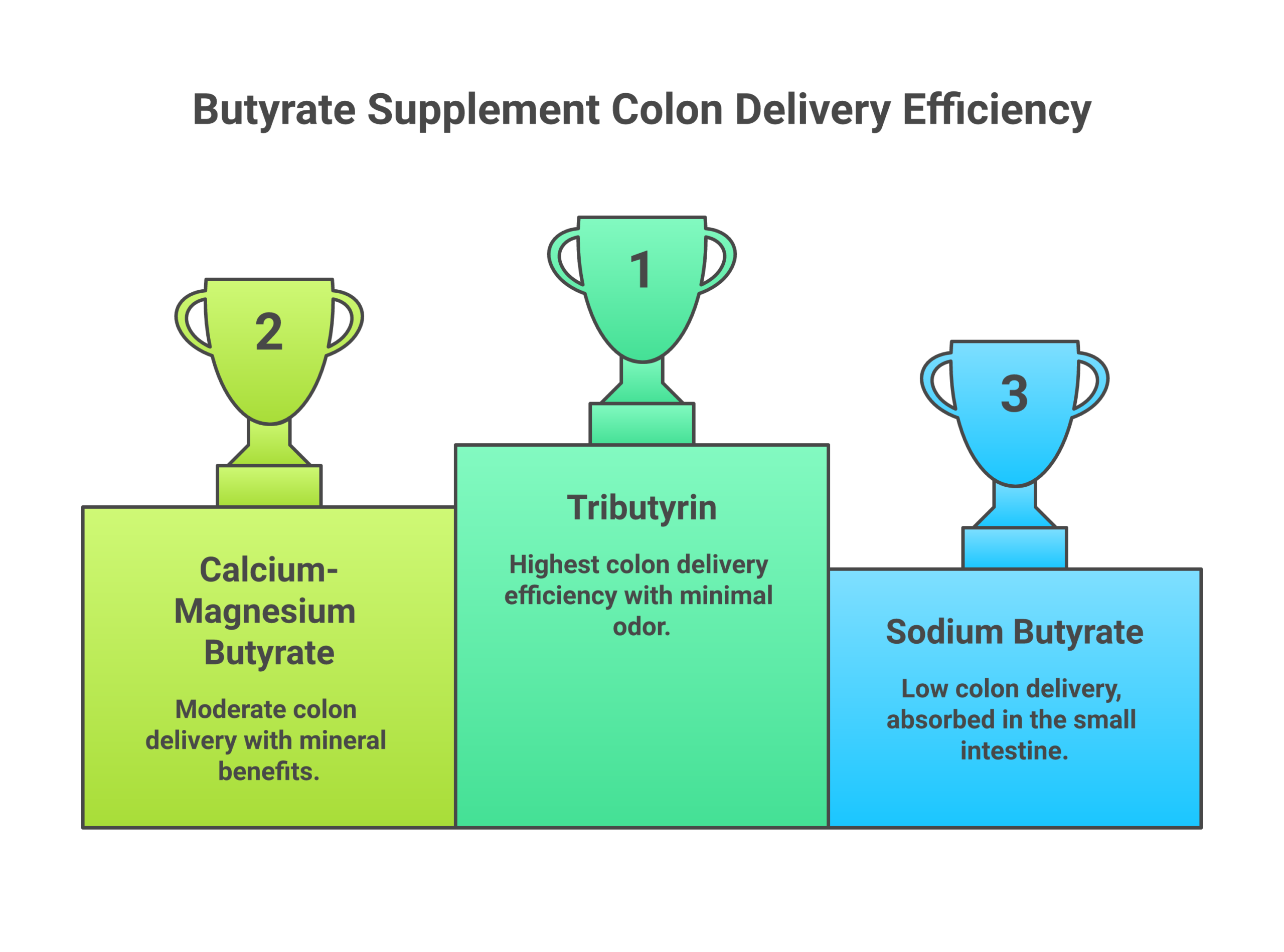
But here is the catch: plain butyrate supplements, whether sodium butyrate or calcium-magnesium butyrate, are absorbed too quickly in the upper digestive tract. Very little reaches the colon where it does the most good. That is why tributyrin has become the preferred form among researchers.
Why Tributyrin Outperforms Plain Butyrate
Tributyrin is a triglyceride form of butyrate. It resists stomach acid breakdown and releases butyrate gradually as pancreatic lipases break it down in the intestines. A November 2025 study in Frontiers in Nutrition tested CoreBiome tributyrin using the Triple-L-SHIME model (a validated simulation of the human gut). The researchers found that 51% to 59% of tributyrin survived the upper GI tract and reached the colon intact. That same study showed tributyrin increased populations of Bifidobacterium longum, Bacteroides fragilis, and Akkermansia muciniphila in colon reactors over three weeks. It also improved intestinal barrier resistance and raised anti-inflammatory IL-10 levels while reducing pro-inflammatory TNF-alpha.
When you see “tributyrin” or the branded ingredient “CoreBiome” on a supplement label, that is a strong positive signal. I wrote a full breakdown of why CoreBiome tributyrin stands out if you want the deeper science.
Sodium Butyrate vs. Calcium-Magnesium Butyrate
If tributyrin is not available, these are the two common alternatives:
- Sodium butyrate: absorbs quickly, may cause a noticeable odor, and adds sodium to your diet. Often used in research settings at doses of 300 to 600 mg daily.
- Calcium-magnesium butyrate: gentler on the stomach, provides small amounts of calcium and magnesium, and is the form used in BodyBio’s product line. Typical dose: 600 to 1,200 mg daily.
Neither form delivers butyrate to the colon as effectively as tributyrin. If your primary goal is colon health or you are addressing leaky gut, tributyrin is the better choice.
Beyond Butyrate: Other Postbiotic Ingredients Worth Knowing
Urolithin A
Urolithin A is a metabolite produced when gut bacteria convert ellagic acid (found in pomegranates, walnuts, and berries) into a bioactive compound. Not everyone’s gut bacteria can make this conversion efficiently, which is why supplementation has gained attention.
A 2022 randomized trial published in Cell Reports Medicine tested Mitopure (a branded urolithin A supplement) in 88 middle-aged adults over four months. The higher-dose group (1,000 mg daily) showed a 12% improvement in muscle strength along with measurable gains in aerobic endurance (peak VO2) and six-minute walk test performance. Plasma C-reactive protein levels dropped, indicating reduced systemic inflammation.
If a postbiotic supplement includes urolithin A at 500 mg or above, that aligns with the doses used in clinical research. Below that, you are likely getting a “label decoration” amount.
Pasteurized Akkermansia muciniphila
Akkermansia muciniphila is a bacterium that lives in the mucus layer of the intestines. What makes it unusual as a postbiotic ingredient is that the pasteurized (heat-killed) form appears to work better than the live version for metabolic health.
A 2019 proof-of-concept study published in Nature Medicine by Depommier et al. tested pasteurized A. muciniphila in 32 overweight or obese adults over three months. The pasteurized form improved insulin sensitivity by 28.62%, reduced insulinemia by 34.08%, and lowered total cholesterol by 8.68% compared to placebo. Body weight trended downward by 2.27 kg, though that result did not reach full statistical significance.
These results are promising for anyone with metabolic concerns. Look for supplements specifying “pasteurized” or “heat-treated” Akkermansia, and check that they provide at least 10 billion cells per serving, which matches the dose used in the study.
Other Short-Chain Fatty Acids
Acetate and propionate are the other major SCFAs your gut bacteria produce. Acetate supports energy metabolism and appetite regulation. Propionate has been linked to cholesterol reduction and appetite control in a 2019 study in Gut that found propionate supplementation reduced weight gain over 24 weeks. While these SCFAs are less commonly sold as standalone supplements, some postbiotic formulas include them alongside butyrate for broader coverage.
How to Read a Postbiotic Supplement Label
Here is what I check every time I evaluate a new postbiotic product:
Ingredient Transparency
- Each postbiotic compound should be listed individually with its dose per serving
- Avoid “proprietary blends” that lump multiple ingredients together without individual amounts
- Branded ingredients (CoreBiome, Mitopure, EpiCor) signal that the manufacturer is using clinically studied material, not generic powder
Dose Per Serving vs. Dose Per Capsule
- Some labels list amounts “per serving” where a serving is 2 or 3 capsules. If you miss this, you could be taking one-third of the intended dose
- Compare the listed dose to the clinical research doses mentioned above
Other Ingredients Section
- Fewer fillers is better. Cellulose capsules, rice flour, and silica are standard and harmless
- Watch for titanium dioxide (a whitening agent with no health benefit), artificial colors, and unnecessary sweeteners
- If you see magnesium stearate, that is a common flow agent used in manufacturing. It is generally safe, but some purist brands avoid it
Allergen and Dietary Statements
- Check for gluten-free, dairy-free, soy-free, and non-GMO declarations
- Vegan capsules (HPMC or cellulose) vs. gelatin matters for plant-based diets
Dosage Guidance: What the Research Supports
There is no universal “right dose” for postbiotics because different compounds require different amounts. Here is a summary of clinically supported ranges:
| Postbiotic Compound | Research-Supported Daily Dose | Source |
|---|---|---|
| Tributyrin (CoreBiome) | 300 to 1,000 mg | Frontiers in Nutrition, 2025 |
| Sodium butyrate | 300 to 600 mg | Multiple clinical trials |
| Calcium-magnesium butyrate | 600 to 1,200 mg | BodyBio clinical use |
| Urolithin A (Mitopure) | 500 to 1,000 mg | Cell Reports Medicine, 2022 |
| Pasteurized Akkermansia | 10 billion cells | Nature Medicine, 2019 |
Start at the lower end if you are new to postbiotic supplements. Some people experience mild bloating or changes in bowel habits during the first week, especially with butyrate. These effects typically resolve within 7 to 10 days.
Red Flags That Signal a Low-Quality Product
After reviewing dozens of postbiotic supplements, these are the warning signs I have learned to watch for:
- Vague ingredient names: “Postbiotic complex” or “gut health blend” without specifying what postbiotics are included
- No third-party testing: Reputable brands test through NSF International, USP, or ConsumerLab and display those certifications
- Unrealistic health claims: Any product claiming to “cure” IBS, Crohn’s disease, or other conditions is violating FDA labeling rules and should not be trusted
- Extremely low prices: Quality tributyrin, pasteurized Akkermansia, and urolithin A cost money to produce. A 30-day postbiotic supplement for $9.99 almost certainly cuts corners on ingredient quality or dose
- No GMP certification: Products should be manufactured in FDA-registered, GMP-certified facilities. If the brand does not mention this, ask them directly
- Missing expiration dates or lot numbers: These are basic quality control markers. Their absence suggests sloppy manufacturing practices
- Proprietary blend hiding doses: If a formula lists five postbiotic ingredients but only gives you a combined weight, you cannot verify whether any single ingredient reaches an effective dose
Postbiotics vs. Probiotics vs. Prebiotics: Which Do You Actually Need?
This is the question I hear most often. Here is how I explain it:
| Category | What It Is | Example | Best For |
|---|---|---|---|
| Prebiotic | Fiber that feeds gut bacteria | Inulin, resistant starch, FOS | Supporting existing healthy bacteria |
| Probiotic | Live beneficial bacteria | Lactobacillus, Bifidobacterium strains | Replenishing after antibiotics, travel |
| Postbiotic | Compounds produced by bacteria | Butyrate, urolithin A, pasteurized Akkermansia | Direct gut barrier support, metabolic health |
The key advantage of postbiotics is stability. Probiotics are live organisms that can die during shipping, storage, or stomach transit. Postbiotics, by definition, are already in their final bioactive form. They do not need to survive your stomach acid or compete with your existing microbiome to work.
For most people, I recommend starting with postbiotics (especially a tributyrin-based formula) and adding a prebiotic fiber source through whole foods like onions, garlic, and cooked-then-cooled potatoes. Probiotics become more useful in specific situations: after antibiotic courses, during travel to regions with unfamiliar microbes, or when a stool test shows low diversity.
Condition-Specific Considerations
Leaky Gut and Intestinal Permeability
Tributyrin is your first choice here. The 2025 CoreBiome study showed measurable improvements in intestinal barrier resistance in vitro. Butyrate directly feeds the cells that maintain tight junctions between intestinal epithelial cells. Pair it with L-glutamine (typically 2 to 5 grams daily) for additional barrier support.
Metabolic Health and Weight Management
Pasteurized Akkermansia muciniphila has the strongest clinical data here. The 28.62% improvement in insulin sensitivity from the 2019 Depommier study is a meaningful effect size. Some newer combination products pair Akkermansia with butyrate and pomegranate extract, which could provide urolithin A precursors as well.
Inflammatory Bowel Conditions
Butyrate supplementation has shown promise for ulcerative colitis in particular. A 2005 study in Alimentary Pharmacology & Therapeutics found that butyrate enemas improved symptoms in mild-to-moderate UC patients. Oral tributyrin may offer a similar benefit with better compliance, though head-to-head trials are still needed. Always work with a gastroenterologist if you have a diagnosed IBD condition.
Muscle Health and Aging
Urolithin A targets mitochondrial function rather than gut barrier repair. The 12% strength improvement seen in the 2022 Cell Reports Medicine trial makes it relevant for adults over 40 who want to support muscle health alongside gut health. A 2025 randomized trial in Nature Aging also showed urolithin A expanded naive-like CD8+ T cells, suggesting immune aging benefits as well.
Third-Party Testing and Quality Certifications to Look For
I rank supplements higher when they carry one or more of these independent certifications:
- NSF International: tests for contaminants and verifies label accuracy. NSF Sport certification adds banned-substance screening for athletes
- USP (United States Pharmacopeia): strict identity, strength, and purity testing
- ConsumerLab: independent testing and publishes results publicly, including failures
- Informed Sport or Informed Choice: tests for substances banned in competitive athletics
- GMP certification: confirms the manufacturing facility follows Good Manufacturing Practices. Required by FDA, but not all brands are transparent about it
A product without any third-party testing is a product asking you to trust its marketing department. That is not enough, especially for a YMYL (your money or your life) health decision.
Browse all of our gut health supplements reviews and guides for more research-backed recommendations.
Frequently Asked Questions About Postbiotic Supplements
What is the best form of butyrate to take as a supplement?
Tributyrin is the best-studied form for delivering butyrate to the colon. A 2025 Frontiers in Nutrition study confirmed that 51% to 59% of tributyrin survives the upper GI tract and reaches the colon, compared to plain sodium butyrate, which is largely absorbed in the small intestine. CoreBiome is the most widely used branded tributyrin ingredient with published clinical data.
Can I take postbiotics and probiotics at the same time?
Yes. Postbiotics and probiotics work through different mechanisms, so they do not interfere with each other. Postbiotics provide direct bioactive compounds to your gut cells, while probiotics add live bacteria that can produce additional postbiotics over time. Many gastroenterologists recommend combining them, especially after antibiotic treatment.
How long does it take for a postbiotic supplement to work?
Most people notice digestive changes (less bloating, more regular bowel movements) within 1 to 2 weeks of starting a butyrate-based postbiotic. Metabolic improvements from pasteurized Akkermansia took about 3 months to reach measurable levels in the 2019 Depommier clinical trial. I tell people to commit to at least 8 weeks before judging whether a product works for them.
Are postbiotic supplements safe during pregnancy?
There is limited clinical trial data specifically on postbiotic supplements during pregnancy. Butyrate is naturally produced by your own gut bacteria, so it is not a foreign substance. Still, I recommend consulting your OB-GYN or midwife before starting any new supplement during pregnancy or breastfeeding. This applies to all postbiotic products, including tributyrin and Akkermansia formulations.
Do postbiotic supplements need to be refrigerated?
Most postbiotic supplements are shelf-stable, which is one of their advantages over probiotics. Butyrate, tributyrin, and pasteurized Akkermansia do not contain live organisms, so they do not require cold storage. Check the label for specific storage instructions, but room temperature in a dry location is typically fine.
What is the difference between postbiotics and fermented foods?
Fermented foods like yogurt, kimchi, and sauerkraut naturally contain postbiotic compounds alongside live bacteria and prebiotics. The difference is concentration and specificity. A postbiotic supplement delivers a measured dose of a specific compound (like 500 mg of tributyrin), while a serving of kimchi provides a variable and generally smaller amount of mixed SCFAs. Both have value, but supplements offer precision that food sources cannot match.
Can postbiotics help with IBS symptoms?
Butyrate supplementation has shown promise for IBS in several small trials. A 2021 review in the European Journal of Clinical Investigation noted that butyrate can reduce visceral hypersensitivity, which is a major driver of IBS pain. Tributyrin may be especially useful because it reaches the colon where IBS symptoms originate. However, IBS has multiple subtypes (IBS-D, IBS-C, IBS-M), and what works for one subtype may not work for another. Work with a healthcare provider to match the supplement to your specific situation.
How do I know if my postbiotic supplement is working?
Track three things over your first 8 weeks: bowel movement consistency (use the Bristol Stool Chart for objectivity), bloating frequency, and energy levels. Some people also track skin clarity and sleep quality, which can improve as gut inflammation decreases. If you want lab confirmation, a calprotectin stool test can measure intestinal inflammation before and after supplementation. For a more complete picture of what to eat alongside supplementation, see our guide to gut-supporting foods.
Choosing the Right Product: a Practical Checklist
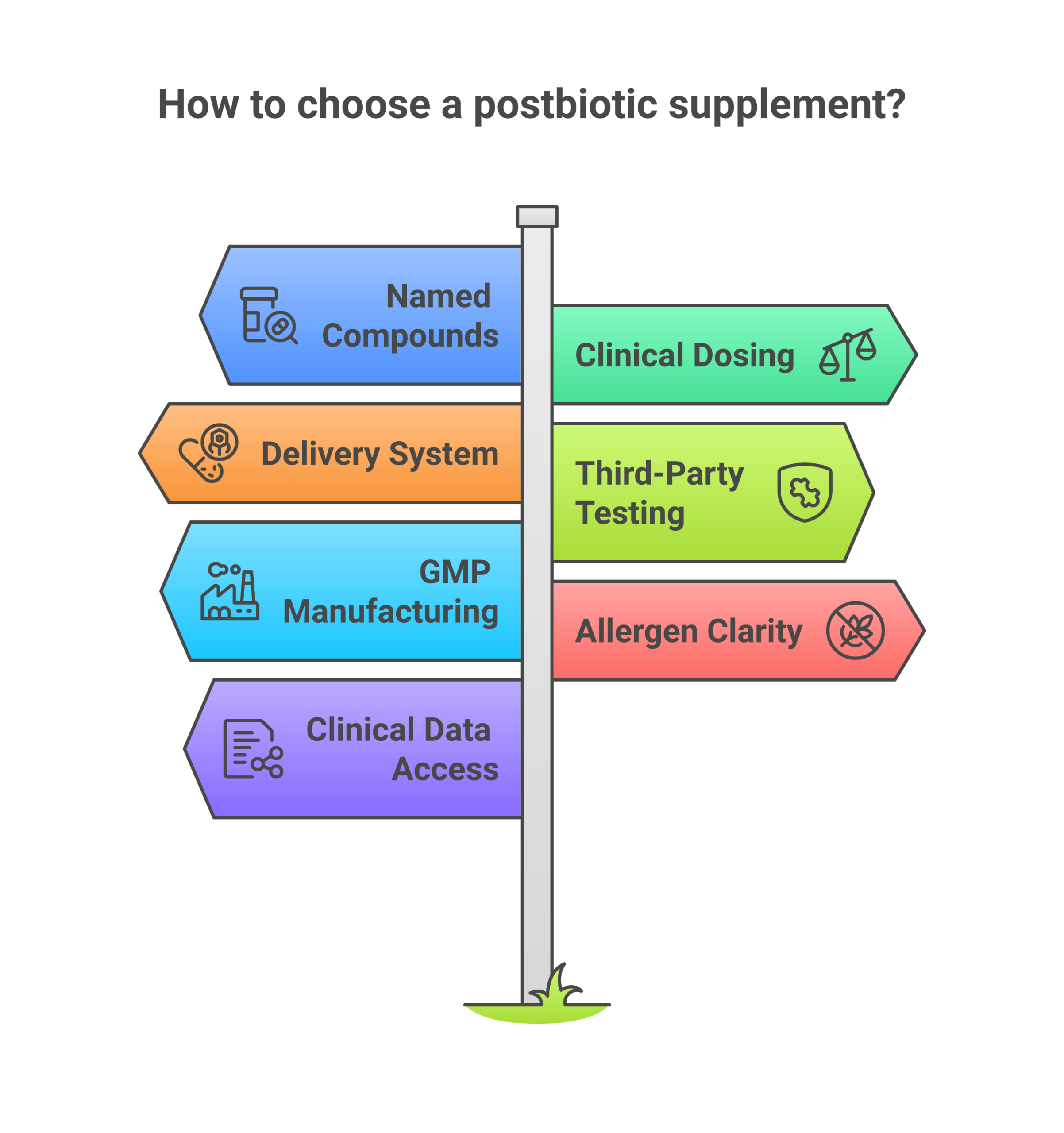
Before you buy any postbiotic supplement, run through this checklist:
- Does it name specific postbiotic compounds (not just “postbiotic blend”)?
- Is the dose per serving in the clinically studied range for that compound?
- Does it use a delivery system (tributyrin, delayed-release capsules, or enteric coating) designed for colon delivery?
- Does it carry at least one third-party testing certification (NSF, USP, or ConsumerLab)?
- Is it manufactured in a GMP-certified facility?
- Are allergen and dietary restriction statements clear?
- Does the company provide access to clinical data or certificates of analysis?
If a product checks all seven boxes, it belongs in the top tier. If it misses three or more, keep looking. You can also browse our verified postbiotic supplement reviews for products that meet these standards, or check our broader gut health product reviews for related options.
Gut health is not something you fix once and forget. It requires consistent support, and the right postbiotic supplement can be a strong part of that routine. If you are exploring other supplement categories, our guide on what to look for in a nerve supplement follows a similar evaluation framework.