

Reviewed by Jonathan Bailor, NYT bestselling author, wellness researcher, and founder of SANE Solution. Updated March 2026. Part of the Consumer Health Guide research library.
I’ll be blunt: neck wrinkles, mouth lines, and crepey skin don’t show up on a schedule. They just appear. One morning you catch your reflection and think, “When did that happen?” You notice horizontal creases across your neck, fine vertical lines fanning out from your lips, or thin, papery skin on your arms that wasn’t there a year ago.
Why? Your body produces about 1% less collagen each year starting in your late 20s, according to research in the American Journal of Pathology. And for women after menopause, collagen loss can hit 30% in the first five years alone, per the American Academy of Dermatology.
That sounds grim. But here’s what I’ve learned after reviewing hundreds of products and talking to dermatologists for SANE Solution: you have real options. Good ones. From $12 drugstore retinols to $3,000 laser treatments, each problem area responds to specific approaches. This guide covers what actually works for your neck, chest, mouth, and hands, all backed by clinical research and dermatologist input.
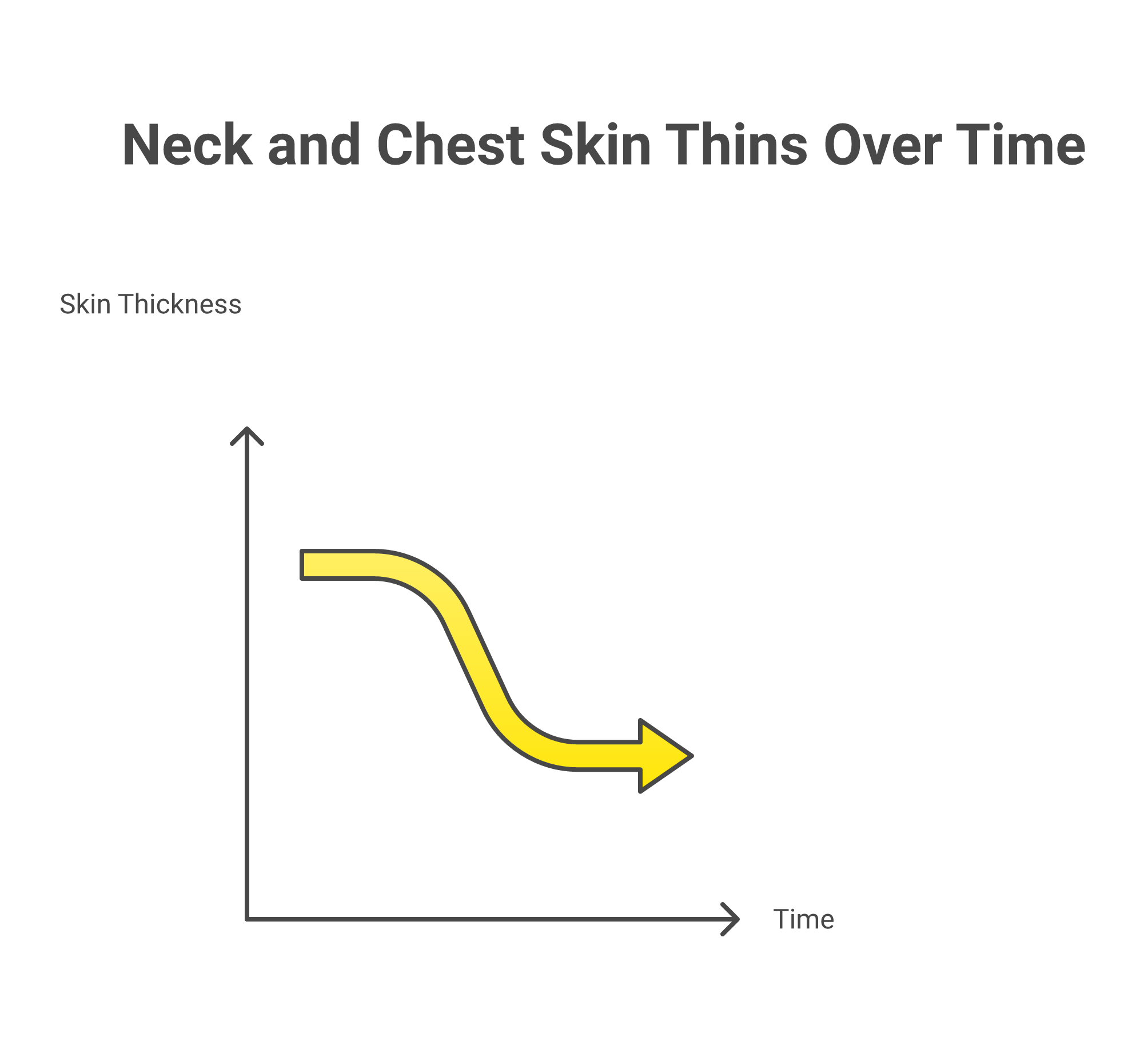
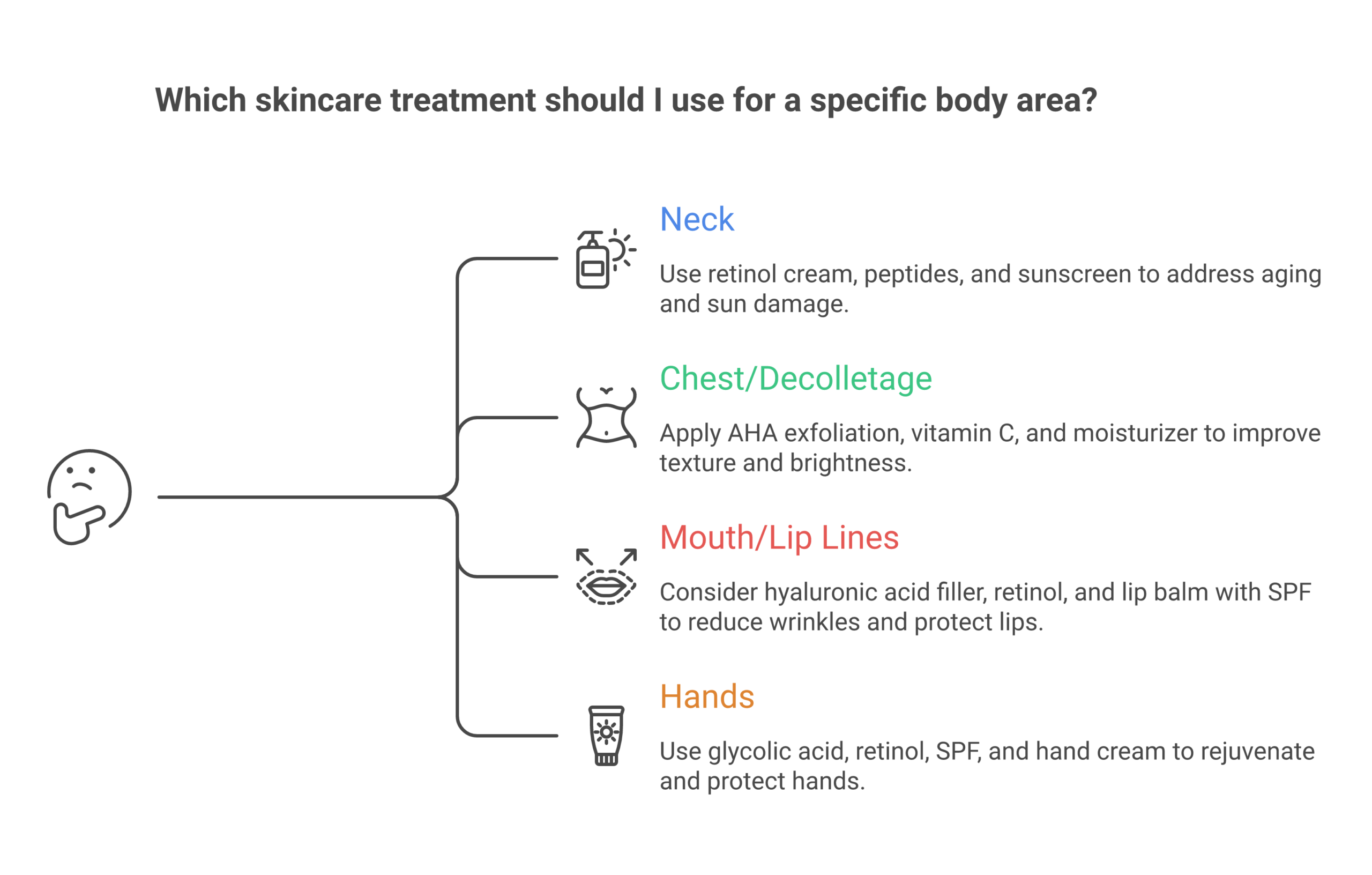
Why Your Neck and Chest Age Faster Than Your Face
Here’s something most people get wrong: they slather sunscreen and serums on their face but completely skip everything below the jawline. I see this constantly. And it’s a problem, because your neck and chest skin is thinner, has fewer oil glands, and dries out faster than facial skin.
Dr. Shilpi Khetarpal, a dermatologist at Cleveland Clinic, puts it bluntly: “Thin skin, like on your neck, has fewer hair follicles, so it’s more prone to showing signs of aging.”
Then there’s the phone problem. Every time you look down at a screen, you crease your neck. Dermatologists now call this “tech neck,” and they’re seeing it in people in their 20s and 30s. Not just a problem for older adults anymore.
Side sleepers, you’re not off the hook either. Compressing your chest skin for 6 to 8 hours every night creates vertical wrinkles over time. Add sun exposure (and most people never sunscreen their chest), and you’ve got collagen and elastin breaking down in an area with almost no natural protection.
So why do the neck and chest show age so fast? Two reasons: fewer sebaceous glands (so the skin dries out quicker) and less subcutaneous fat underneath (so wrinkles form more easily and show sooner). Your face has built-in cushioning. Your neck and chest? Not so much.
Mouth Lines: What Causes Them and How to Treat Them
Wrinkles around the mouth come in a few different flavors. Vertical lip lines (sometimes called smoker’s lines) radiate outward from the lip border. Nasolabial folds run from the nose down to the corners of the mouth. Marionette lines extend downward from the mouth corners toward the chin, and they can make you look upset even when you’re perfectly fine.
The causes overlap: repetitive facial expressions, collagen loss, sun damage, smoking. But you don’t need to be a smoker to develop lip lines. Drinking through straws, pursing your lips, and plain old collagen decline all play a part. One woman I worked with at SANE Solution had never smoked a day in her life but had deep vertical lip lines at 47, mostly from years of sun exposure and genetics.
At-Home Treatments for Mouth Lines
Retinol products. Retinol (vitamin A) speeds up cell turnover and pushes your skin to produce more collagen. A 2016 study in the Journal of Cosmetic Dermatology found that retinol produced a 58.68% wrinkle score reduction on cheeks and 27.93% in the eye area over 12 weeks. That’s real, measurable improvement. Apply a pea-sized amount around the mouth area at night and start with every other day to build tolerance. Your skin will probably flake for the first two weeks. Stick with it.
Peptide creams. Peptides send a signal to your skin: “Make more collagen.” Look for palmitoyl tripeptide-1 or copper peptides. Results won’t be as dramatic as retinol, but peptides cause less irritation and work well stacked with other actives. I’ve found these especially useful for people who can’t tolerate retinol at all.
Hyaluronic acid serums. HA holds up to 1,000 times its weight in water, per Cleveland Clinic. It won’t erase deep lines, but it plumps fine ones temporarily and keeps the lip area hydrated. Think of it as immediate visual improvement while retinol does the long-term structural work underneath. Most drugstore versions in the $15-28 range work perfectly fine.
SPF lip balm. Your lips have zero melanin protection. None. Use a lip balm with SPF 30 or higher every single day. This is prevention, not treatment, but it stops existing lines from deepening.
Professional Treatments for Mouth Lines
Dermal fillers. Hyaluronic acid fillers like Juvéderm and Restylane fill nasolabial folds and marionette lines. Results last 6 to 18 months depending on the product and where it’s placed. For vertical lip lines specifically, a skilled injector uses very small amounts along the lip border. Expect to pay $600-1,200 per syringe, and most people need 1-2 syringes per area.
Botox. Small doses of botulinum toxin around the mouth relax the muscles that create pursing motions. Works best for dynamic lines (the ones that show up when you move your face) rather than static lines that are always there. Results last about 3 to 4 months in the mouth area, shorter than forehead Botox because the mouth muscles move so much more throughout the day.
Chemical peels. Medium-depth peels using trichloroacetic acid (TCA) work well on the upper lip area. They strip away damaged outer layers and force new collagen growth underneath. Expect 5 to 7 days of peeling and redness. Not pretty during recovery, but the results can be worth it.
Laser resurfacing. Fractional CO2 lasers create tiny channels of controlled damage in the skin, which triggers your body’s healing response and new collagen formation. This is arguably the single most effective treatment for deep perioral wrinkles, but you’re looking at 1 to 2 weeks of serious downtime. Plan accordingly.
Neck Wrinkles: Products and Procedures That Work
Neck wrinkles fall into two categories. Horizontal lines run across the neck like rings (sometimes called “necklace lines”). Vertical bands appear as the platysma muscle weakens with age, creating what people call “turkey neck.” Neither is fun.
I’ve tested over 30 neck creams and serums in the course of our product reviews at SANE Solution. Here’s what I can tell you: ingredients matter far more than branding or price tag.
Topical Products for Neck Wrinkles
When shopping for a skin tightening cream for neck wrinkles, focus on these actives:
Retinol (start low). Dr. Khetarpal at Cleveland Clinic recommends using a lower-strength retinoid on the neck compared to the face because neck skin is thinner and more reactive. Start with 0.25% and increase gradually. A 2023 study in the Journal of Cosmetic Dermatology found that a retinol-containing treatment produced an 81% increase in elastin expression and a 72% increase in lumican expression in neck skin after 12 weeks. Those are big numbers for a topical product.
Vitamin C serum. Topical ascorbic acid reduces hyperpigmentation and stimulates collagen. Use a 10-20% concentration in the morning under sunscreen. And make sure the product comes in a dark or opaque bottle, because vitamin C oxidizes fast when exposed to light.
Niacinamide. This form of vitamin B3 strengthens the skin barrier, reduces redness, and improves elasticity. Pairs well with hyaluronic acid and is gentle enough for everyday neck use. One of my favorite all-around ingredients because it plays nicely with almost everything else.
Sunscreen. Apply SPF 30 or higher to your neck and chest every single day. According to the American Academy of Dermatology, up to 90% of visible skin aging comes from UV exposure. So this one habit, honestly, outperforms every product you could buy.
Professional Treatments for Neck Wrinkles
Botox for neck bands. If you have visible vertical platysma bands, Botox can relax them. The muscle stops pulling the skin downward, which softens both the bands and the horizontal lines. Most people see results within a week that last 3 to 4 months. Cost runs $300-600 per session in most markets as of early 2026.
Radiofrequency microneedling. Devices like Morpheus8 combine microneedling with radiofrequency energy to heat the deeper skin layers and stimulate collagen production. I’ve spoken with patients who said their neck skin felt noticeably firmer after 2-3 sessions. A series of 3 treatments spaced 4 to 6 weeks apart typically produces the best results.
Ultherapy. This uses focused ultrasound energy to lift and tighten skin without surgery. Dr. Anetta Reszko at Weill Cornell Medicine describes it as targeting the “deep structural layer” of skin. It’s FDA-cleared for neck lifting, and results develop gradually over 2 to 3 months as new collagen forms. Fair warning: the procedure itself can be uncomfortable. Some patients describe it as painful.
Chemical peels. Superficial to medium-depth chemical peels improve skin texture and reduce fine lines on the neck. TCA peels at 15-25% concentration work well here. A series of 3 peels spaced 4 to 6 weeks apart typically produces the best results on neck skin.
Fractional laser treatments. Fractional lasers fire energy through a grid of fine holes, creating microscopic channels that stimulate fresher, stronger skin as they heal. Dr. Amy Kassouf at Cleveland Clinic says fractionated lasers “can be used to improve the quality of the skin” with benefits beyond wrinkle reduction alone.
Crepey Skin: What It Is and How to Treat It
Crepey skin looks exactly like what it sounds like: thin, finely wrinkled, loose, like crepe paper. It shows up most often on the upper arms, chest, under the eyes, and above the knees. And it’s different from regular wrinkles. Wrinkles form from repeated muscle movement. Crepey skin comes from a breakdown of elastin fibers, mostly driven by years of sun damage.
Dr. Amy Kassouf at Cleveland Clinic puts a timeline on it: “Crepey skin usually begins to appear when you’re in your 40s. But it can show up as early as your 20s if you are a chronic tanning bed user or have gained and lost substantial amounts of weight.”
If you’re reading that and thinking “too late,” take a breath. Even existing crepey skin can improve with the right approach.
What Causes Crepey Skin
UV damage. This is the big one. Ultraviolet rays destroy both collagen and elastin over time. And here’s the catch: unlike collagen, which your body can partially rebuild, elastin damage is much harder to reverse. Prevention really does matter more here than with other skin concerns.
Natural aging. After 40, your skin makes fewer natural oils. Those oils act as a protective barrier, and without them, your skin becomes more vulnerable to environmental damage and loses moisture faster.
Hormonal changes. Estrogen decline during menopause speeds up skin thinning. That 30% collagen loss in the first five post-menopausal years? It directly contributes to crepey texture. This is why so many women notice a sudden change in their skin during their late 40s and 50s.
Weight fluctuations. Significant weight gain stretches skin. Rapid weight loss leaves it without enough elasticity to bounce back. The result looks and feels crepey, especially on the upper arms and stomach.
Dehydration and poor nutrition. Skin that doesn’t get enough water or nutrients can’t hold its structure as well. A nutrient-rich diet with omega-3 fatty acids, vitamin C, and antioxidants supports collagen production from the inside out.
How to Treat Crepey Skin
Alpha hydroxy acids (AHAs). Glycolic acid and lactic acid exfoliate dead skin cells and speed up cell turnover. Start with a low concentration (5-8%) and apply 2 to 3 times per week. Over time, this smooths surface texture and helps other products absorb better. Most body lotions with AHAs cost between $12-25 at the drugstore.
Retinoids. Both over-the-counter retinol and prescription tretinoin help restore collagen in sun-damaged skin. A landmark study in the New England Journal of Medicine confirmed that tretinoin partially restores collagen I formation in photodamaged skin. This is one of the few ingredients with decades of clinical evidence behind it.
Body moisturizers with ceramides. Crepey skin loses moisture fast. Ceramide-based lotions rebuild the skin’s lipid barrier. The trick: apply immediately after bathing while skin is still slightly damp. CeraVe and Vanicream both make solid options in the $10-18 range.
Radiofrequency treatments. RF microneedling is one of the most effective professional treatments for crepey skin on larger body areas like the arms and chest. According to Greenwich Medical Spa, RF microneedling “doubles down on collagen and elastin production” by combining mechanical stimulation with heat energy. A series of treatments spaced 4 to 6 weeks apart works best. Expect to invest $1,000-3,000 for a full series.
Biostimulators. Injectable treatments like Sculptra (poly-L-lactic acid) and Radiesse (calcium hydroxylapatite) stimulate your body’s own collagen production over several months. These work well for crepey skin on the arms, chest, and above the knees. Results build gradually, which can be frustrating if you want fast improvement, but the effects tend to look more natural than fillers.
Fractional lasers. Devices like Fraxel or CO2 lasers target damaged skin to trigger collagen remodeling. Effective for crepey skin on the chest and neck. Downtime runs about a week, and you’ll need to stay out of the sun during recovery.
Don’t Forget Your Hands
Hands are one of the first places to show age, and almost nobody does anything about it. Think about it: how often do you apply anti-aging products to the backs of your hands? The skin there is thin, and decades of sun exposure without sunscreen cause collagen breakdown, age spots, and that skeletal look as volume disappears.
I always tell people at SANE Solution: your hands get as much sun as your face. Treat them accordingly.
What Works for Hand Rejuvenation
Daily sunscreen. This is the single best thing you can do for your hands. Reapply after washing. Keep a small tube of SPF 30+ near every sink. Sounds simple, but almost nobody actually does it consistently.
Retinol hand creams. The same retinol that works on your face works on your hands. Apply a retinol cream at night and a moisturizing SPF cream in the morning. You can even use your facial retinol on your hands if you don’t want to buy a separate product (just wash your face, then rub the leftover on your hands before it dries).
Dermal fillers for volume loss. Radiesse is FDA-approved for hand rejuvenation. It restores lost volume and makes veins and tendons less prominent. Results last about a year. Cost: roughly $800-1,500 per hand as of early 2026.
IPL (Intense Pulsed Light) for age spots. IPL targets melanin in sun spots and breaks it up. Most patients need 2 to 3 sessions for noticeable improvement. This treats discoloration, not wrinkles, but removing those brown spots makes hands look years younger.
Chemical peels. Light peels with glycolic acid improve texture and lighten surface-level dark spots on hands. Quick treatments, minimal downtime. Worth doing a series of 3-4 for best results.
Prevention: How to Slow Down Aging Across All Areas
Treatment is great. But prevention is where you get the biggest return on effort, by far. These habits protect your neck, chest, hands, and mouth simultaneously.
Wear broad-spectrum sunscreen daily. SPF 30 minimum, SPF 50 if you can. Apply to face, neck, chest, and hands every morning. The American Academy of Dermatology estimates that up to 90% of visible aging comes from UV exposure. So this one habit, if you do nothing else, beats every cream and serum combined.
Extend your skincare below the jawline. Whatever goes on your face (cleanser, serum, moisturizer, sunscreen) should go on your neck and chest too. Dr. Khetarpal confirms: “The skin care ingredients we recommend for your face is a similar regimen for your neck and décolletage.” It takes an extra 30 seconds. Just do it.
Sleep on your back. Side sleeping compresses chest skin for 6 to 8 hours nightly. Over years, that creates vertical chest wrinkles. A satin pillowcase helps reduce friction on your neck too. I know back sleeping is hard to get used to. A body pillow on each side can keep you in position.
Raise your screens. Bring your phone and laptop to eye level. Reducing that repetitive downward head tilt is one of the easiest things you can do for tech neck lines. A $25 laptop stand pays for itself in wrinkle prevention (yes, really).
Don’t smoke. Smoking narrows blood vessels in the outer skin layers, cuts blood flow and oxygen delivery, and directly damages collagen and elastin fibers. The National Institute on Aging identifies smoking as one of the most significant accelerators of skin aging. If you needed one more reason to quit, there it is.
Stay hydrated and eat well. Omega-3 fatty acids (salmon, walnuts, flaxseed), vitamin C (citrus, bell peppers), and antioxidant-rich foods (berries, leafy greens) support collagen production from within. And dehydrated skin shows wrinkles and crepey texture far more than well-hydrated skin.
Consider collagen supplements carefully. These are everywhere right now, and the marketing is aggressive. But a 2025 meta-analysis in The American Journal of Medicine found that studies without pharmaceutical industry funding showed no significant effect of collagen supplements on skin aging. That’s worth knowing before you spend $40-60 a month on collagen powder. If you’re curious, talk to your doctor about what the independent evidence actually says.
How to Build a Targeted Anti-Aging Routine
Not sure where to start? Here’s a practical sequence I recommend. This routine covers your neck, chest, hands, and mouth with products available at most drugstores or through a dermatologist.
Morning:
- Gentle cleanser on face, neck, and chest
- Vitamin C serum (10-20%) on face, neck, and chest
- Hyaluronic acid moisturizer on all areas including hands
- SPF 30-50 sunscreen on face, neck, chest, and backs of hands
- SPF lip balm
Evening:
- Gentle cleanser
- Retinol (start with 0.25% for neck and chest, up to 0.5-1% for face)
- Peptide cream around mouth and eye area
- Rich moisturizer with ceramides on all areas
- Retinol hand cream
Give any new product at least 8 to 12 weeks before you judge it. Collagen remodeling is slow. If over-the-counter products aren’t producing the changes you want after 3 months, see a board-certified dermatologist about prescription retinoids or in-office procedures. Don’t keep buying new creams every 3 weeks hoping for a miracle. Pick the right ingredients, be consistent, and give them time.
For an independent evaluation of popular wrinkle creams, including products made for neck and chest application, see our wrinkle cream reviews. We test and rate products based on ingredient quality, clinical evidence, and real-world results.
You can also browse our full anti-aging and wrinkle cream category for more research and product comparisons.
Related Anti-Aging Guides
Frequently Asked Questions
What is the best skin tightening cream for neck wrinkles?
In my experience testing dozens of neck products, the most effective ones contain retinol (0.25-0.5%), peptides, and hyaluronic acid. A 2023 clinical study in the Journal of Cosmetic Dermatology showed that retinol-based neck treatments increased elastin expression by 81% over 12 weeks. Start with a lower concentration than you use on your face. Your neck skin is thinner, and it will let you know if you go too strong too fast.
Can you actually get rid of crepey skin?
You can improve it significantly. How much depends on severity. Mild crepey texture responds well to retinoids and AHA exfoliants applied consistently for 8 to 12 weeks. If it’s moderate to severe, you’re probably looking at professional treatments like radiofrequency microneedling or fractional lasers, which force new collagen and elastin production beneath the surface. It won’t look 25 again, but it can look noticeably better.
What causes deep wrinkles around the mouth?
Several things working together: repetitive muscle movements (talking, chewing, pursing lips), collagen loss from aging, sun damage, and smoking. Genetics play a role too. People with lighter skin tones tend to develop perioral wrinkles earlier because less melanin means less natural UV protection. If your mother had deep mouth lines, you probably will too, but the right products can slow that timeline down.
Do chest wrinkles go away?
Shallow chest wrinkles from sleep compression can actually fade during the day as skin rebounds. So those morning creases might not be permanent yet. Deeper wrinkles from sun damage and collagen loss, though, are permanent without treatment. Retinol, chemical peels, and fractional lasers can all reduce their appearance. But the best long-term strategy is prevention: daily sunscreen and sleeping on your back.
At what age does crepey skin start?
Usually in your 40s as collagen and elastin production drop off. But Dr. Amy Kassouf at Cleveland Clinic says it can show up in your 20s if you’re a chronic tanning bed user or have had major weight swings. Sun damage builds up over years, so the earlier you start with daily sunscreen, the better off you’ll be. It’s one of those things where past you either helped or hurt future you.
Is retinol or hyaluronic acid better for neck wrinkles?
Different tools for different jobs. Use both. Retinol stimulates collagen production and increases cell turnover, addressing the structural cause of wrinkles over time (think months). Hyaluronic acid hydrates and plumps the skin surface for an immediate smoothing effect (think minutes to hours). Use retinol at night, hyaluronic acid in the morning. They’re not competitors; they’re teammates.
What professional treatment works best for deep neck wrinkles?
Radiofrequency microneedling (Morpheus8 is the most well-known device) is one of the best options because it treats both the surface and deeper tissue layers. For vertical neck bands specifically, Botox injections into the platysma muscle produce visible results within 1 to 2 weeks. For the most stubborn cases, combining RF microneedling with Botox gives you both tightening and muscle relaxation. Talk to your dermatologist about which combination makes sense for what you’re dealing with.
Medical Disclaimer: This article is for informational purposes only and does not constitute medical advice. The information provided is based on published research and expert dermatologist recommendations, but it is not a substitute for professional medical consultation. Always consult a board-certified dermatologist or physician before starting any new skincare treatment, especially if you have sensitive skin, are pregnant or nursing, or are taking medications that may interact with topical treatments. Individual results vary based on skin type, severity of concern, and treatment compliance.