
The most effective ways to reduce fine lines and wrinkles are prescription tretinoin, over-the-counter retinol or retinaldehyde, vitamin C serum, peptide blends, and daily broad-spectrum SPF. Retinoids are the only topical class with consistent clinical evidence for both prevention and reversal of wrinkle depth. In-office options like microneedling, fractional lasers, and Botox add deeper results for static lines. This guide compares at-home routines and clinical treatments by cost, evidence, downtime, and realistic outcomes.
Reviewed by Jonathan Bailor, NYT bestselling author, wellness researcher, and founder of SANE Solution. Updated March 2026. Part of the Consumer Health Guide research library.
I get asked about fine lines and wrinkles more than almost anything else. And honestly? I understand the frustration. You walk into a Sephora or scroll through Instagram and you’re hit with 300 products all claiming to “turn back the clock.” Most of them are garbage. I’ve spent years sorting the evidence from the marketing, and here’s what I tell every client who asks me this: a handful of proven ingredients, consistent sun protection, and the right professional treatments (if needed) will do more than a bathroom counter full of serums ever will.
Let me walk you through what actually works, what’s a waste of money, and how to build a routine that makes sense. No fluff. Just the data.
Medical disclaimer: This article is for informational purposes only and does not constitute medical advice. Consult a board-certified dermatologist before starting any new skincare treatment, especially if you are pregnant, nursing, or managing a skin condition.
What Causes Fine Lines vs. Wrinkles (and Why It Matters)
These two terms get thrown around interchangeably, but they’re not the same thing. And knowing the difference saves you from picking the wrong treatment.
Fine lines are shallow. They’re the little creases you first notice around your eyes, mouth, and forehead. They come from early collagen loss and years of making the same facial expressions. Wrinkles? Those are deeper folds. They develop as your skin loses more collagen, elastin, and fat volume over time.
Here’s a number that puts it in perspective: your skin loses roughly 1% of its collagen each year after age 30, according to the Cleveland Clinic. So by 50, you may have lost up to 20% of the collagen that kept your skin firm in your twenties. Combine that with slower cell turnover and reduced moisture retention, and you’ve got visible aging.
What drives this process? Several things:
- UV exposure: Responsible for up to 80% of visible facial aging, per a 2013 study in Clinical, Cosmetic and Investigational Dermatology. Eighty percent. That’s not a typo.
- Repetitive facial movements: Squinting, frowning, smiling. These create dynamic wrinkles that eventually become static (visible even when your face is totally relaxed).
- Collagen and elastin breakdown: Both proteins decrease with age. Pollution and smoking speed up the loss.
- Dehydration: Dry skin makes fine lines more visible, though hydration alone won’t erase them.
- Genetics: Some people are genetically predisposed to earlier or more pronounced wrinkling. Not fair, but it’s reality.
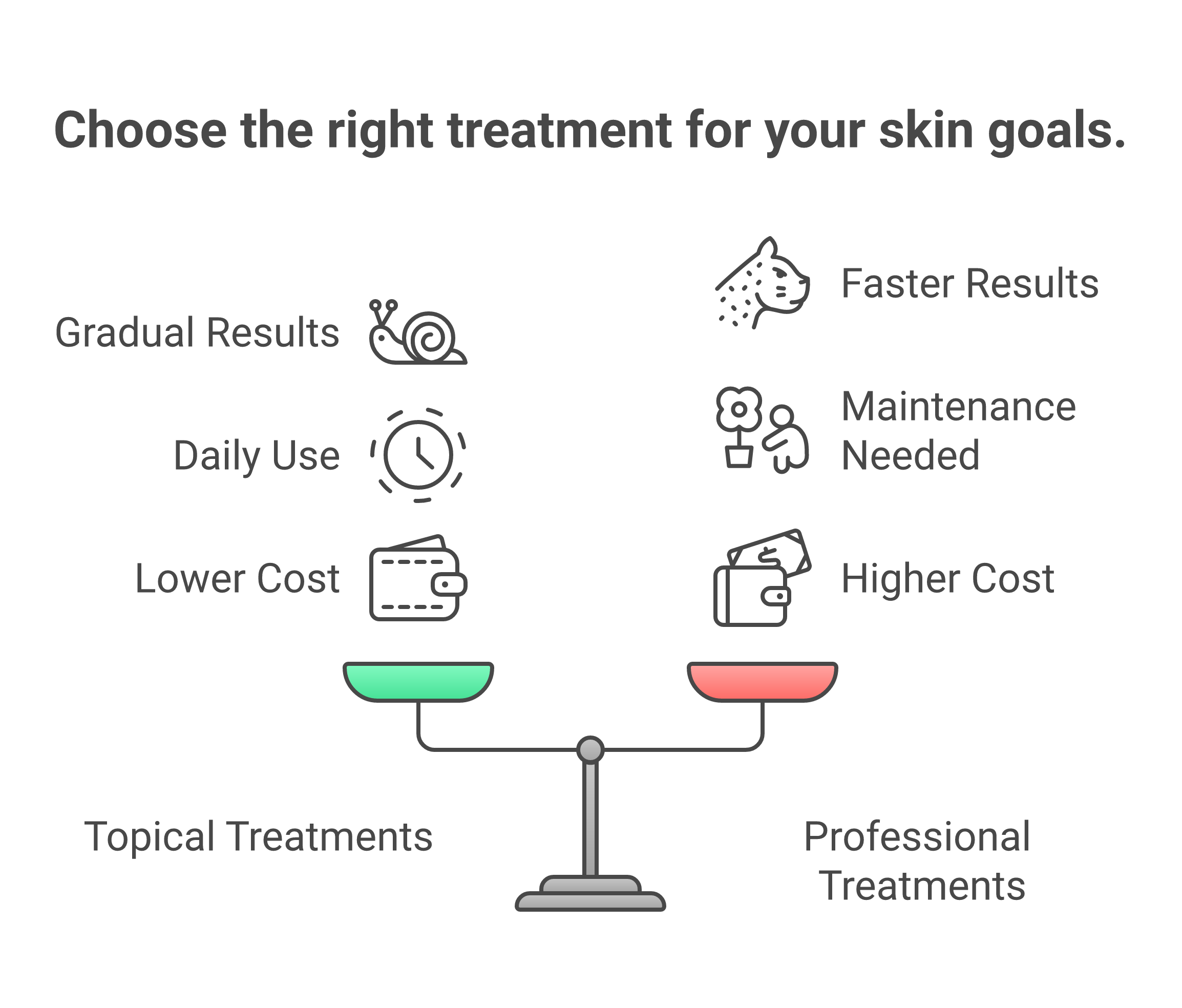
So why does this distinction matter? Because topical treatments work well for fine lines. Deeper wrinkles usually need professional procedures. Spending $200 on a cream when you actually need Botox is just burning money.
Topical Treatments That Actually Work (With Evidence)
Not every ingredient in a jar does what the label promises. In my work with SANE Solution, I see this mistake constantly: people buy products based on packaging and influencer endorsements instead of clinical data. Here are the ingredients with real evidence behind them.
Retinoids: Still the Gold Standard
I’ll be direct: if you’re using one anti-aging ingredient, make it a retinoid. Vitamin A derivatives remain the most studied and effective topical anti-aging ingredient available, period. They accelerate cell turnover, boost collagen production, and improve skin texture and tone.
A 2006 clinical trial published in Archives of Dermatology by Kang et al. found that 0.1% tretinoin significantly reduced fine lines and wrinkles after 24 weeks. And these results have been replicated dozens of times across different formulations and concentrations since then.
What you need to know about using retinoids:
- Start low (0.025% tretinoin or 0.3% retinol) and build up gradually. Your skin needs time to adjust.
- Apply at night, because retinoids break down in sunlight.
- Expect results at 12 to 24 weeks of consistent use. Not overnight. Not in a week.
- Dryness, peeling, and redness during the first few weeks are normal. They pass.
- Prescription tretinoin (0.025% to 0.1%) delivers stronger results than OTC retinol.
Sensitive skin? Bakuchiol is a plant-based alternative worth trying. A 2019 study in the British Journal of Dermatology found bakuchiol produced comparable improvements in wrinkles and pigmentation to retinol, with less scaling and stinging. I’ve recommended it to several clients who couldn’t tolerate retinol, and they’ve been happy with the results.
Vitamin C (L-Ascorbic Acid)
Vitamin C is a potent antioxidant that neutralizes free radicals from UV exposure and pollution. A review in the journal Nutrients confirmed that L-ascorbic acid at concentrations between 5% and 15% stimulates collagen production and reduces photodamage.
But here’s the thing most people get wrong: vitamin C is unstable. It degrades in light and air. So that clear bottle sitting on your bathroom windowsill? It’s probably oxidized and useless by now. Look for serums with L-ascorbic acid at 10% to 20%, packaged in dark or opaque bottles. Apply in the morning under sunscreen.
Niacinamide (Vitamin B3)
Niacinamide strengthens the skin barrier, reduces water loss, and improves elasticity. A 2004 study in the International Journal of Cosmetic Science found that 5% niacinamide applied for 12 weeks reduced fine lines, wrinkles, hyperpigmentation, and skin sallowness compared to a placebo.
It pairs well with hyaluronic acid and you can use it alongside retinoids. Apply niacinamide in the morning, retinoid at night. Simple.
Hyaluronic Acid
Hyaluronic acid holds up to 1,000 times its weight in water. Impressive on paper, right? But let me be clear: it does not reverse wrinkles at a structural level. What it does is plump the skin temporarily by drawing moisture into the upper layers. Fine lines look less visible right after application, but the effect fades.
For best results, apply to damp skin and follow with a moisturizer to lock in hydration. Think of it as a cosmetic quick fix, not a long-term solution.
Peptides
Peptides are short chains of amino acids that signal your skin to produce more collagen. The evidence here is less extensive than for retinoids, but a 2020 review in the International Journal of Molecular Sciences found that certain peptides (particularly palmitoyl pentapeptide-4) improved skin firmness and reduced wrinkle depth in controlled trials.
For a more complete look at which skincare ingredients are backed by research, including those that address uneven skin tone alongside fine lines, check our ingredient guide.
In-Office Procedures: When Creams Aren’t Cutting It
Topical products work best on fine, surface-level lines. But if you’ve got deeper wrinkles, volume loss, or skin laxity, you’re going to need professional help. One client I worked with spent $4,000 on various creams and devices before finally getting Botox, which solved her problem in one 15-minute appointment for about $400. I wish she’d come to me first.
Here’s what the evidence supports, as of March 2026.
Botox and Other Neuromodulators
Botulinum toxin injections (Botox, Dysport, Xeomin) relax the muscles that create dynamic wrinkles, particularly on the forehead, between the eyebrows, and around the eyes. The American Society of Plastic Surgeons reported over 4 million wrinkle-relaxing injections performed in 2020 alone. There’s a reason it’s that popular.
Results appear within 3 to 7 days, peak at about 2 weeks, and last 3 to 4 months. Botox runs $300 to $600 per session in most markets, depending on the number of units and your provider. For glabellar lines (the “11 lines” between your eyebrows), Botox is usually the first-line treatment because those lines are driven almost entirely by muscle movement. Most patients need 20 to 30 units.
Dermal Fillers
Hyaluronic acid-based fillers (Juvederm, Restylane) restore lost volume and smooth deeper wrinkles, particularly nasolabial folds and marionette lines. Results are immediate. You walk out looking different. They typically last 6 to 18 months depending on the product and treatment area.
Biostimulatory fillers like Sculptra work differently. Instead of filling directly, they stimulate your body’s own collagen production over several months. Results last up to 2 years. But you need patience, because you won’t see the full effect for 3 to 6 months.
Laser Resurfacing
Ablative lasers (CO2, erbium) remove damaged outer skin layers and heat the underlying dermis to stimulate collagen remodeling. Non-ablative lasers (Fraxel, Clear + Brilliant) work beneath the surface without removing skin, so there’s less downtime but more gradual results.
Ablative laser resurfacing shows the most dramatic wrinkle improvement, hands down. But you’re looking at 1 to 2 weeks of recovery where you won’t want to be seen in public (I wish I were kidding). Non-ablative treatments need 3 to 5 sessions spaced 4 to 6 weeks apart.
Microneedling
Microneedling creates controlled micro-injuries in the skin, triggering a wound-healing response that produces new collagen and elastin. A study in the Journal of Cutaneous and Aesthetic Surgery found that 81.3% of clinical assessments showed wrinkle improvement after a series of treatments, with 93.8% of subjects reporting visible changes at 90 days.
RF microneedling, which adds radiofrequency heat to the needling process, shows even stronger results. Clinical data shows it can reduce wrinkle depth in the eye area by 25% to 43% after three sessions, with some studies reporting up to 49% reduction. That’s significant.
Chemical Peels
Chemical peels use acids (glycolic, salicylic, trichloroacetic, or phenol) to remove damaged outer skin layers. Light peels address fine lines and texture with 1 to 3 days of downtime. Medium and deep peels treat more pronounced wrinkles but need longer recovery.
For stubborn 11 lines that don’t respond fully to Botox, a study in Dermatologic Surgery found that superlocalized phenol-croton oil peels can effectively treat static glabellar lines that persist even when the muscle is relaxed. It’s a niche treatment, but worth knowing about.
The 11 Lines: How to Get Rid of Glabellar Lines
These are the vertical lines between your eyebrows. People call them “11 lines” because, well, they look like the number 11. They form because the corrugator and procerus muscles contract every time you frown, squint, or concentrate. And if you work at a computer all day? You’re probably making those expressions right now without realizing it.
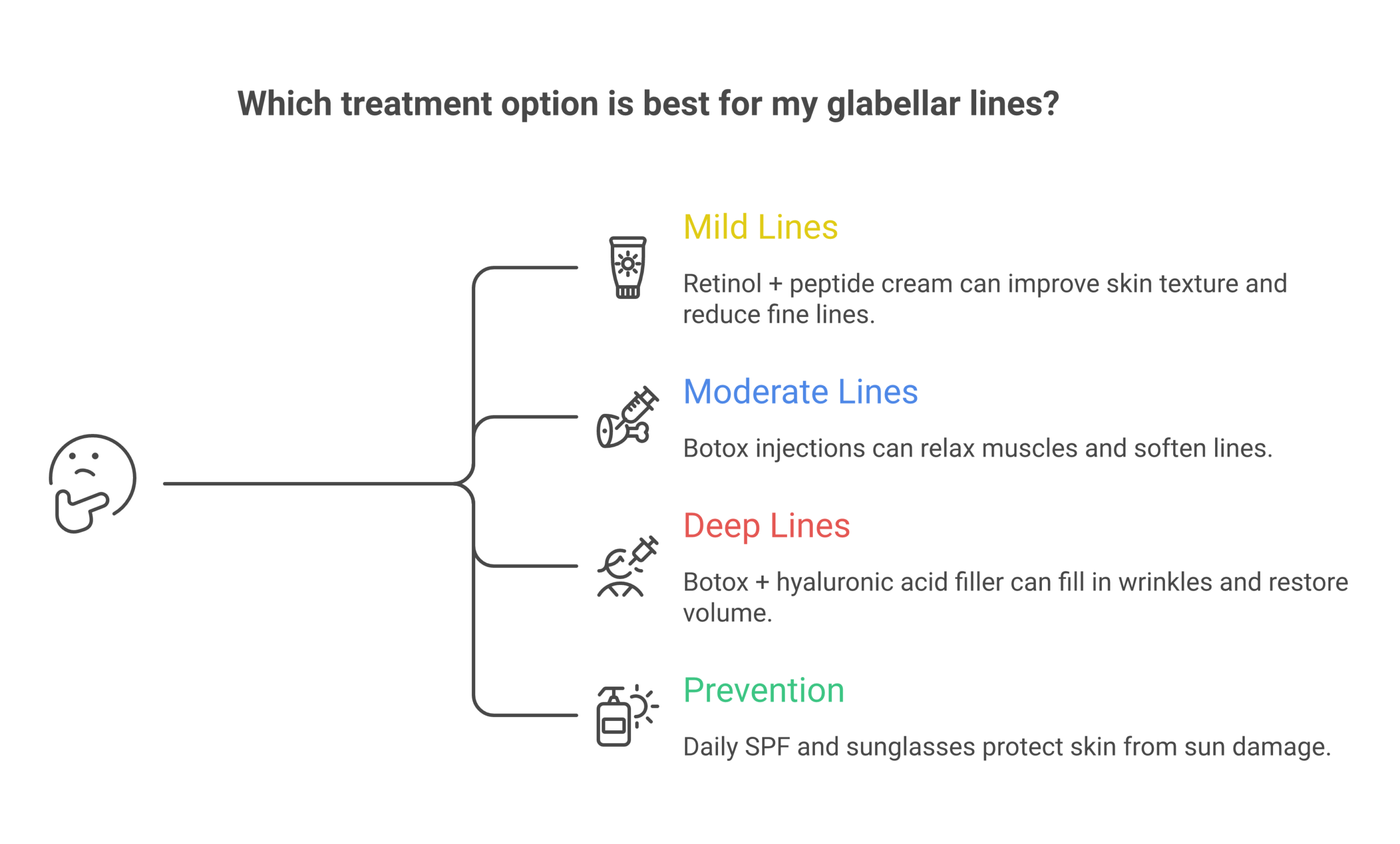
Over time, these dynamic lines become etched into the skin and stay visible even when your face is completely relaxed. That’s when people start panicking. But there’s a clear treatment hierarchy, from least to most aggressive:
- Retinoid creams: Can soften shallow 11 lines over 3 to 6 months of consistent use. Good starting point if yours are mild.
- Botox or Dysport: The most common treatment, and for good reason. Relaxes the frowning muscles within days. You’ll need repeat treatments every 3 to 4 months.
- Dermal fillers: When 11 lines are deep enough to stay visible even after Botox relaxes the muscle. Combining both works well for stubborn cases.
- Laser or RF microneedling: The heavy artillery. Best for lines that have been etched in for years. Pair with Botox so the muscle stays quiet while the skin heals.
Oh, and one more thing. Do you squint a lot? Seriously, go get your eyes checked. A woman I worked with, late thirties, had been agonizing over her 11 lines for months. She was ready to book Botox. I asked if she’d had her vision tested recently. She hadn’t. Turned out she needed reading glasses. She got a $150 pair from her optometrist, stopped scrunching her face at her laptop eight hours a day, and three months later her lines were noticeably softer. Saved herself $1,600 a year in Botox appointments.
How to Tighten Skin Naturally
Sagging skin and wrinkled skin? Two different problems. Related, yes. Same solution? No.
I’m going to be blunt here. Can you tighten skin without surgery? A little. Can you reverse 15 years of gravity and collagen loss with a $90 cream? Not a chance. Anyone who says otherwise is trying to sell you that cream. But there are things that genuinely help, and I want to be specific about what they can and can’t do.
Build Collagen From the Inside Out
Collagen doesn’t appear from nowhere. Your body builds it from protein, vitamin C, zinc, and copper. If your diet is missing those building blocks, it doesn’t matter what serums you’re applying. Production stalls.
Choi et al. published a review in the Journal of Drugs in Dermatology in 2019 that pooled data from multiple randomized controlled trials. Their finding: hydrolyzed collagen peptides at doses of 2.5g to 10g per day, taken for 8 to 12 weeks, improved both skin elasticity and hydration. Not ambiguous results. Clear, measurable improvements across several independent studies.
I eat a lot of eggs, fish, citrus, and bell peppers. I also take 10g of hydrolyzed collagen peptides every morning. Have for roughly two years now. Has it helped my own skin? Honestly, I can’t separate the collagen from the retinoid, the sunscreen, the sleep, and everything else I do. That’s the frustrating truth about personal experiments. But the published trial data convinced me enough to keep going. Your gut health affects your skin too, and our nutrition guide covers that connection in depth.
Facial Exercises and Massage
I was skeptical about this one until I actually read the study. Dr. Murad Alam’s team at Northwestern ran a trial in 2018 where participants did 30 minutes of specific facial exercises every day for 20 weeks. The result? Blinded dermatologists rated participants as looking roughly 3 years younger, with visibly fuller cheeks.
But let’s be real about the limitations. Sixteen people finished the whole protocol. That’s a tiny sample. And 30 minutes of face exercises daily is a commitment most people will abandon by week three. Interesting proof of concept? Absolutely. Something I’d bank on as a primary anti-aging strategy? No.
Topical Firming Ingredients
Products containing retinoids, peptides (particularly palmitoyl tripeptide-1), and niacinamide support collagen production and can incrementally improve skin firmness over several months. But I want to set expectations: no topical product can replicate the tightening effect of a professional procedure. Not one. Not even the pricey ones.
Professional Skin Tightening
For noticeable skin tightening without surgery, radiofrequency devices (Thermage, Profound RF) and ultrasound therapy (Ultherapy) have the strongest evidence. These treatments heat the deep layers of skin to stimulate collagen and elastin remodeling. Results develop gradually over 2 to 6 months and typically last 1 to 2 years. Expect to pay $1,500 to $4,500 per session, depending on the device and treatment area.
Lifestyle Factors That Make a Real Difference
No topical product or procedure will deliver lasting results if you’re working against your skin every day. I tell clients this constantly. Here are the habits that actually matter, backed by evidence.
Sun Protection (Non-Negotiable)
This is the single most important thing you can do for your skin. Period.
A 2013 randomized controlled trial published in the Annals of Internal Medicine, led by Professor Adele Green at the Queensland Institute of Medical Research, studied 903 adults over 4.5 years. The daily sunscreen group showed 24% less skin aging than the group that used sunscreen only when they felt like it. And the daily users showed no detectable increase in skin aging over the entire study period. Let that sink in.
Use a broad-spectrum SPF 30 or higher every single day, even on cloudy days. Reapply every 2 hours during sun exposure. This one habit does more for wrinkle prevention than any cream on the market. It’s not even close.
Sleep
A 2015 study in Clinical and Experimental Dermatology found that poor sleepers had increased signs of skin aging and slower recovery from environmental stressors like UV exposure. Not surprising when you think about it, since your body releases growth hormone during deep sleep, which triggers cell repair and collagen production.
Sleeping on your back prevents sleep lines (those creases from pressing your face into a pillow night after night). Side sleeper? A silk or satin pillowcase reduces friction. Aim for 7 to 9 hours per night.
Diet and Hydration
A 2020 review in Nutrients found that diets high in fruits, vegetables, and omega-3 fatty acids were associated with fewer wrinkles. Meanwhile, high sugar intake accelerated glycation, a process where sugar molecules damage collagen fibers and make them stiff and brittle. So yes, your diet shows up on your face eventually.
Drinking water alone won’t erase wrinkles. But chronic dehydration makes fine lines more visible. Aim for at least 8 glasses daily.
Quit Smoking
I shouldn’t have to say this in 2026, but smoking destroys your skin. It narrows blood vessels, cuts off oxygen and nutrient delivery, and directly damages collagen and elastin. A 2013 study in Plastic and Reconstructive Surgery compared the faces of 79 pairs of twins. The twin who smoked (or smoked longer) showed significantly more eyelid sagging, under-eye bags, nasolabial folds, and lip wrinkles. The photos in that study are startling.
Manage Stress
Chronic stress elevates cortisol, which breaks down collagen and impairs skin barrier function. Exercise, meditation, and adequate sleep all help keep cortisol in check. And if you’re thinking “easier said than done,” you’re right. But even 10 minutes of daily meditation or a 20-minute walk makes a measurable difference.
What Doesn’t Work: Common Myths
The anti-aging industry pulls in billions selling products that don’t live up to their claims. I’ve tested dozens of them over the years, and here’s what you should stop wasting money on.
- Collagen creams won’t rebuild collagen. Collagen molecules are too large to penetrate the skin barrier. Full stop. Topical collagen can hydrate the surface temporarily, but it won’t restore lost collagen in the dermis. You need retinoids, vitamin C, or peptides to stimulate your body to produce its own.
- Face tape and patches are temporary. Silicone patches and face tape can smooth lines while you wear them. Take them off and the effect disappears within hours. No lasting structural change. Zero.
- Coconut oil is not an anti-aging treatment. It’s a decent moisturizer, sure. But no clinical evidence supports wrinkle reduction from coconut oil. None.
- Most anti-aging supplements are unproven. Outside of hydrolyzed collagen peptides (which have decent evidence) and vitamin C, most anti-aging supplements lack clinical data showing they actually reduce wrinkles. Save your money.
- “Natural” does not mean effective. Many plant-based anti-aging claims are based on in-vitro studies (test tube experiments) that don’t translate to real results on human skin. Just because something comes from a plant doesn’t mean it works on your face.
If you’re evaluating which anti-aging creams actually work, look for products with the evidence-backed ingredients listed above, not marketing buzzwords.
Building Your Anti-Aging Routine: A Practical Framework
Here’s what I tell every client who asks me about a routine: stop buying 15 products. You need four, maybe five. That’s it.
Morning:
- Gentle cleanser
- Vitamin C serum (10% to 20% L-ascorbic acid)
- Moisturizer with hyaluronic acid or niacinamide
- Broad-spectrum SPF 30+ sunscreen (last step, every single day)
Evening:
- Gentle cleanser (double cleanse if you wore makeup or sunscreen)
- Retinoid (start 2 to 3 nights per week, build to nightly)
- Moisturizer
That’s the whole routine. Consistency matters more than complexity. Give each new product 8 to 12 weeks before judging results, because your skin needs time to respond. If you want a deeper look at products that perform well in independent testing, our wrinkle cream reviews cover the top options.
When to See a Dermatologist
Look, I’m a big believer in doing what you can at home first. But there are times when you need professional help. Consider seeing a board-certified dermatologist if:
- OTC retinol causes persistent irritation and you want to try prescription-strength tretinoin with professional guidance.
- You have deep wrinkles or significant volume loss that topicals can’t address.
- You want to combine treatments (like Botox plus laser resurfacing) safely.
- You notice sudden or asymmetric changes in your skin texture, which could indicate something medical, not just normal aging.
- You’ve spent a lot on products without seeing results and you want a personalized treatment plan.
For more resources on skin health topics, including anti-aging product reviews and guides, browse our wrinkle creams category.
Related Anti-Aging Guides
Skin appearance also reflects internal inflammation. The gut-skin axis, well documented in dermatology research since 2018, shows that an inflamed gut often surfaces as duller, more fine-lined skin even when topical care is solid. Our guide on gut function and the gut-skin connection is a useful companion to any anti-aging routine.
Frequently Asked Questions
Can fine lines be completely removed?
Shallow fine lines can be significantly reduced with retinoids, vitamin C, and good sun protection. But “complete removal”? That’s unrealistic for most people. The goal is meaningful improvement, not perfection. Professional treatments like laser resurfacing can get very close to eliminating surface-level fine lines, but even those results aren’t permanent without ongoing maintenance.
What is the best way to get rid of 11 lines between the eyebrows?
Botox or Dysport. They’re the most effective treatment for glabellar (11) lines because they directly relax the frowning muscles that create them. For deeper, static 11 lines, a combination of Botox and dermal filler delivers the best results. At-home prevention includes retinoid use and avoiding repetitive squinting or frowning.
Which anti-aging creams actually work?
Creams containing retinoids (retinol or tretinoin), vitamin C (L-ascorbic acid at 10% to 20%), niacinamide (3% to 5%), and peptides have the strongest clinical evidence. Hyaluronic acid provides temporary plumping but doesn’t reverse wrinkles structurally. Avoid products that rely solely on marketing claims without listing active ingredient concentrations. For our full analysis, see our wrinkle cream reviews.
At what age should you start using anti-aging products?
Dermatologists generally recommend starting sunscreen in childhood and adding a retinoid in your mid-to-late twenties. Most people begin to lose collagen around age 25 to 30. Starting early with prevention (sunscreen, antioxidants) is far more effective and less expensive than trying to reverse damage later. I wish someone had told me this at 22.
How long does it take for retinol to reduce wrinkles?
Clinical studies show measurable improvements in fine wrinkles after 12 to 24 weeks of consistent retinol use. Some people notice texture and tone improvements as early as 4 to 6 weeks. Prescription tretinoin tends to produce faster and more pronounced results than OTC retinol, but also causes more initial irritation. Stick with it through the “purge” phase.
Is microneedling worth it for wrinkles?
Short answer: yes. Over 80% of treated areas show measurable improvement in clinical assessments. RF microneedling goes further, cutting wrinkle depth near the eyes by 25% to 49%. You’ll sit through 3 to 4 sessions, spaced about a month apart, and results hold for several months to roughly a year. Worth it? For most people I’ve talked to, absolutely.
What can I use to tighten loose skin on my face?
Depends on severity. Mild sagging? Retinoids, peptides, and collagen supplements can nudge things in the right direction. Moderate to significant sagging needs professional help: Thermage, Ultherapy, or RF microneedling are the strongest non-surgical options out there. Facial exercises might help a little based on early research, but I wouldn’t count on them. And for severe laxity? A facelift. I know that’s not what anyone wants to hear, but no cream or device comes close to surgical results when sagging is significant.
Medical disclaimer: Everything here is drawn from published clinical research, but it’s for education, not a substitute for talking to your own doctor. Your skin is unique. See a board-certified dermatologist before starting new treatments or procedures. Results differ from person to person. Consumer Health Guide doesn’t endorse any specific product, procedure, or provider.
Further Reading from Consumer Health Guide
If you want to go deeper, our guide to what men should look for in an anti-aging routine covers what most product pages skip. For readers comparing options, see our breakdown of best wrinkle creams compared. A useful companion read is top collagen supplements compared.
We also looked closely at dark spot correctors for body and arms in a separate guide. For the related question, check treating puffy eyes. You can dig into best eye creams for fine lines if that overlaps with what you’re researching.
Pair this with best products for women in their 50s for a fuller picture. Our notes on treating brown spots on hands and arms address an adjacent topic worth knowing. For wider context, see neck and chest aging.
If symptoms or causes matter to you, our powder or liquid collagen guide is a good next step. See also: starting retinol safely. Related Consumer Health Guide research: foods that support collagen.