

Reviewed by Jonathan Bailor, NYT bestselling author, wellness researcher, and founder of SANE Solution. Updated March 2026. Part of the Consumer Health Guide research library.
About 20 million Americans live with some form of peripheral neuropathy, according to the National Institute of Neurological Disorders and Stroke. Tingling hands, burning feet, numbness that creeps up from the toes. The symptoms range from mildly annoying to debilitating, and the supplement market has responded with hundreds of products claiming to help.
Most of them won’t do much. Some contain the right ingredients at the wrong doses. Others hide behind “proprietary blends” that make it impossible to know what you’re actually taking. After years of researching nerve health and working with clients dealing with neuropathy at SANE Solution, I’ve learned what separates effective nerve supplements from expensive placebos. Here’s how to evaluate them. (see nerve health research) (see peripheral neuropathy)
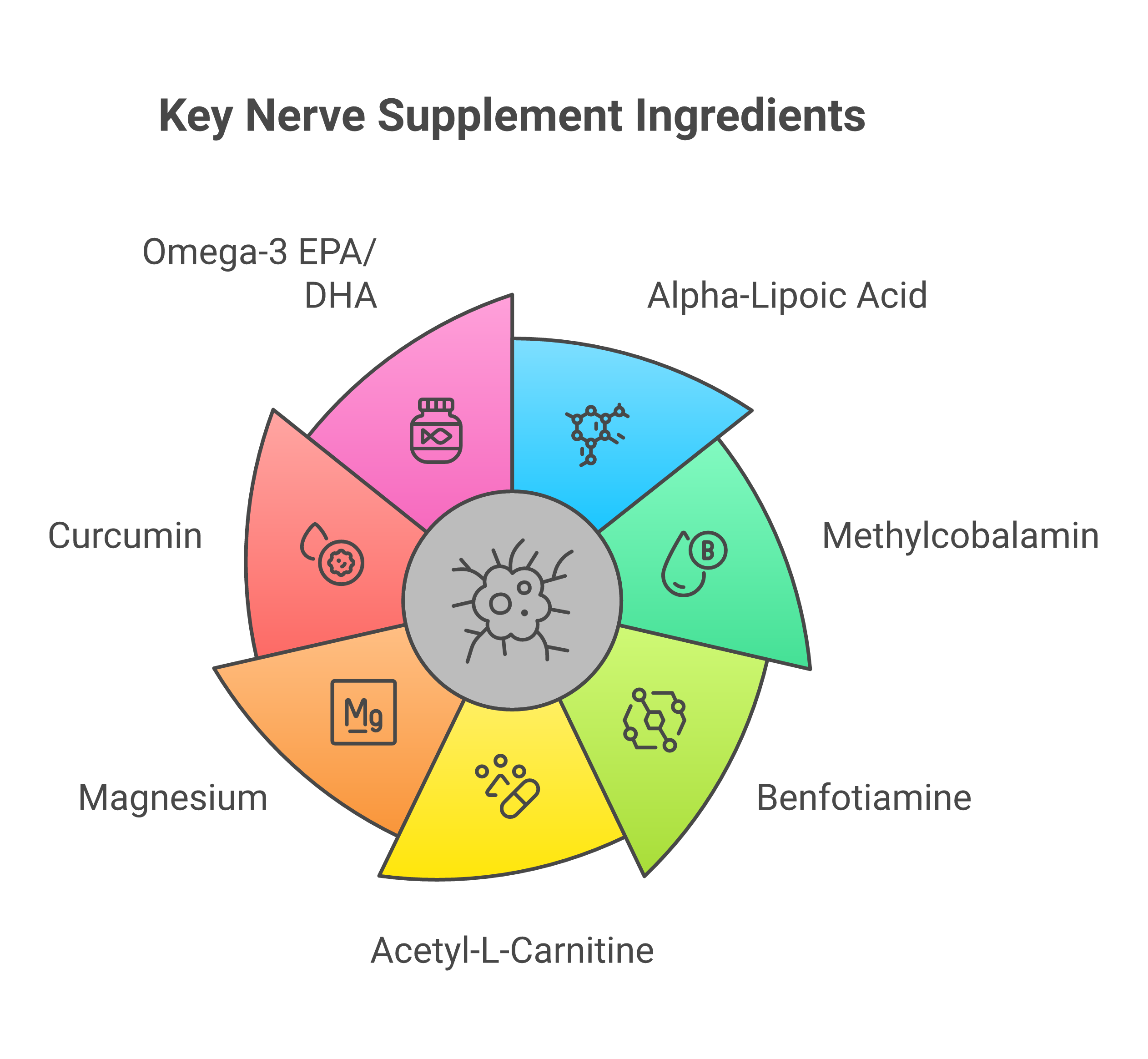
The 7 Ingredients With Real Clinical Evidence
Not every ingredient marketed for nerve health has research behind it. These seven do, and the clinical data tells us exactly how much you need.
1. Alpha-Lipoic Acid (ALA): The Most-Studied Nerve Supplement
Alpha-lipoic acid appears on virtually every “best nerve supplement” list for good reason. It’s the most researched ingredient for neuropathy, with over 15 randomized controlled trials in humans. A landmark 2006 meta-analysis in Diabetic Medicine pooled data from 1,258 patients across four clinical trials (the ALADIN, SYDNEY, NATHAN, and ORPIL studies) and found that 600 mg of intravenous ALA daily for 3 weeks significantly reduced neuropathy symptoms.
Since the gut-brain axis directly affects nerve function, what you eat matters too. Our guide to the gut health foods covers the dietary foundations that support healthy nerve signaling.
Oral ALA works too, though it takes longer. The NATHAN 1 trial followed 460 patients with mild-to-moderate diabetic neuropathy taking 600 mg of oral ALA daily for 4 years. The results, published in Diabetes Care in 2011, showed that ALA improved neuropathic deficits and was well-tolerated over the entire study period.
What to look for: 600 mg per daily serving. The R-lipoic acid form is more bioavailable than standard racemic ALA, but costs more. Both forms work. Take ALA on an empty stomach for best absorption, about 30 minutes before a meal.
Important if you have diabetes: ALA can lower blood sugar. If you take insulin or sulfonylureas, monitor your glucose levels carefully and talk to your doctor before starting ALA supplementation.
2. Vitamin B12 (Methylcobalamin): Essential for Myelin
Your nerves are wrapped in a protective coating called myelin, similar to insulation on electrical wires. B12 is required to build and maintain that myelin sheath. When B12 levels drop, myelin deteriorates and nerve signals slow down or misfire, causing numbness, tingling, and pain.
B12 deficiency is more common than most people realize. A Tufts University study found that nearly 40% of Americans have B12 levels in the low-normal range where neurological symptoms can occur. Risk factors include age over 50 (stomach acid production decreases, reducing B12 absorption), vegetarian or vegan diets, metformin use, and proton pump inhibitor medications.
The form matters. Methylcobalamin is the neurologically active form of B12. Your body uses it directly without conversion. Cyanocobalamin (the cheaper form found in many supplements) requires your body to convert it first, and some people can’t do that efficiently. Clinical research has shown that ultra-high-dose methylcobalamin (1,500 mcg daily) can improve nerve conduction velocity and reduce symptoms in patients with diabetic neuropathy, with benefits typically appearing after several months of consistent use.
Look for: 500-1,500 mcg of methylcobalamin per daily serving. Sublingual (under-the-tongue) forms bypass the digestive system and are better absorbed, especially for people over 50.
3. Vitamin B1: Thiamine and Its Superior Form, Benfotiamine
Thiamine (B1) is critical for nerve cell energy production. Deficiency causes beriberi, a disease characterized by severe peripheral neuropathy. Even mild deficiency impairs nerve function.
Benfotiamine is the form you want. It’s a fat-soluble derivative of thiamine that penetrates nerve cell membranes far better than standard water-soluble thiamine. A 2008 study in Experimental and Clinical Endocrinology and Diabetes (the BENDIP trial) tested benfotiamine at 300 mg and 600 mg daily in 165 patients with diabetic neuropathy. After 6 weeks, the 600 mg group showed statistically significant improvement in the Neuropathy Symptom Score.
Look for: 150-600 mg of benfotiamine per daily serving. Standard thiamine (thiamine HCl) at 50-100 mg is acceptable if benfotiamine isn’t available, but benfotiamine is preferred for neuropathy.
4. Acetyl-L-Carnitine (ALC): Nerve Regeneration Support
Acetyl-L-carnitine fuels the mitochondria inside nerve cells and may support actual nerve fiber regeneration. A 2005 analysis of two randomized placebo-controlled trials published in Diabetes Care found that ALC at 500 mg and 1,000 mg three times daily improved pain scores and nerve fiber regeneration (measured by sural nerve biopsy) in 1,257 patients with diabetic neuropathy (Sima et al., 2005).
ALC has also shown benefits for chemotherapy-induced peripheral neuropathy (CIPN), a common side effect of cancer treatment that standard B vitamins don’t address well. For our guide on whether nerve supplements are safe alongside other medications, see our article on nerve supplement safety.
Make sure the label says “acetyl-L-carnitine,” not just “L-carnitine.” The acetyl group is what allows it to cross the blood-brain barrier and reach nerve tissue. Look for: 500-1,000 mg twice daily.
5. Magnesium: Nerve Signal Regulation
Magnesium controls the flow of calcium and potassium through ion channels in nerve cell membranes, directly regulating how nerve signals fire. When magnesium is low, nerves become overexcitable, causing cramping, spasms, and heightened pain sensitivity. The National Institutes of Health estimate that about 50% of Americans don’t get enough magnesium from their diets.
Not all magnesium forms are equal for nerve health:
- Magnesium glycinate: High absorption, calming effect, minimal digestive side effects. Best all-around choice.
- Magnesium L-threonate: Crosses the blood-brain barrier. A 2010 study in Neuron by MIT researchers found it enhanced learning and memory in animal models. The best form for combined nerve and brain support.
- Magnesium oxide: Cheap but poorly absorbed (only about 4% bioavailability). Mostly used as a laxative. Avoid for nerve support.
Look for: 200-400 mg of elemental magnesium from glycinate or threonate forms.
6. Curcumin: Anti-Inflammatory Nerve Protection
Curcumin, the active compound in turmeric, reduces neuroinflammation through multiple pathways. A 2014 review in BioMed Research International documented curcumin’s ability to reduce neuropathic pain in animal models by blocking NF-kB, a key inflammatory signaling molecule in nerve tissue.
The catch: standard curcumin has poor bioavailability (less than 1% is absorbed). Three approaches fix this:
- Piperine (black pepper extract): Increases curcumin absorption by 2,000%, per a study in Planta Medica by Shoba et al.
- Phospholipid complexes (Meriva): Increases absorption 29x compared to standard curcumin.
- Nanoparticle formulations (CurcuWIN, Theracurmin): Various enhanced absorption technologies.
If a nerve supplement contains curcumin without any of these absorption enhancers, it’s likely ineffective. Look for: 500-1,000 mg of enhanced curcumin per daily serving.
7. Omega-3 Fatty Acids (EPA/DHA): Myelin Building Blocks
DHA makes up a significant portion of nerve cell membranes and myelin. EPA reduces neuroinflammation. Together, they support both nerve structure and function. A 2017 study in Pain found that omega-3 supplementation reduced neuropathic pain intensity in patients with diabetic neuropathy over 12 months.
Most nerve supplement formulas don’t include omega-3s because the dose required (1,000-2,000 mg combined EPA/DHA) would make the capsules too large. If your nerve supplement doesn’t include them, take a separate high-quality fish oil. Look for: molecularly distilled, third-party tested for mercury and PCBs, providing at least 1,000 mg combined EPA/DHA daily.
Botanical Ingredients: The Emerging Science
Beyond vitamins and antioxidants, several botanical compounds show promise for nerve comfort, though with less clinical evidence than the seven ingredients above. I’m including them because some of the best-performing nerve formulas use these, and clients frequently ask about them.
Passionflower (Passiflora incarnata): Used traditionally for nerve pain and anxiety. A 2017 review in Phytotherapy Research found evidence supporting its GABA-enhancing properties, which may calm overactive nerve signaling.
Corydalis (Corydalis yanhusuo): Contains dehydrocorybulbine (DHCB), which a 2014 study in Current Biology by UC Irvine researchers identified as a pain-reducing compound that works through dopamine D2 receptors, a mechanism different from opioids. Promising, but human clinical trials are limited.
California Poppy: Traditional use for nerve pain and sleep. Contains alkaloids that interact with GABA receptors. If your nerve discomfort disrupts sleep (which is common), formulas including this ingredient may offer dual benefit.
Lion’s Mane Mushroom: Contains compounds called hericenones and erinacines that stimulate nerve growth factor (NGF) production. A 2009 study in Phytotherapy Research found that Lion’s Mane supplementation improved cognitive function in older adults with mild cognitive impairment. Nerve regeneration data is mostly from animal studies so far.
For a comparison of how top products combine these ingredients, see our expert-reviewed nerve supplement rankings.
How to Read a Nerve Supplement Label
The supplement industry relies on consumers not knowing how to evaluate what’s in the bottle. Here’s what to check, and what the red flags look like.
Check the dose against clinical research
Compare what’s on the label to what actually worked in studies. If a product contains 50 mg of ALA when clinical trials used 600 mg, that product is “fairy dusting,” listing an ingredient for marketing purposes at a dose too low to do anything. Here are the clinically studied doses for the key ingredients:
- Alpha-lipoic acid: 600 mg/day
- Methylcobalamin (B12): 500-1,500 mcg/day
- Benfotiamine (B1): 300-600 mg/day
- Acetyl-L-carnitine: 1,000-2,000 mg/day
- Magnesium (glycinate/threonate): 200-400 mg/day
- Curcumin (enhanced): 500-1,000 mg/day
- EPA+DHA: 1,000-2,000 mg/day
Avoid “proprietary blends”
When a label says “Proprietary Nerve Support Blend: 800 mg” followed by a list of six ingredients, you have no idea how much of each ingredient is in there. The first ingredient could be 790 mg and the remaining five could be dust. FDA regulations only require listing ingredients in order of weight within a proprietary blend, not their individual amounts. Transparent companies list every ingredient with its exact dose.
Check the form of each ingredient
Methylcobalamin vs. cyanocobalamin. Benfotiamine vs. thiamine HCl. Magnesium glycinate vs. magnesium oxide. The form determines how much your body actually absorbs and uses. Cheaper forms cost less for a reason.
Look for third-party testing
NSF International, USP, and ConsumerLab independently verify that what’s on the label matches what’s in the bottle. A 2015 investigation by the New York Attorney General found that four out of five herbal supplements sold at major retailers didn’t contain what their labels claimed. Third-party testing is the only way to verify you’re getting what you paid for.

Red Flags: What to Avoid in a Nerve Supplement
I’ve reviewed hundreds of nerve supplements over the years. These are the warning signs that tell me a product isn’t worth your money:
- “Miracle cure” or “reverses neuropathy” claims: Supplements cannot legally claim to cure, treat, or prevent any disease. Companies making these claims are either breaking FDA regulations or hiding behind fine-print disclaimers. Honest products say “supports nerve health” or “may help maintain healthy nerve function.”
- Artificial colors and dyes: FD&C Blue No. 2, FD&C Yellow No. 6, and similar synthetic dyes have no health benefit and add unnecessary chemical exposure. Some well-known nerve supplements contain these. If a company cuts corners on something this simple, question what else they’re cutting corners on.
- No GMP certification: Good Manufacturing Practices (GMP) certification from an FDA-registered facility means the product was made under controlled conditions with quality checks. Without GMP, there’s no assurance of consistency between batches.
- Exclusively 5-star reviews: No product works perfectly for everyone. If every review is glowing, reviews are likely filtered or fake. Look for products with a mix of positive and critical feedback where you can read real user experiences.
- No clear return policy: Reputable nerve supplement companies offer 60-90 day money-back guarantees because they know results take time (typically 8-12 weeks). If a company won’t stand behind its product, that’s a signal.
Matching Ingredients to Your Specific Condition
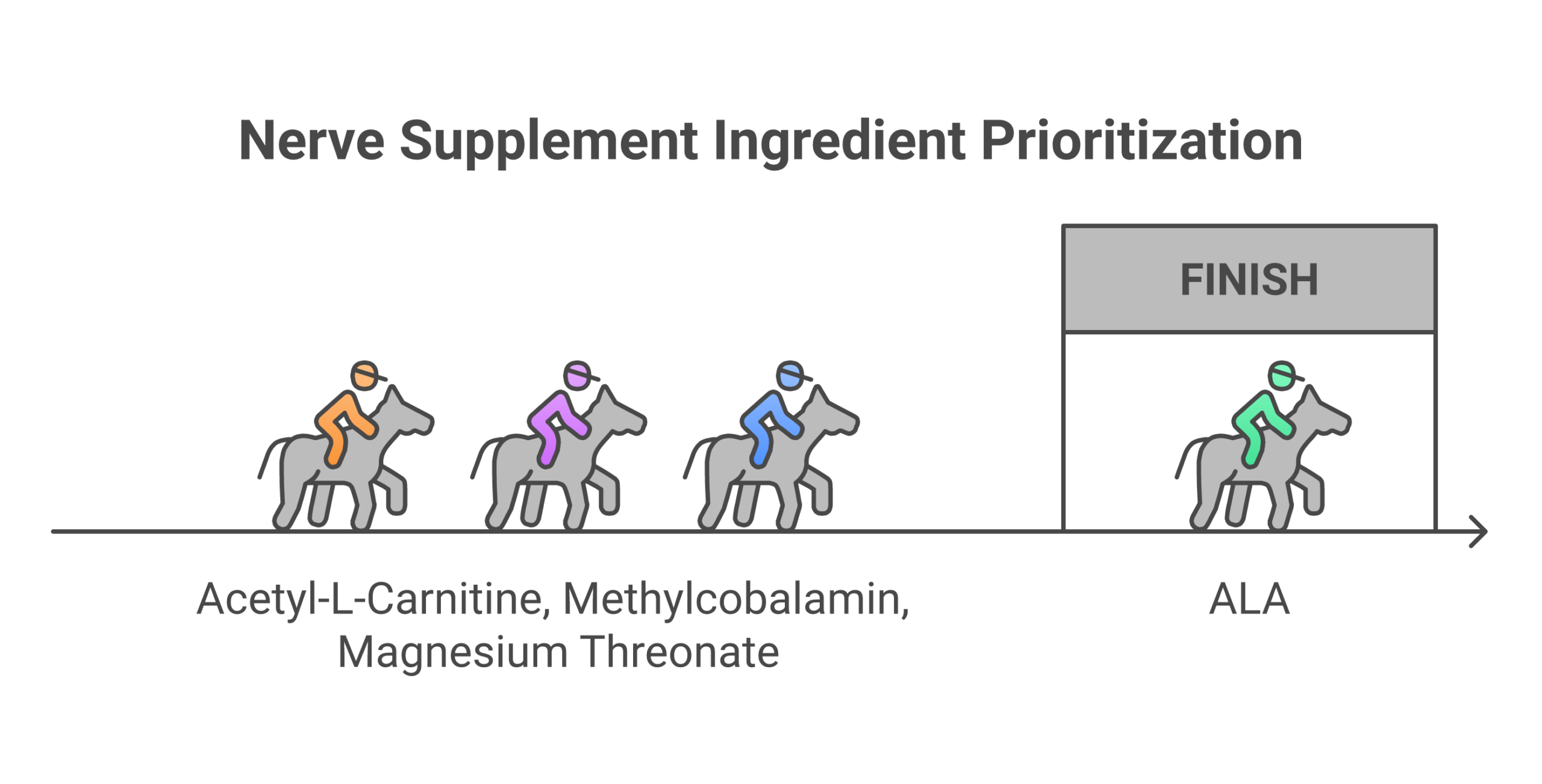
Different types of nerve damage respond to different ingredients. Here’s how to prioritize based on your situation:
Diabetic neuropathy: Prioritize ALA (600 mg) + benfotiamine (300-600 mg) + methylcobalamin. This combination has the strongest clinical evidence for diabetes-related nerve damage. Monitor blood sugar closely since ALA affects glucose levels.
Chemotherapy-induced neuropathy (CIPN): Acetyl-L-carnitine (1,000 mg twice daily) has the most targeted evidence. Discuss timing with your oncologist, as some doctors prefer waiting until treatment ends before starting supplements.
Age-related nerve decline: B12 (methylcobalamin 1,000 mcg) + magnesium threonate + omega-3s. B12 absorption decreases with age, and magnesium threonate crosses the blood-brain barrier for combined nerve and cognitive support.
General nerve support and prevention: A B-complex with methylcobalamin + ALA (300 mg) + magnesium glycinate provides a solid foundation without the higher therapeutic doses used for active neuropathy. Dietary support matters here too. For food-based approaches, see our guide on foods that support nerve health.
How Long Before You See Results?
Nerve tissue regenerates slowly, about 1 inch per month for peripheral nerves. Don’t expect overnight improvement. Here’s a realistic timeline based on clinical trial data and client experience:
- Weeks 1-2: Most people notice nothing yet. Nutrient levels are building in your system.
- Weeks 3-4: Some clients report subtle changes: slightly less tingling, marginally better sleep.
- Weeks 6-8: This is when clinical studies typically start measuring improvements. Many people notice meaningful symptom reduction in this window.
- Weeks 12+: Full effect. The NATHAN 1 trial (ALA) and BENDIP trial (benfotiamine) both showed progressive improvement over 6 weeks to 4 years. Longer use generally produces better results.
If you’ve taken a nerve supplement consistently for 12 weeks with zero improvement, it’s either the wrong product, the wrong dose, or your nerve issues need medical evaluation beyond supplementation. Don’t keep buying refills out of hope. Reassess and consult your healthcare provider.
Browse all of our nerve supplements reviews and guides for more research-backed recommendations.
For detailed product comparisons, see our nerve health supplement reviews.
You may also want to read our guide on vision supplements.
Frequently Asked Questions
What is the best vitamin for nerve pain?
Alpha-lipoic acid (ALA) at 600 mg daily has the strongest clinical evidence across multiple large trials. Among pure vitamins, methylcobalamin (B12) at 1,000-1,500 mcg daily is the most important, especially if you’re over 50, take metformin, or eat a plant-based diet. For diabetic neuropathy specifically, the combination of ALA plus benfotiamine (B1) performs better than either ingredient alone.
Can neuropathy be reversed with supplements?
It depends on the cause and severity. Neuropathy caused by B12 deficiency is often reversible once B12 levels are restored, especially if caught early. Diabetic neuropathy can be stabilized and partially improved with ALA and benfotiamine, according to long-term clinical trials. However, severe nerve damage with significant fiber loss is generally not fully reversible with supplements alone. Early intervention produces the best outcomes.
Is Nervive a good nerve supplement?
Nervive (made by Procter and Gamble) contains ALA, B vitamins, turmeric, and ginger. It has high brand recognition but has drawn criticism for ingredient discrepancies. An analysis by Illuminate Labs found differences between what the Nervive label claims and what independent testing revealed. The product also contains FD&C Blue No. 2, an artificial dye unnecessary in a health supplement. At its price point, there are better-formulated options available. See our nerve supplement comparison for alternatives.
Can you take too much vitamin B6 for nerve health?
Yes. This is a critical point. While B6 supports nerve function at appropriate doses (10-50 mg daily), chronic intake above 200 mg daily can actually cause sensory neuropathy, the very condition you’re trying to treat. The tolerable upper limit set by the Institute of Medicine is 100 mg per day. If your nerve supplement contains more than 50 mg of B6, that’s a concern, not a benefit.
How much alpha-lipoic acid should I take for neuropathy?
The clinical standard is 600 mg daily, based on the ALADIN, SYDNEY, and NATHAN trials. Some practitioners use 1,200 mg daily (600 mg twice) for severe cases, though the evidence for higher doses showing additional benefit is mixed. Take ALA on an empty stomach 30 minutes before meals for best absorption. Start at 300 mg and increase to 600 mg over 1-2 weeks if you experience stomach sensitivity.
Are nerve supplements safe to take with diabetes medications?
Most nerve supplement ingredients are safe alongside diabetes medications, but ALA requires caution. Because ALA can lower blood sugar, combining it with insulin or sulfonylureas increases the risk of hypoglycemia. Monitor your blood glucose more frequently when starting ALA and discuss dose adjustments with your doctor. B vitamins, magnesium, and omega-3s generally don’t interact with diabetes medications.
What’s the difference between methylcobalamin and cyanocobalamin?
Methylcobalamin is the active form of B12 that your nervous system uses directly. Cyanocobalamin is a synthetic form that must be converted by your liver before use. The conversion process isn’t efficient in everyone, particularly older adults and people with certain genetic variations (MTHFR mutations). For nerve health specifically, methylcobalamin is the clear choice. It costs slightly more but delivers B12 in the form your nerves actually need.