
Medically reviewed content. This article is for informational purposes only and does not replace professional medical advice. Consult a board-certified dermatologist before starting any treatment for dark spots or hyperpigmentation.
Brown spots on your arms, hands, chest, and back are solar lentigines, caused by years of cumulative UV exposure. They form when melanocytes (pigment-producing cells) cluster together after repeated sun damage. The good news: you can fade them at home with the right OTC ingredients, or remove them faster with professional treatments. I’ll walk you through both options below, organized by body area, so you can pick the approach that fits your skin, budget, and patience level.
Why Arms, Hands, and Body Get More Dark Spots Than Your Face
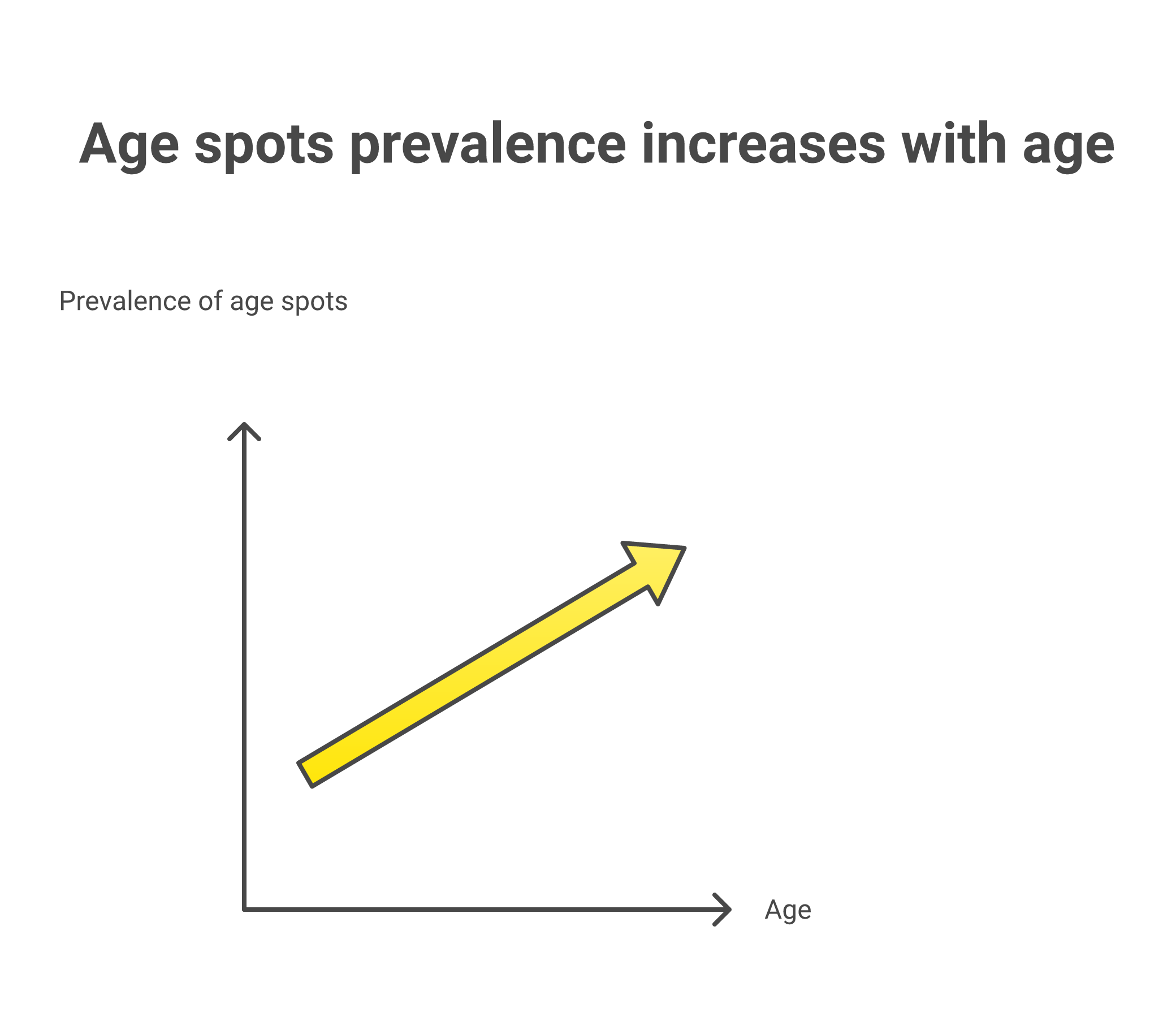
Your face gets the most skincare attention, but your arms, hands, and chest often take more cumulative UV damage over a lifetime. Think about it: how many years did you drive with your left forearm in the sun before you started wearing sunscreen daily? According to the American Academy of Dermatology (AAD), age spots appear most often on skin that has had the most sun exposure over the years, including the backs of hands, tops of feet, face, shoulders, and upper back.
The skin on the backs of your hands is thinner than most body areas, which is why hands often show spots first. Your forearms and upper arms get exposed during driving, yard work, and any short-sleeve activity. And your chest or decolletage area? Years of V-neck shirts and open collars create a triangle of sun damage that many people ignore until the spots become obvious.
The Cleveland Clinic notes that age spots are most common in adults over 50, but younger people can develop them too, especially with frequent tanning bed use or intense sun exposure. Fair-skinned individuals and those with a history of sunburns face higher risk.
Body Area Guide: Where Age Spots Form and What to Know
Arms (Upper Arms and Forearms)
Arms are the most common body location for age spots after the face. Your forearms and the tops of your hands face the sun almost every time you step outside. The left arm tends to develop more spots in countries where people drive on the right side of the road. I’ve seen this pattern in person after reviewing hundreds of before-and-after photos from dermatology practices.
Body skin on the arms is thicker than facial skin, which means it can handle stronger active ingredients. A 10% glycolic acid body lotion or a retinol-based dark spot cream that would irritate your face can work well on arms without the same sensitivity issues.
Hands
Hands show age spots earlier than almost any other area. The skin on the back of the hand is thin with little subcutaneous fat, which means UV damage accumulates quickly. Hands also get washed 10 to 20 times per day, stripping away whatever SPF you applied that morning. If you’re serious about treating hand spots, you need a sunscreen you reapply after every wash. A mineral SPF stick works well for this since it’s fast and mess-free.
Chest and Decolletage
The chest gets overlooked in most skincare routines. But that V-shaped area exposed by shirts and blouses collects UV damage for decades. Spots on the chest can be harder to treat because the skin there is relatively thin and prone to redness from strong actives. Start with a lower concentration (vitamin C at 10% rather than 20%) and build up over 2 to 3 weeks.
Back and Shoulders
Upper back and shoulder spots often go unnoticed because you can’t see them. They typically show up during a skin check or when someone else points them out. Back spots tend to be larger because they’ve been growing unchecked for years. The AAD recommends having a dermatologist examine any new or changing spots on the back, since melanoma also commonly develops in this area.
Legs
Age spots on legs are less common than on arms, but they’re harder to treat. Skin cell turnover on the lower legs is slower than on the upper body, which means topical treatments take longer to show results. A dark spot remover that works in 8 weeks on your arms might need 12 to 16 weeks on your shins. If leg spots bother you, consider professional treatments for faster results.
OTC Treatments: What Actually Works on Body Dark Spots
Over-the-counter products can fade age spots, but they require patience and consistency. The AAD notes that creams and lotions require application once or twice a day for weeks or months to produce visible results. Here are the ingredients with the strongest evidence behind them.
Hydroquinone (2% OTC, 4%+ Prescription)
Hydroquinone remains the gold-standard topical for dark spots. It works by inhibiting tyrosinase, the enzyme responsible for melanin production. At 2% concentration (available OTC), it typically lightens spots within 4 to 8 weeks of daily use. A 2023 narrative review published in the Journal of Clinical and Aesthetic Dermatology analyzed 113 studies and confirmed hydroquinone, whether as monotherapy or in combination creams, is among the most effective topical treatments available for hyperpigmentation.
For body spots specifically, a study of 2% hydroquinone applied to solar lentigines on the forearms of 30 Asian adults showed measurable lightening after two months of once-daily application. The body can often tolerate hydroquinone better than the face, with less irritation.
One caution: don’t use hydroquinone continuously for more than 3 to 4 months without a break. Prolonged use can cause ochronosis (a paradoxical darkening). Cycle it: 3 months on, 1 month off, using vitamin C or niacinamide during the break.
Vitamin C (L-Ascorbic Acid, 10-20%)
Vitamin C is an antioxidant that also inhibits melanin production. For body use, look for serums or lotions with 15% to 20% L-ascorbic acid. It’s gentler than hydroquinone and safe for long-term use, though results take longer (typically 12 or more weeks). Vitamin C also helps protect against further UV damage, making it a good daytime option under sunscreen.
Retinoids (Retinol 0.5-1%, Adapalene, Tretinoin)
Retinoids speed up skin cell turnover, pushing pigmented cells to the surface faster. Over-the-counter retinol at 0.5% to 1% is available in body-specific formulations. Adapalene 0.1% (brand name Differin) is now OTC and works well for body spots. Expect mild peeling and dryness for the first 2 to 4 weeks, then gradual improvement by week 8 to 12. Use at night, since retinoids make skin more sun-sensitive.
Glycolic Acid (8-12%)
An alpha hydroxy acid (AHA) that exfoliates the outer skin layer. The AAD found that chemical peeling with glycolic acid was “particularly effective” for treating age spots on the hands. For at-home use, body lotions with 10% glycolic acid applied 2 to 3 times per week can produce visible fading in 6 to 8 weeks. Pair it with sunscreen, because AHAs increase sun sensitivity.
Niacinamide (5-10%)
Niacinamide (vitamin B3) reduces melanin transfer from melanocytes to skin cells. It’s well-tolerated and works as a good add-on to other actives. It won’t fade spots as fast as hydroquinone on its own, but it adds cumulative benefit when layered with vitamin C or retinol. Apply morning and night.
Recommended Product Approach
For a targeted body dark spot routine, I’d suggest checking out the top-rated dark spot removers we’ve reviewed. These products combine multiple proven ingredients in formulations designed for effective results. The best dark spot removers for women typically pair hydroquinone or vitamin C with niacinamide and SPF to cover both treatment and prevention in one step.
Professional Treatments for Stubborn Body Spots
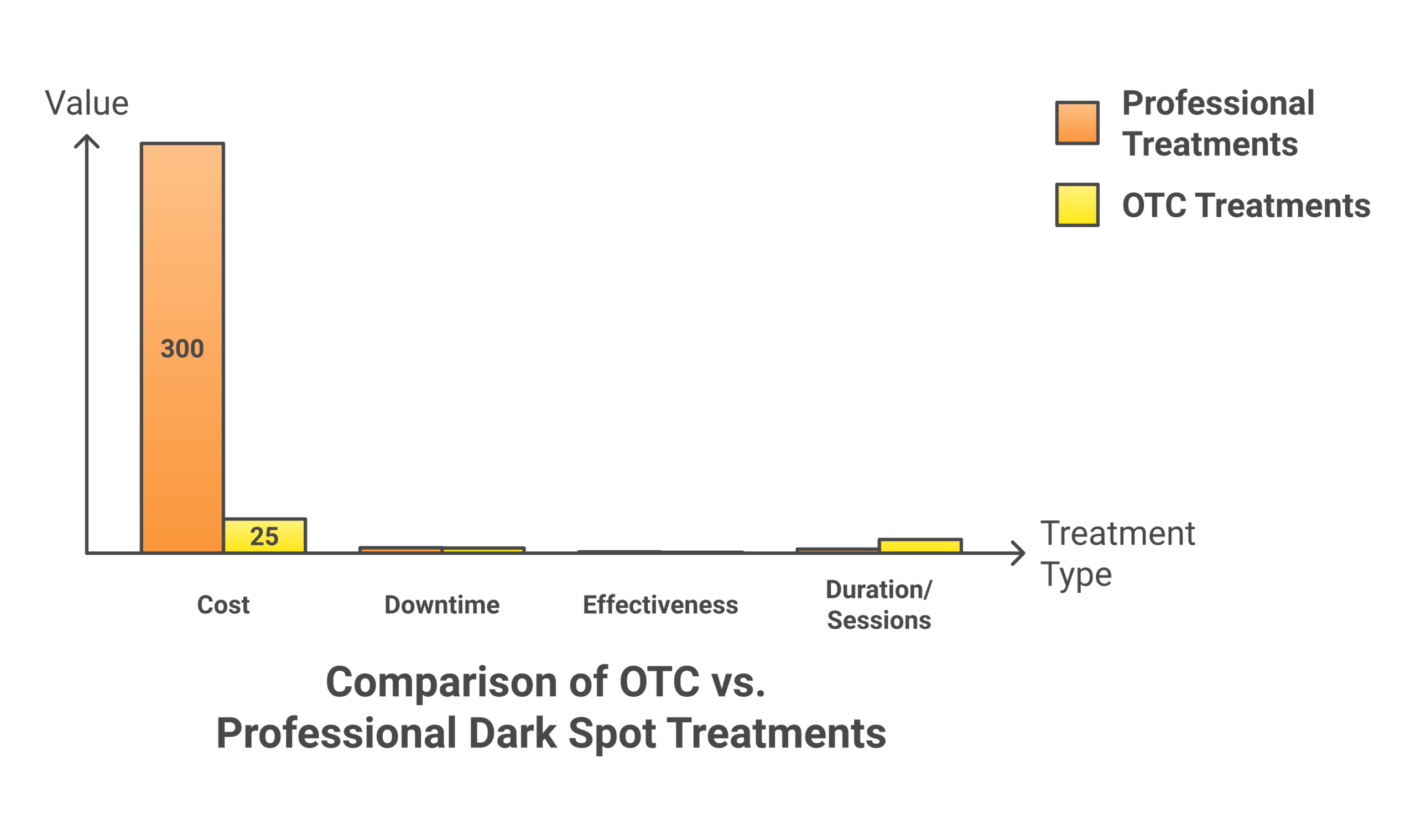
If OTC products haven’t worked after 3 months, or if your spots are deep-set and dark, professional treatments deliver faster results. The AAD reports that one or two laser sessions can treat age spots quickly, with longer-lasting results than creams alone.
Chemical Peels
A dermatologist applies a glycolic acid, TCA, or combination solution to peel away the outer skin layer. The AAD found that 47% of patients receiving chemical peels experienced at least 50% fading of their age spots. Peels are particularly effective on hands. Expect 3 to 7 days of recovery per session, with 3 to 6 sessions typically needed. Cost ranges from $150 to $400 per session.
Laser Therapy and IPL (Intense Pulsed Light)
Lasers and IPL target melanin directly. According to the Mayo Clinic, some laser and intense pulsed light therapies destroy melanin-producing cells without damaging the skin’s surface. You’ll typically need 2 to 4 sessions spaced 3 to 4 weeks apart. Cost runs $200 to $600 per session depending on the treatment area. There’s minimal downtime (1 to 3 days of mild redness), and body skin generally tolerates laser treatment well because it’s thicker than facial skin.
Cryotherapy
Your dermatologist applies liquid nitrogen to freeze individual spots. The AAD describes this as a common treatment where the dark spot sloughs off as the skin heals, revealing more even-toned skin beneath. It works best on isolated, well-defined spots. Cost is $100 to $300 per session. Healing takes 1 to 2 weeks, and there’s a small risk of temporary lightening around the treated spot, especially on darker skin tones.
Microdermabrasion
This procedure sands the outer skin layer. The AAD reports that after microdermabrasion treatments every two weeks for 16 weeks, about 40% of patients saw their age spots completely disappear. When combined with a chemical peel, that number jumps to 50%. It’s gentler than laser treatments and has essentially zero downtime.
DIY and Natural Approaches: An Honest Assessment
You’ll find plenty of claims about lemon juice, apple cider vinegar, and aloe vera fading dark spots. Here’s the reality: none of these have strong clinical evidence for treating solar lentigines. Lemon juice contains citric acid at roughly 5% to 8% concentration, far below the 10% to 30% glycolic acid concentrations used in clinical settings. It can also cause phytophotodermatitis (chemical burns) when combined with sun exposure.
Aloe vera has some evidence for mild skin-lightening effects, but the studies use concentrated extracts, not the gel from your kitchen plant. If you want to try natural approaches, pair them with proven OTC ingredients rather than relying on them alone.
The most effective “natural” step you can take is strict daily sunscreen use, which prevents new spots from forming while your treatment ingredients work on existing ones.
Body Skin vs. Face Skin: Why Your Treatment Approach Should Differ
Your body’s skin is structurally different from your face in ways that affect treatment. Body skin is generally thicker (1 to 4mm compared to 0.5 to 2mm on the face), has fewer sebaceous glands, and has slower cell turnover. This means:
- You can use stronger concentrations. A 1% retinol that would irritate your face might be well-tolerated on your arms. Glycolic acid at 10% to 12% is standard for body use versus 5% to 8% for the face.
- Results take longer. Slower turnover means pigmented cells take more time to cycle out. Add 2 to 4 weeks to any timeline you’ve read about facial dark spot treatment.
- You need more product. Treating both arms, your chest, and your hands requires significantly more product than your face. Look for body-specific formulations in larger sizes, or use serums only on individual spots and a treatment lotion on broader areas.
- Sunscreen coverage matters more. You’re covering a much larger surface area on the body. A full arm requires roughly a nickel-sized amount of sunscreen per application. Most people under-apply by 50% or more on body skin.
Realistic Treatment Timeline: What to Expect
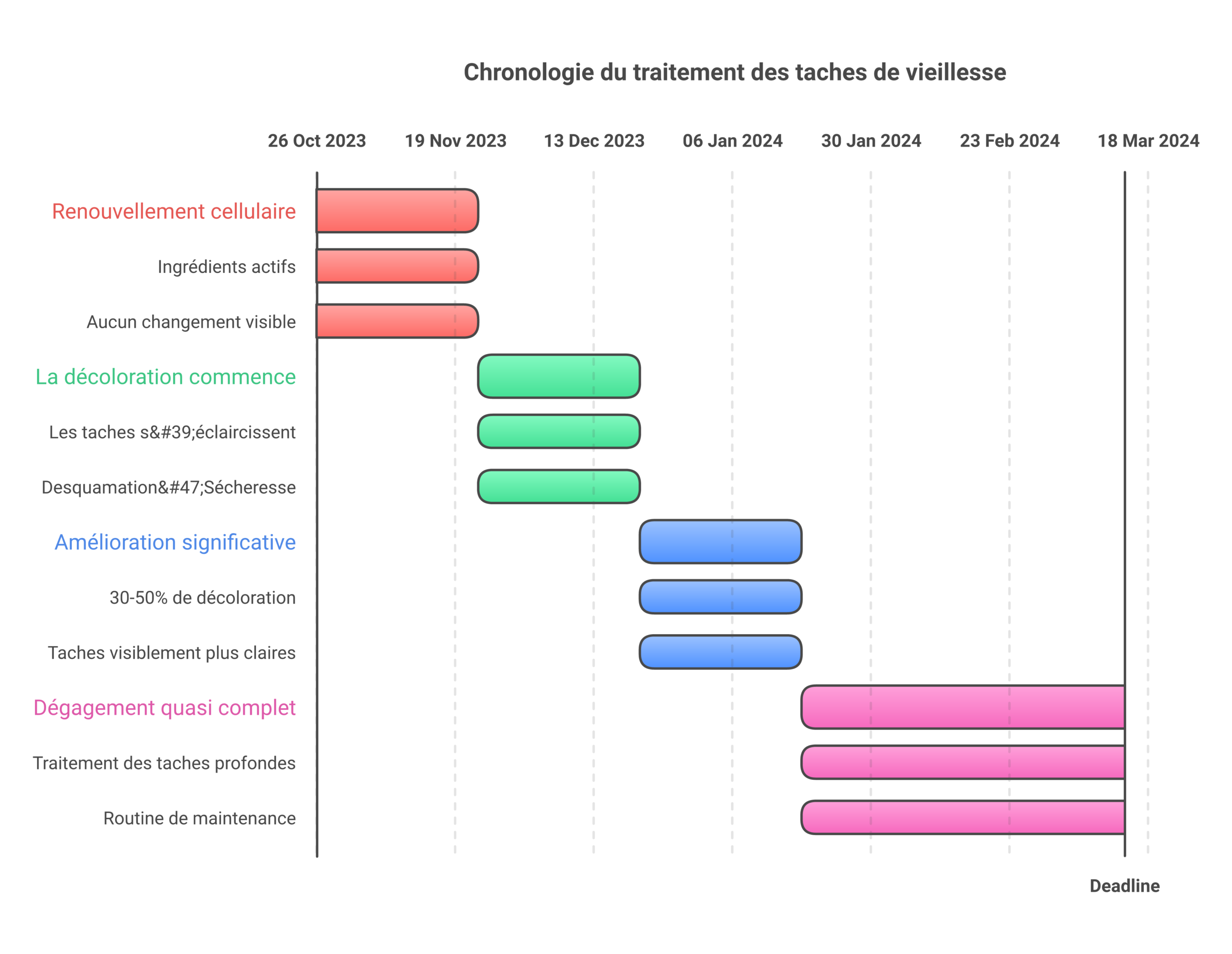
Set your expectations correctly from the start. Dark spots on your body will take longer to fade than spots on your face because of the slower cell turnover rate.
- Weeks 1 to 4: Active ingredients begin working beneath the surface. You won’t see visible changes yet. Stick with your routine. Some mild dryness or peeling with retinoids is normal.
- Weeks 4 to 8: Fading starts to become visible. Spots look slightly lighter. Keep using SPF daily since UV exposure during treatment can reverse your progress.
- Weeks 8 to 12: Significant improvement for most people. The AAD notes that hydroquinone typically shows visible lightening within this timeframe. Expect 30% to 50% fading on average.
- Months 4 to 6: Near-complete clearing for many surface-level spots. Deeper, older spots or those on the lower legs may need continued treatment or a switch to professional options.
If you’re not seeing any improvement by week 8, the spots may be too deep for OTC ingredients alone. That’s the right time to consult a dermatologist about professional treatments. You can also explore our reviewed dark spot treatments for products with clinical-strength active ingredients that may work more effectively.
Prevention: Stopping New Spots Before They Form
Every dermatologist will tell you the same thing: the best dark spot treatment is prevention. The Cleveland Clinic recommends broad-spectrum sunscreen with mineral filters like zinc oxide and titanium dioxide for daily protection. Here’s how to protect body skin specifically:
- Apply SPF 30+ to all exposed body skin daily. Not just beach days. A 10-minute drive with your window down counts as UV exposure.
- Reapply every 2 hours when outdoors, and after swimming or sweating. For hands, reapply after every wash.
- Wear UV-protective clothing. UPF-rated shirts, hats, and sun sleeves offer the most reliable protection for arms and shoulders. No reapplication needed.
- Check your rearview mirror habits. If your left arm gets more sun while driving, keep a mineral SPF stick in your car for quick touch-ups.
- Don’t skip body skin during cloudy days. Up to 80% of UV rays penetrate clouds. Cumulative “invisible” exposure is what creates spots over decades.
When to See a Dermatologist
Most age spots are harmless, but some changes deserve medical attention. The AAD recommends seeing a dermatologist if a spot changes in size, develops an irregular border, becomes multi-colored, bleeds, or itches. These can be signs of melanoma or other skin cancers that mimic age spots.
Beyond safety concerns, a dermatologist visit makes sense if you’ve tried OTC treatments for 3 months without improvement, if you want faster results through professional procedures, or if your spots are on sensitive areas like the hands where precision matters. Make sure you’re also aware of safety considerations for dark spot removers before choosing any treatment.
Frequently Asked Questions
Can I use the same dark spot cream on my body that I use on my face?
Yes, but body skin can usually tolerate higher concentrations. If your facial cream contains 0.5% retinol, you could use a 1% retinol product on your arms. The same applies to glycolic acid and vitamin C. Facial products will work on the body, they’ll just run out faster since you’re covering more area. Body-specific formulations typically come in larger sizes and cost less per ounce.
How long does it take to get rid of age spots on arms?
With consistent daily use of proven OTC ingredients like hydroquinone or retinol, expect visible fading in 8 to 12 weeks on arms. Professional treatments like laser or IPL can show results after 2 to 4 sessions spread over 6 to 12 weeks. Deeper or older spots may need 4 to 6 months of treatment. Daily sunscreen is required throughout, or UV exposure will create new spots while you’re treating old ones.
What is the fastest way to remove brown spots on the body?
Laser therapy or IPL (intense pulsed light) delivers the fastest results. The AAD notes that one or two sessions can treat age spots, though most patients need 2 to 4 sessions. Cryotherapy is another fast option for individual spots. For at-home treatment, hydroquinone at 2% (OTC) or 4% (prescription) works faster than other topical ingredients.
Are dark spots on arms a sign of something serious?
In most cases, no. Age spots (solar lentigines) are benign. But the AAD warns that what looks like an age spot could occasionally be skin cancer. See a dermatologist if a spot changes shape or color, has an irregular border, is larger than 6mm (about the size of a pencil eraser), or feels raised or rough. An annual skin check is a good idea for anyone with multiple age spots.
Does sunscreen actually help with existing dark spots?
Sunscreen alone won’t fade existing spots, but it prevents them from getting darker and stops new ones from forming. Without daily SPF, any treatment you use is fighting against ongoing UV damage. Think of sunscreen as the foundation that makes every other treatment ingredient work better. The Cleveland Clinic recommends mineral-based sunscreens with zinc oxide and titanium dioxide for the best broad-spectrum protection.
Can I treat dark spots on my back by myself?
You can apply body lotions containing glycolic acid or retinol to your back, though reaching every spot is tricky. A long-handled lotion applicator can help with coverage. For isolated spots on the upper back, professional cryotherapy (a single session per spot) is often the most practical option. Ask a partner or family member to help monitor back spots for changes, since you can’t easily see them yourself.
What ingredients should I avoid in body dark spot creams?
Avoid mercury-containing products (sometimes sold as “skin lighteners” from overseas), steroids above 1% without a prescription, and any product making “instant results” claims. High-concentration hydroquinone (above 2%) should only be used under dermatologist supervision. Check the ingredients list carefully, and choose products that disclose the exact concentration of active ingredients.
Ready to start treating dark spots on your arms and body? See our expert-reviewed dark spot treatments for the most effective options available, or visit our Consumer Health Guide homepage for more evidence-based skincare advice. You can also browse our full library of dark spot remover reviews and guides for more information, and learn more about our review team and how we evaluate products.