
Medically reviewed content. This article is for informational purposes only and does not constitute medical advice. Consult your physician before starting any supplement regimen.
Collagen is the most abundant protein in the human body, making up roughly 30% of your total protein (Ricard-Blum, 2011, CSHL Press). After age 25, your body produces about 1% less collagen each year, and by 60, production has dropped by nearly half. That decline shows up in your skin, joints, bones, and gut. The right collagen supplement can help offset some of that loss, but the market is flooded with options, and not all of them are worth your money. (see collagen supplementation research) (see collagen supplement evidence)
I’ve spent months reviewing clinical research, comparing formulations, and testing products to put together this guide. Below, you’ll find a clear breakdown of collagen types, what the science actually says about benefits, who stands to gain the most from supplementation, and exactly what to look for (and avoid) on the label. If you’re ready to compare specific products, check out our verified collagen supplement reviews.

What Is Collagen and Why Does It Matter?
Collagen is a structural protein that acts as a scaffold for your skin, bones, tendons, ligaments, and gut lining. Think of it as the glue holding your body together. Your body makes collagen naturally from amino acids (primarily glycine, proline, and hydroxyproline), but that production slows with age, UV exposure, smoking, and poor diet.
According to the American Academy of Dermatology (AAD), women can lose up to 30% of their skin collagen in the first five years after menopause. That makes supplementation especially relevant for adults over 50 and post-menopausal women.
Collagen supplements deliver pre-broken-down amino acids (called peptides) that your body can absorb and use to support its own collagen-building processes. But there are different types, different sources, and real differences in quality. Let’s break it all down.
The Three Main Types of Collagen (and When to Use Each)
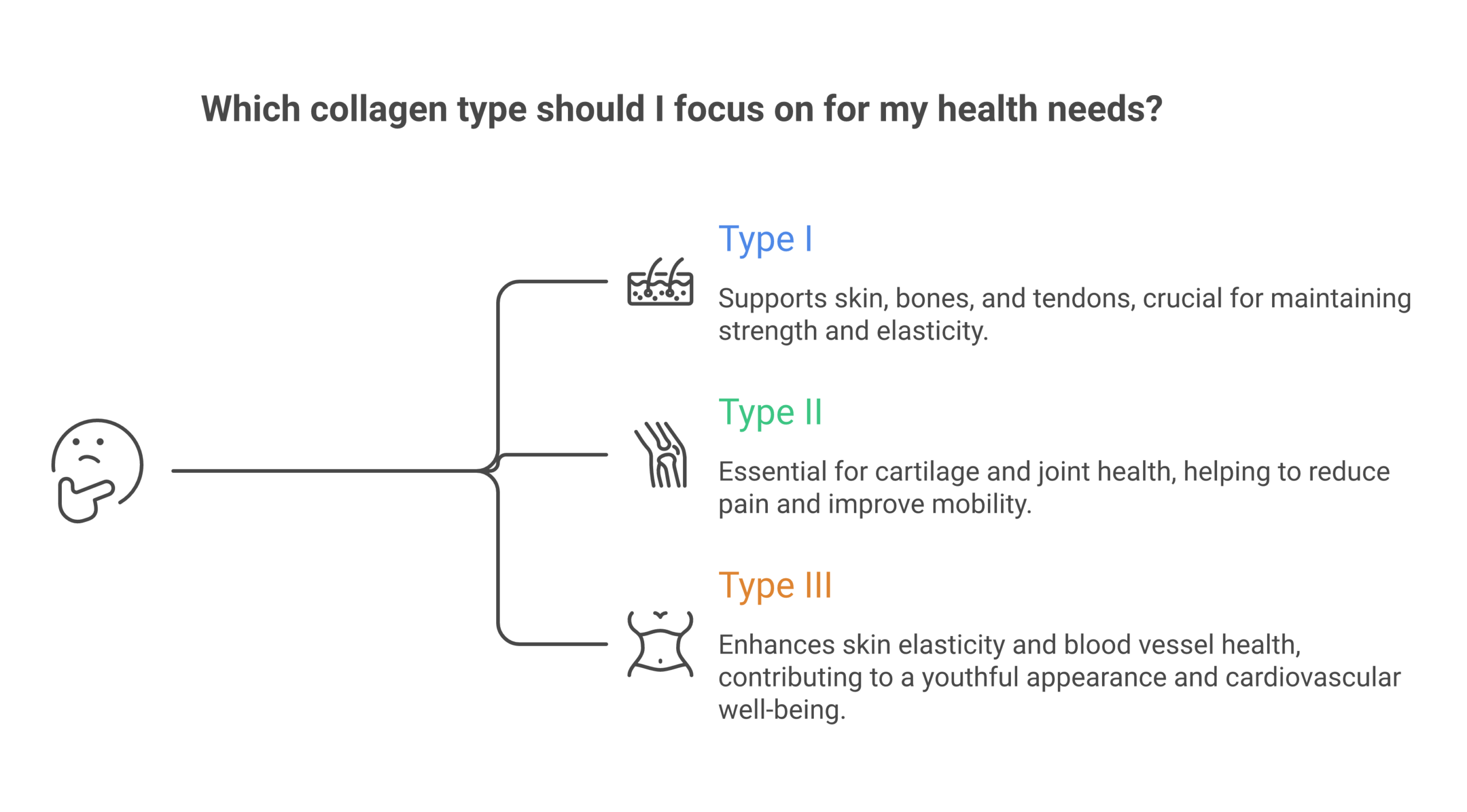
Your body contains at least 28 types of collagen, but three account for the vast majority of collagen in your tissues. Each type serves a different function, and knowing the difference helps you pick the right supplement for your goals.
Type I Collagen: Skin, Hair, Nails, and Bones
Type I makes up about 90% of the collagen in your body (Ricard-Blum, 2011). It’s the primary structural protein in your skin, bones, tendons, corneas, and teeth. If your main concern is skin elasticity, wrinkle reduction, hair thickness, or bone strength, Type I is what you want.
Most bovine (cow-derived) and marine (fish-derived) collagen supplements are rich in Type I. A 2014 study by Proksch et al. in the journal Skin Pharmacology and Physiology found that women taking 2.5g to 5g of Type I collagen peptides daily for 8 weeks showed a statistically significant increase in skin elasticity compared to placebo (69 participants, ages 35-55).
Type II Collagen: Joint Cartilage and Flexibility
Type II collagen is the main structural component of cartilage. If you have joint stiffness, osteoarthritis, or you’re an active person dealing with wear-and-tear on your knees, hips, or shoulders, Type II is the one to prioritize.
Lugo et al. published a 2016 study in the Nutrition Journal showing that just 40mg per day of undenatured Type II collagen (UC-II) over 180 days significantly reduced WOMAC pain and stiffness scores in 191 volunteers with knee osteoarthritis. That’s a fraction of the dose needed for other collagen types, because undenatured Type II works through immune modulation rather than direct tissue building.
Chicken-derived collagen is the richest source of Type II. You’ll often find it in joint-specific formulas.
Type III Collagen: Blood Vessels, Organs, and Gut
Type III collagen works alongside Type I in your skin, blood vessels, and intestinal lining. It’s important for cardiovascular health and gut integrity. Bovine collagen is the best source for Type III, as it naturally contains both Type I and Type III together.
If you’re dealing with gut health issues, Type III collagen’s role in maintaining the intestinal wall is worth noting. A 2022 study in JMIR Formative Research found that 20g of daily collagen peptide supplementation reduced bloating and improved mild digestive symptoms in healthy women over 8 weeks (Abrahams et al., 2022).
Collagen Types Comparison Table
| Type | Found In | Best For | Top Sources | Typical Dose |
|---|---|---|---|---|
| Type I | Skin, bones, tendons, teeth | Skin elasticity, wrinkles, hair, bone density | Bovine, marine (fish) | 2.5 to 15g/day |
| Type II | Cartilage | Joint pain, osteoarthritis, flexibility | Chicken (sternum cartilage) | 40mg/day (UC-II) or 10g/day (hydrolyzed) |
| Type III | Skin, blood vessels, intestines | Gut lining, cardiovascular support, skin structure | Bovine | 2.5 to 15g/day (usually combined with Type I) |
Collagen Sources: Marine vs. Bovine vs. Chicken
The animal source of your collagen matters more than most brands want you to think. Each source has real advantages and limitations.
Marine Collagen (Fish)
Marine collagen comes from fish skin and scales, primarily cod, pollock, or snapper. It’s almost entirely Type I collagen with smaller peptide molecules, which means faster absorption. Marine collagen peptides tend to have smaller molecular weight than bovine collagen, which may support faster absorption in the gut.
Marine collagen is the best choice if your primary goal is skin health. It’s also a good option for people who avoid beef or pork for religious or dietary reasons. The downside: marine collagen is typically more expensive, and some products carry a faint fishy taste (though the best tasteless collagen powders on the market, like those from Vital Proteins and Orgain, have solved that problem).
Bovine Collagen (Cow)
Bovine collagen is sourced from cowhide and bones. It provides both Type I and Type III collagen, making it the most versatile single-source option. It’s ideal if you want skin, bone, AND gut support in one product. Bovine collagen is also the most affordable option per gram.
Look for grass-fed, pasture-raised sourcing. This isn’t just marketing. Grass-fed, pasture-raised cattle are generally raised without antibiotics or added hormones, and many consumers prefer this sourcing for overall quality reasons.
Chicken Collagen
Chicken collagen (from sternum cartilage) is the primary source of Type II collagen. If joint health is your main concern, this is the source to look for. Most UC-II (undenatured Type II collagen) supplements come from chicken.
You’ll rarely find chicken collagen sold on its own as a powder. It’s more common in capsule-based joint formulas or multi-collagen blends.
Hydrolyzed Collagen Peptides vs. Gelatin vs. Undenatured Collagen
This is where most buyers get confused, and it’s one of the most important distinctions.
Hydrolyzed Collagen Peptides
Hydrolyzed collagen has been broken down into small peptides (typically 2,000 to 5,000 daltons in molecular weight) through enzymatic processing. These small peptides dissolve in hot or cold liquids, have no taste or texture, and absorb rapidly in the gut. This is the form used in most clinical studies and the one I recommend for daily use.
A 2015 study by Asserin et al. in the Journal of Cosmetic Dermatology used hydrolyzed collagen peptides and found significant improvements in skin hydration and collagen density in the dermis after 8 weeks of daily supplementation.
Gelatin
Gelatin is partially hydrolyzed collagen. It dissolves only in hot liquid and gels when cooled (that’s what makes Jello jiggle). Same amino acids as hydrolyzed collagen, but larger molecules mean slower absorption. Gelatin works great in cooking (bone broth, gummies, baked goods) but isn’t practical for daily supplementation in drinks.
Undenatured (Native) Type II Collagen
This is a special case. Undenatured Type II collagen (UC-II) hasn’t been broken down at all. It works differently from peptides: instead of providing building blocks, it trains your immune system to stop attacking your own cartilage (a process called oral tolerance). Effective at very small doses (40mg/day) specifically for joint health.
What the Research Actually Says About Collagen Benefits
I want to be honest about what’s well-supported and where the evidence is still developing. Here’s where the clinical data stands as of 2026.
Skin Elasticity and Hydration: Strong Evidence
This is collagen’s strongest area of research. A 2021 systematic review and meta-analysis by de Miranda et al. in the International Journal of Dermatology analyzed 19 randomized controlled trials with 1,125 total participants. The findings: oral collagen supplementation significantly improved skin hydration, elasticity, and wrinkle reduction compared to placebo, with benefits appearing at 6 to 12 weeks.
Proksch et al. (2014, Skin Pharmacology and Physiology) found that 2.5g of collagen peptides daily for 8 weeks reduced eye wrinkle volume by 20% in 114 women ages 45-65. Kim et al. (2018, Nutrients) showed 1,000mg of low-molecular-weight collagen improved skin hydration at 6 weeks and wrinkle depth at 12 weeks in 64 women ages 40-60.
Joint Health: Good Evidence
Zdzieblik et al. (2017, Applied Physiology, Nutrition, and Metabolism) studied 139 young athletes with knee discomfort. After 12 weeks of 5g daily collagen peptides, the treatment group reported significantly less activity-related joint pain and reduced need for pain medication compared to placebo.
For osteoarthritis specifically, the Lugo et al. (2016) trial mentioned earlier showed UC-II outperformed glucosamine plus chondroitin in reducing WOMAC scores over 180 days. If you’re dealing with stiff, painful joints, the evidence supports collagen as a real option, not just a marketing claim. For more on supporting joint health through diet, see our guide on best foods for gut health, since inflammation and gut integrity affect joints too.
Bone Density: Promising but Early
Konig et al. (2018, Nutrients) studied postmenopausal women (average age 64) taking 5g of specific collagen peptides daily for 12 months. The collagen group showed increased bone mineral density in the spine and femoral neck, along with favorable shifts in bone formation markers (P1NP increased, CTX bone breakdown marker decreased).
This is encouraging, but we need more large-scale trials before drawing firm conclusions. Collagen supplementation should complement, not replace, calcium, vitamin D, and weight-bearing exercise for bone health.
Gut Health: Preliminary Evidence
Collagen’s amino acid profile, especially glycine and glutamine, supports the cells lining your intestinal wall. A 2017 lab study by Chen et al. in Food & Function showed collagen peptides strengthened tight junction proteins (ZO-1 and occludin) in intestinal cell models, suggesting a protective effect on gut barrier function.
The 2022 human study (Abrahams et al., JMIR Formative Research) found reduced bloating with 20g daily collagen, but the researchers noted this likely reflected improved digestion rather than actual gut healing, which takes longer. More human trials are needed here. If gut health is a priority, collagen may be a helpful addition alongside foods that support gut health and proper nutrition.
Who Benefits Most from Collagen Supplements?
Collagen isn’t a magic fix for everyone. Based on the research, these groups stand to gain the most:
Adults over 50. Collagen production drops significantly with age. By 60, you’re producing roughly half the collagen you made at 25 (Varani et al., 2006, American Journal of Pathology). Supplementation helps offset that decline for skin, joints, and bones.
Post-menopausal women. The estrogen drop during menopause accelerates collagen loss in skin and bones. The Konig et al. (2018) bone density study specifically targeted this population and found measurable benefits at 12 months.
Active adults and athletes. Joint stress from exercise increases collagen turnover. The Zdzieblik et al. (2017) study showed clear benefits for athletes with activity-related knee pain.
People with early signs of skin aging. Wrinkles, dryness, and loss of firmness respond well to collagen peptides. Results typically appear at 4 to 12 weeks of consistent use. You might also consider pairing collagen with a quality topical product. See our wrinkle cream reviews for options that work from the outside in.
Individuals with joint pain or osteoarthritis. Both hydrolyzed collagen and UC-II have clinical support for reducing joint pain and stiffness.
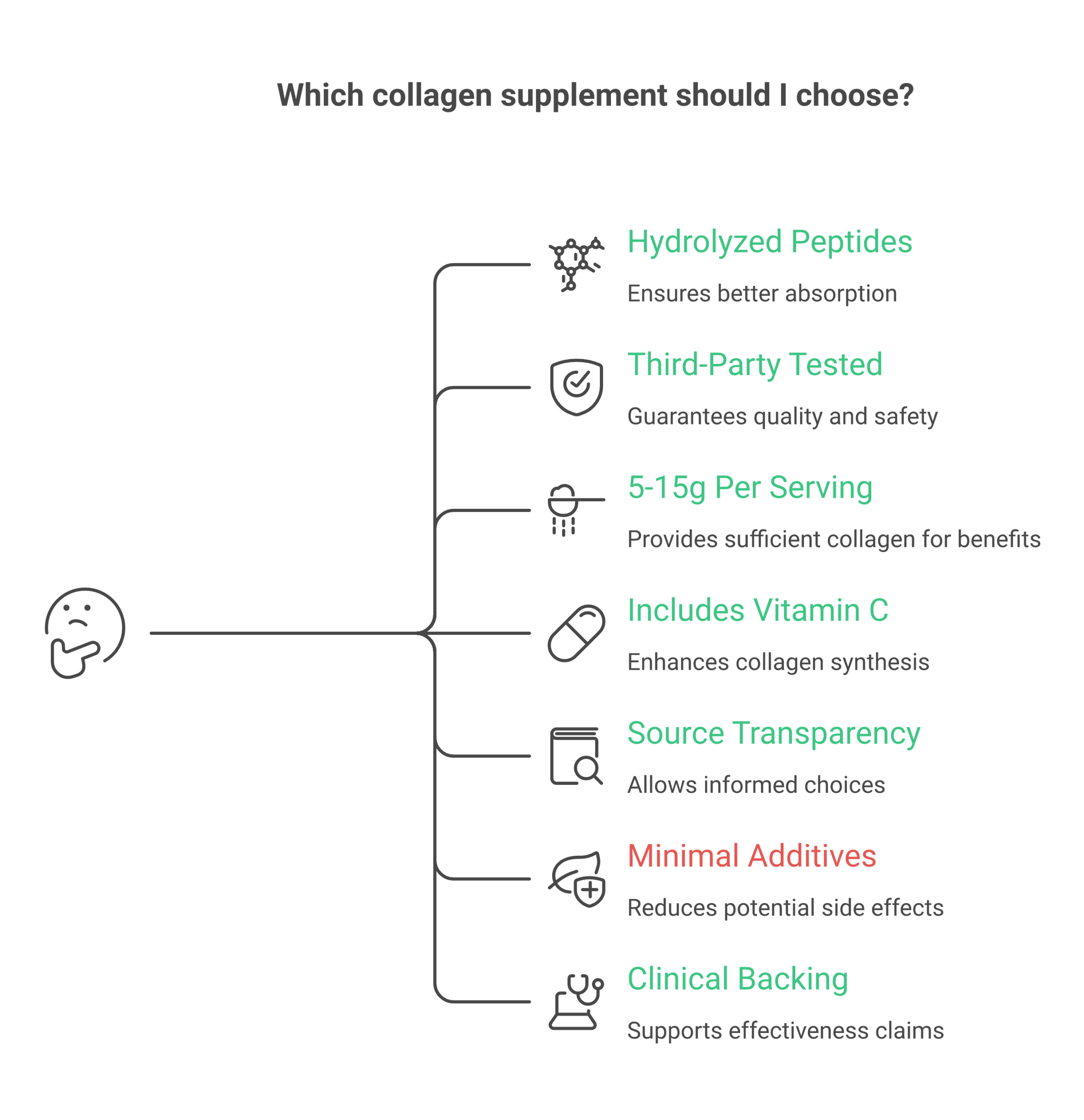
What to Look for in a Collagen Supplement
Not all collagen products deliver what they promise. Here’s my checklist for evaluating any collagen supplement, whether it’s a powder, capsule, or liquid.
1. Third-Party Testing
This is non-negotiable. Look for NSF International, USP, or Informed Sport certification on the label. Third-party testing confirms the product actually contains what it claims and screens for heavy metals, pesticides, and contaminants. Independent testing labs like ConsumerLab have found that some collagen supplements contain less collagen than advertised or carry heavy metal contamination, which is why third-party certification matters.
2. Source and Type
Match the collagen type to your goal:
- Skin, hair, nails, bones: Type I (marine or bovine)
- Joints: Type II (chicken) or hydrolyzed collagen at higher doses
- General wellness: Type I + III blend (bovine)
- Multi-purpose: Multi-collagen blend (all three sources)
For source quality, look for grass-fed/pasture-raised bovine or wild-caught fish. Avoid products that don’t disclose their collagen source at all.
3. Dosage: 5 to 15 Grams Per Day
Most clinical studies showing real results used between 2.5g and 15g of hydrolyzed collagen daily. For skin benefits, 2.5 to 5g appears effective. For joint and bone support, aim for 5 to 15g. For UC-II (undenatured Type II), the effective dose is much lower: 40mg per day.
Be skeptical of products offering only 1 to 2 grams per serving, especially capsules. That’s likely too low to match the doses used in clinical research.
4. Added Vitamin C
Vitamin C is essential for collagen synthesis. Your body literally cannot build collagen without it (Pullar et al., 2017, Nutrients). Some collagen supplements include vitamin C in the formula, which is a plus. If yours doesn’t, take it with a glass of orange juice or a vitamin C supplement. This is a simple step that most people skip, and it can make a real difference in how well your body uses the collagen you’re taking.
5. Minimal Additives
The cleanest collagen supplements contain one ingredient: hydrolyzed collagen peptides. Watch out for added sugars, artificial sweeteners, fillers, and unnecessary flavoring. Flavored varieties are fine if you prefer them, but check the sugar content. Some flavored collagen products pack 8 to 12 grams of sugar per serving, which undermines the health benefits.
6. Molecular Weight
Lower molecular weight means smaller peptides, faster absorption, and better dissolution in liquids. Look for products that specify “hydrolyzed” or list a molecular weight under 5,000 daltons. This is especially relevant if you want a tasteless powder that dissolves cleanly in coffee or water.
Red Flags to Avoid in Collagen Products
After reviewing dozens of products, I’ve seen these warning signs repeatedly:
- No third-party testing mentioned anywhere. If a brand doesn’t test independently, assume they have something to hide.
- Proprietary blends that hide individual doses. You should know exactly how many grams of each collagen type you’re getting.
- Outrageous health claims. Any product claiming to “reverse aging” or “rebuild your joints in days” is selling hype, not science.
- Undisclosed collagen source. If the label just says “collagen” without specifying bovine, marine, or chicken, move on.
- Extremely cheap pricing. Quality collagen from grass-fed bovine or wild-caught fish costs money to produce. If a 30-day supply costs less than $10, question what’s actually in it.
- Added hormones or unnecessary ingredients. Collagen doesn’t need added hormones, and many extras (like biotin at mega-doses) are marketing tactics, not science-backed additions.
How to Take Collagen for Best Results
Timing
There’s no single “best time” to take collagen. The clinical studies showing benefits did not specify strict timing. That said, taking collagen on an empty stomach (morning, before breakfast) may improve absorption since it won’t compete with other proteins for uptake. Some people prefer adding it to their morning coffee or smoothie, which works just fine.
For joint-specific benefits, some sports medicine researchers suggest taking collagen 30 to 60 minutes before exercise, paired with vitamin C, based on a 2017 study by Shaw et al. in the American Journal of Clinical Nutrition that showed increased collagen synthesis markers in response to this protocol.
Consistency Matters More Than Timing
Every clinical trial showing real results ran for at least 8 weeks, and most ran for 12 weeks or longer. Collagen isn’t something you’ll feel working overnight. Commit to at least 3 months of daily use before judging results. If you skip days regularly, you’re unlikely to see the benefits the research describes.
Pair with Vitamin C
I mentioned this above, but it bears repeating: vitamin C is a required cofactor for collagen synthesis (Pullar et al., 2017). Take your collagen with 50 to 100mg of vitamin C for best results. A small glass of orange juice, a few strawberries, or a vitamin C tablet all work.
Stay Hydrated
Collagen is a protein, and protein metabolism requires adequate water. Aim for at least 8 glasses of water throughout the day when supplementing with collagen.
Collagen for Skin and Joints: A Dual Approach
Many people over 50 deal with both skin changes and joint discomfort at the same time. The good news is you don’t always need separate products. A bovine-sourced hydrolyzed collagen at 10g per day covers both Type I (skin) and Type III (structural support), and the amino acids also benefit cartilage maintenance.
For targeted joint relief, adding 40mg of UC-II collagen to your routine can complement a standard hydrolyzed collagen powder. Several brands offer combination products that include both forms. If you want to compare specific formulas, our team has tested and reviewed options in our verified collagen supplement reviews section.
And don’t overlook what you put on your skin alongside what you take internally. Collagen supplements address skin structure from the inside, while topical products target the surface. Pairing an oral supplement with a proven topical can produce faster visible results. Browse our dark spot remover reviews if uneven skin tone is part of your concern.
The Best Collagen Multivitamin: Does It Exist?
Some products combine collagen with a multivitamin formula, and this category is growing fast. The idea is appealing, but there are trade-offs.
The main issue: most multivitamin-collagen combos contain only 1 to 3 grams of collagen per serving. That’s below the 2.5 to 5g minimum used in most skin studies and well below the 5 to 15g range for joint and bone benefits. You’re getting a token amount of collagen, not a clinical dose.
If you want both a multivitamin and collagen, I’d recommend taking them as separate products so you can control the dose of each. The exception: if the multivitamin-collagen product provides at least 5g of hydrolyzed collagen AND includes vitamin C, it could be a reasonable all-in-one option. Just check the label math carefully.
Frequently Asked Questions About Collagen Supplements
What is the best type of collagen to take?
It depends on your goal. For skin, hair, and bone health, Type I collagen from marine or bovine sources has the strongest research support. For joint pain and osteoarthritis, undenatured Type II collagen (UC-II) from chicken cartilage is the most studied option at just 40mg per day. For general wellness covering skin, bones, and gut, a bovine-sourced Type I and III blend at 5 to 15g daily is the most versatile choice.
How long does it take for collagen supplements to work?
Clinical studies show skin improvements (hydration, elasticity, wrinkle reduction) typically appear after 6 to 12 weeks of consistent daily use. Joint pain relief may begin at 8 to 12 weeks, with continued improvement over 6 months. Bone density changes, as seen in the Konig et al. (2018) study, were measured at 12 months. Be patient and stay consistent.
Can collagen supplements cause side effects?
Collagen supplements have a strong safety profile. Multiple randomized controlled trials on collagen supplementation have reported no serious adverse effects, with mild bloating being the most common complaint at higher doses. Some people experience mild bloating or a feeling of fullness, especially at higher doses. If you have a fish, shellfish, or egg allergy, check the collagen source carefully to avoid allergens.
Is marine collagen better than bovine collagen?
Marine collagen has smaller peptide molecules and may absorb slightly faster. It’s primarily Type I, making it excellent for skin health. Bovine collagen offers both Type I and Type III, making it more versatile for skin, bones, and gut support. Neither is objectively “better.” Marine is the better choice for skin-focused goals and for people avoiding beef. Bovine is better for broader coverage at a lower price point.
Should I take collagen with food or on an empty stomach?
Either works. Taking collagen on an empty stomach reduces competition with other dietary proteins for absorption. Taking it with food is fine too, and some people find it easier on their stomach that way. The most important factors are taking it consistently every day and pairing it with vitamin C for better synthesis.
How much collagen should adults over 50 take daily?
Based on the clinical research, 5 to 15 grams of hydrolyzed collagen peptides daily is the effective range for adults over 50. Start with 5g and increase to 10 to 15g if targeting joint or bone benefits. For UC-II (joint-specific), 40mg daily is the studied dose. Always check with your doctor first, especially if you take medications or have kidney concerns, since collagen is a protein and affects protein intake totals.
What should I look for in a collagen powder?
Five things: (1) third-party testing from NSF, USP, or Informed Sport, (2) clearly labeled collagen type and source, (3) at least 5g of hydrolyzed collagen per serving, (4) minimal additives, fillers, and sugar, and (5) the inclusion of vitamin C or a note to pair with vitamin C. Avoid proprietary blends that hide dosages and products that don’t disclose their collagen source. For a full product comparison based on these criteria, visit our collagen supplement reviews category.
Bottom Line
Collagen supplementation isn’t a miracle fix, but the clinical evidence for skin, joint, and bone benefits is real and growing. The key is choosing the right type for your goals, taking an effective dose (5 to 15g of hydrolyzed peptides or 40mg of UC-II daily), and sticking with it for at least 8 to 12 weeks.
Look for third-party tested products with clean ingredients, pair with vitamin C, and be skeptical of brands making exaggerated promises. If you’re over 50, post-menopausal, or dealing with joint discomfort, the research suggests collagen is one of the more evidence-backed supplements available today.
Ready to find the right collagen for you? Start with our verified collagen supplement reviews to compare tested products side by side, or explore Consumer Health Guide for more research-backed health and supplement guidance. You can also learn more about our review methodology to see how we evaluate every product.