
This content is for informational purposes only and does not replace professional medical advice. Consult your healthcare provider before starting any supplement regimen, especially if you take prescription medications or have a pre-existing condition.
Emma Relief is one of the most heavily advertised gut health supplements online right now. If you’ve searched for help with constipation, bloating, or general digestive discomfort, you’ve probably seen the ads featuring Dr. Gina Sam, a New York City gastroenterologist. The product promises to “target bacterial overgrowth, parasites and pathogens” while fixing your gut lining and restoring regularity. (see gut microbiome research) (see probiotic safety)
But does it actually work? And is it worth the price?
I spent several weeks researching Emma Relief’s formula, reading through hundreds of customer reviews on Amazon, Trustpilot, and the Better Business Bureau, and cross-referencing each ingredient against published clinical research. Here’s what I found.
Quick verdict: Emma Relief contains several ingredients with real scientific backing for gut health, particularly berberine and quercetin. But the lack of dosage transparency, mixed customer reviews, an F rating with the BBB, and aggressive billing practices give me pause. There are more transparent options available. If you want to compare alternatives, check our gut health supplement reviews for a side-by-side breakdown.
What Is Emma Relief?
Emma Relief is a daily digestive supplement sold primarily through its official website, emmarelief.com. The product is marketed as a solution for constipation, bloating, gas, heartburn, and “leaky gut.” According to the brand, Emma targets harmful gut bacteria while supporting beneficial strains like Akkermansia and Bifidobacteria.
The supplement comes in capsule form. A single bottle costs $59 on the official site, with bulk discounts available: three bottles for $147, six for $234, or nine for $297. The company advertises a 90-day money-back guarantee, though (as I’ll cover below) customer experiences with that refund policy vary widely.
Emma Relief is not sold in retail stores. Listings on Amazon do exist, but the brand’s official site warns that third-party sellers may carry counterfeit product. The supplement is manufactured in the USA, though I could not verify whether the facility holds GMP certification based on publicly available information.
Who Is Dr. Gina Sam?
Dr. Gina Sam is a board-certified gastroenterologist based in New York City. She earned her MD and MPH from Tufts University School of Medicine in 2003, completed her internal medicine residency at Lenox Hill Hospital (2003-2006), and finished her gastroenterology fellowship at NYU School of Medicine (2006-2009). She holds board certification in both internal medicine and gastroenterology from the American Board of Internal Medicine.
Her most notable clinical role was as Director of the Gastrointestinal Motility Center at Mount Sinai Hospital, where she also served as Assistant Professor at the Icahn School of Medicine. She currently runs a private practice in Manhattan (Gina Sam, MD, MPH, PC, established in 2018) and maintains membership in the American College of Gastroenterology, the American Gastroenterological Association, and the American Neurogastroenterology and Motility Society.
So the credentials check out. Dr. Sam is a real, practicing gastroenterologist with genuine academic and clinical experience in GI motility, which is directly relevant to constipation and digestive health. That said, physician endorsement of a supplement does not automatically mean the product is superior to alternatives. Many qualified doctors attach their names to supplement brands. The question is whether the formula itself holds up.
How Emma Relief Claims to Work
According to the brand, Emma Relief works through three mechanisms:
- Targeting harmful bacteria and pathogens. The formula is supposed to suppress organisms like Archaea (methane-producing microbes linked to constipation) and other “bad” gut bacteria.
- Repairing the gut lining. Ingredients like quercetin and licorice root are included to reduce intestinal permeability (sometimes called “leaky gut”).
- Boosting motility. Berberine and other compounds are meant to get your digestive system moving again, reducing constipation and bloating.
The science behind these individual mechanisms is real. Methane-producing organisms in the gut are associated with slower transit time. Intestinal permeability is a documented condition. And certain natural compounds do influence gut motility. The question is whether Emma’s specific formula, at whatever doses it contains, delivers these results in practice.
Emma Relief Ingredients Breakdown
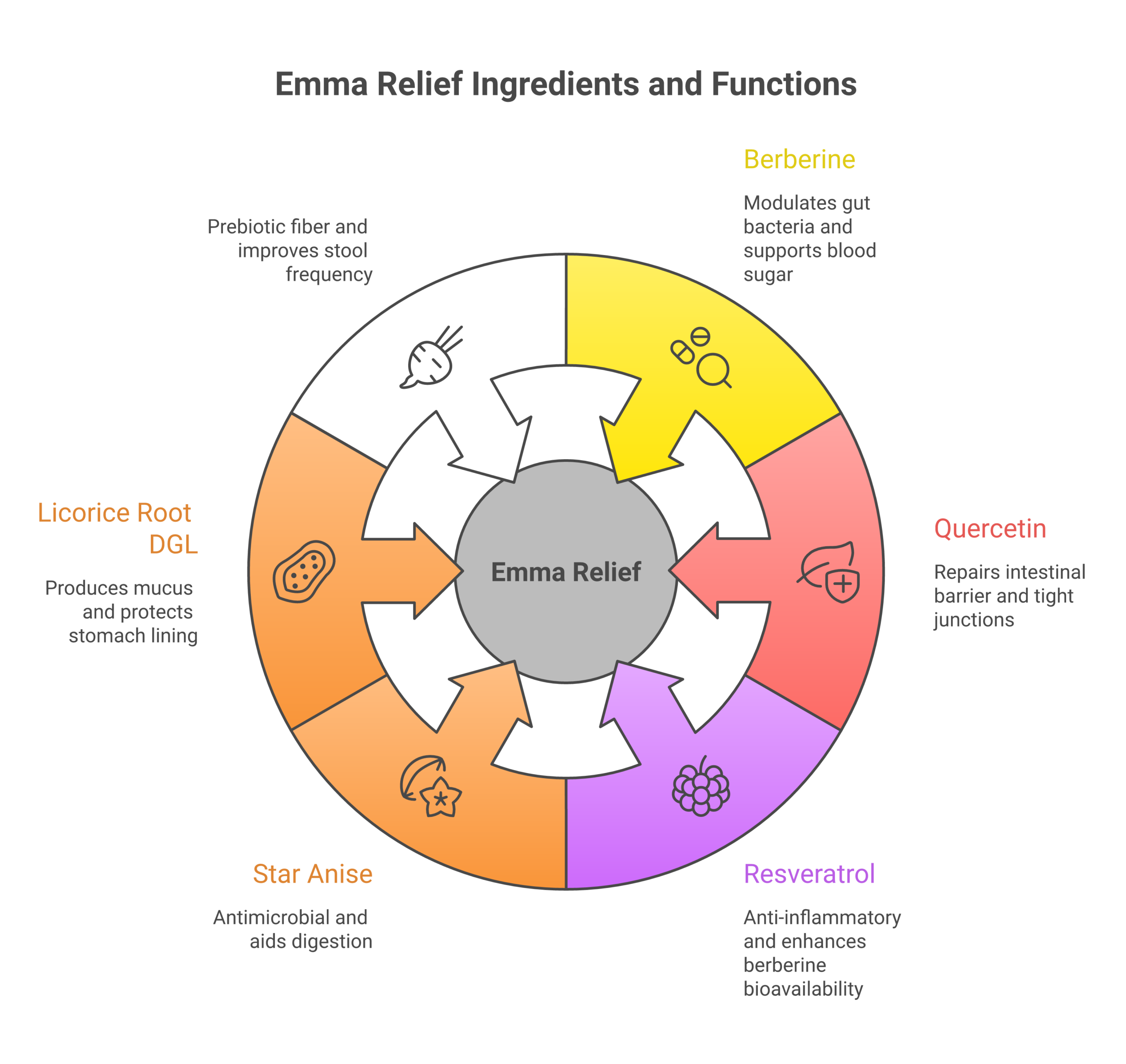
Emma Relief lists six primary ingredients. I looked at each one against published research.
Berberine
Berberine is a plant alkaloid with a solid research base. A 2023 review published in Frontiers in Nutrition analyzed 35 studies and found that berberine can alter gut bacterial composition, promoting beneficial organisms like Bifidobacterium breve while reducing pathogens. A separate clinical study published in Nutrition Research (2020) found that a berberine-based supplement reduced diarrheal events by 50-70% after 30 days of use. Berberine has also shown effects on blood sugar regulation and lipid metabolism in multiple trials.
Typical effective doses in clinical studies range from 500 mg to 1,500 mg daily. Emma Relief does not disclose how much berberine each capsule contains, which makes it impossible to compare against studied doses.
Quercetin
Quercetin is a flavonoid found in onions, apples, and other plant foods. A 2009 study published in the Journal of Nutrition (PMID: 19297429) found that quercetin enhanced intestinal barrier function by promoting the assembly of tight junction proteins (zonula occludens-2, occludin, and claudin-1) in cell models. More recent animal studies have shown quercetin can reduce markers of intestinal permeability and modulate gut microbiota composition.
The research here is promising but still mostly limited to cell and animal studies. Large-scale human clinical trials specifically on quercetin for gut barrier repair are limited.
Deglycyrrhizinated Licorice (DGL)
DGL is a form of licorice root with the glycyrrhizin removed (glycyrrhizin can raise blood pressure). DGL has a long history in traditional medicine for digestive complaints. Some evidence suggests it increases mucus production in the GI tract, which may protect the stomach lining. However, high-quality modern clinical trials on DGL for gut health are sparse. Most of the evidence is older or based on small studies.
Star Anise
Star anise has been used in traditional Chinese medicine for thousands of years. It contains shikimic acid (the precursor used to manufacture oseltamivir/Tamiflu) and various antimicrobial compounds. Emma Relief claims star anise “optimizes bile production” for fat digestion. I could not find strong clinical evidence specifically linking star anise supplementation to improved bile output or digestive function in humans. The research here is thin.
Chicory Root Inulin
Chicory root inulin is a well-studied prebiotic fiber. A 2019 randomized controlled trial published in the International Journal of Food Sciences and Nutrition found that 10 grams per day of chicory inulin significantly increased stool frequency and softened stool consistency in adults with low bowel frequency. Inulin feeds beneficial gut bacteria, which produce short-chain fatty acids that nourish colon cells.
This is one of Emma’s stronger ingredients from an evidence standpoint. The catch, again, is that we don’t know how much inulin each capsule contains. Clinical benefits in studies required 10+ grams daily, which is a substantial amount for a capsule supplement to deliver.
Resveratrol
Resveratrol is a polyphenol found in grapes and red wine. Emma Relief positions it as a “gut modeler” and claims it enhances the bioavailability of berberine. There is some preclinical evidence that resveratrol has anti-inflammatory properties in the gut and may influence microbiota composition. Its role as a bioavailability enhancer for berberine has limited published support. Resveratrol itself has well-documented bioavailability problems, meaning the body absorbs very little of it orally.
The Dosage Problem
The biggest issue with Emma Relief’s formula is transparency. The brand does not publicly disclose the exact amount of each ingredient per serving. Without this information, you can’t compare what you’re getting to the doses used in clinical studies. A supplement could contain 50 mg of berberine or 500 mg, and those are very different products. This lack of disclosure is a red flag for informed consumers, especially at the $59 per bottle price point.
What Do Customers Say?
Customer feedback on Emma Relief is genuinely mixed, and the picture changes depending on where you look.
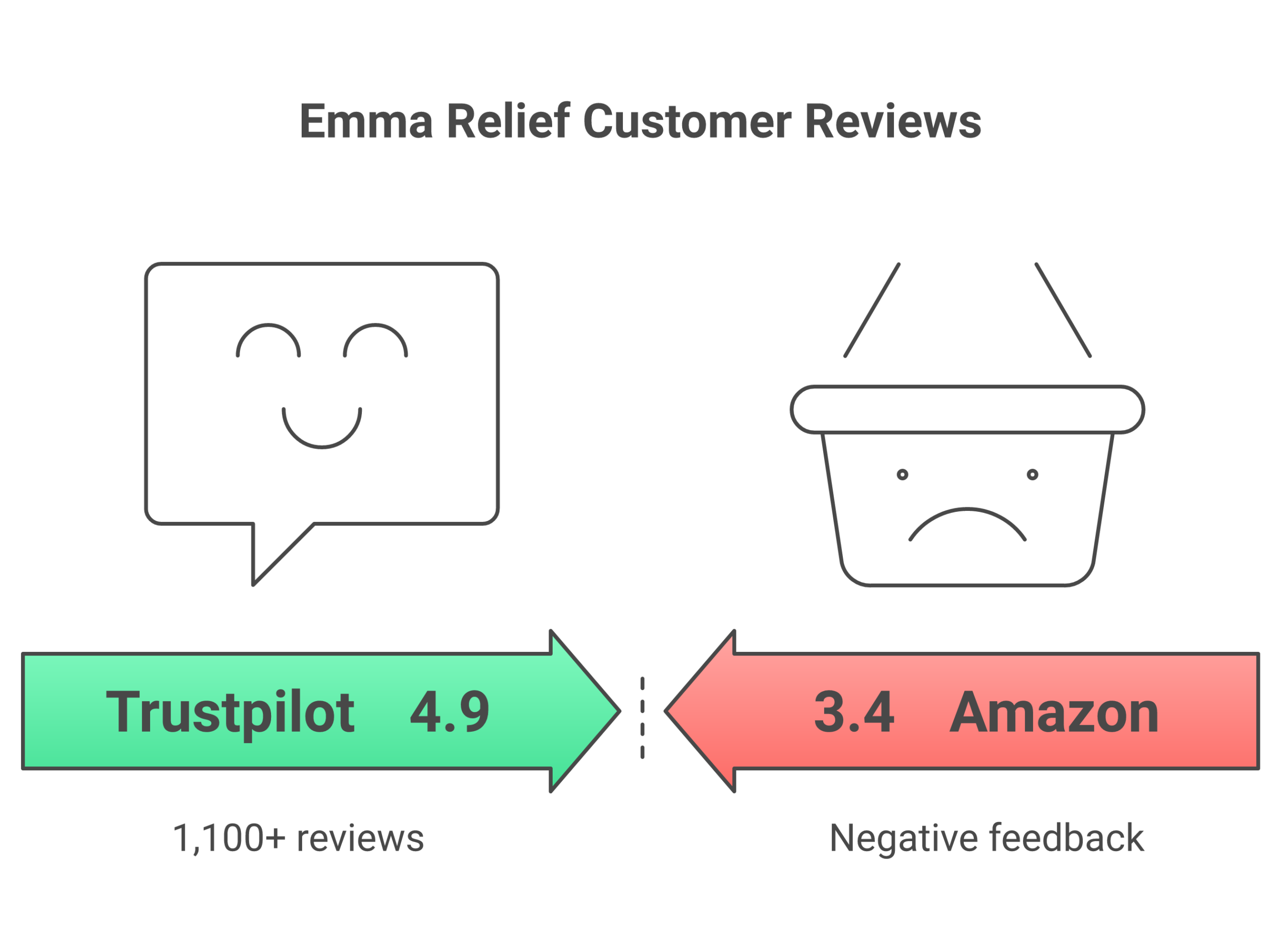
Trustpilot: Emma Relief shows a 3.4-star rating (rated “Average”) from over 1,100 reviews. The positive reviews generally mention improved bowel regularity, less bloating, and better digestion within 1-2 weeks of starting the product.
Amazon: The Amazon listing (where available) shows a lower 3.4-star average. Negative reviews on Amazon cite lack of results, stomach discomfort, and difficulty obtaining refunds.
Better Business Bureau (BBB): This is where things get concerning. Emma Relief’s parent company holds an F rating with the BBB. Common BBB complaints include:
- Customers reporting they ordered 2 bottles but received (and were charged for) 6
- Difficulty getting refunds honored within the advertised 90-day guarantee window
- The refund clock starting from the order date, not when the customer begins taking the product
- Slow or unresponsive customer service
- Reports of unauthorized subscription charges
The gap between Trustpilot (3.4 stars) and the BBB (F rating) is striking and worth paying attention to. Some review platforms allow brands to solicit reviews from satisfied customers, which can skew ratings upward. The BBB, by contrast, primarily captures complaints.
To be fair, the company does respond to BBB complaints and has resolved some cases with refunds. But the pattern of billing and refund issues is consistent enough across multiple platforms that it warrants caution.
Emma Relief vs. Other Gut Health Options
Emma Relief is far from the only gut health supplement available. Here’s how it compares to common alternatives:
Probiotics (Lactobacillus, Bifidobacterium strains) are the most studied category of gut supplements. Hundreds of randomized controlled trials support their use for conditions ranging from antibiotic-associated diarrhea to IBS. The downside: many probiotic strains don’t survive stomach acid, and benefits are strain-specific.
Postbiotics (like tributyrin/butyrate) are a newer category that bypass the survival problem entirely. Tributyrin delivers butyrate directly to the colon, where it nourishes colonocytes and supports barrier function. If you’re unfamiliar with this category, our postbiotic supplement guide covers the research in detail. You can also read about the differences between these approaches in our postbiotics vs. probiotics comparison.
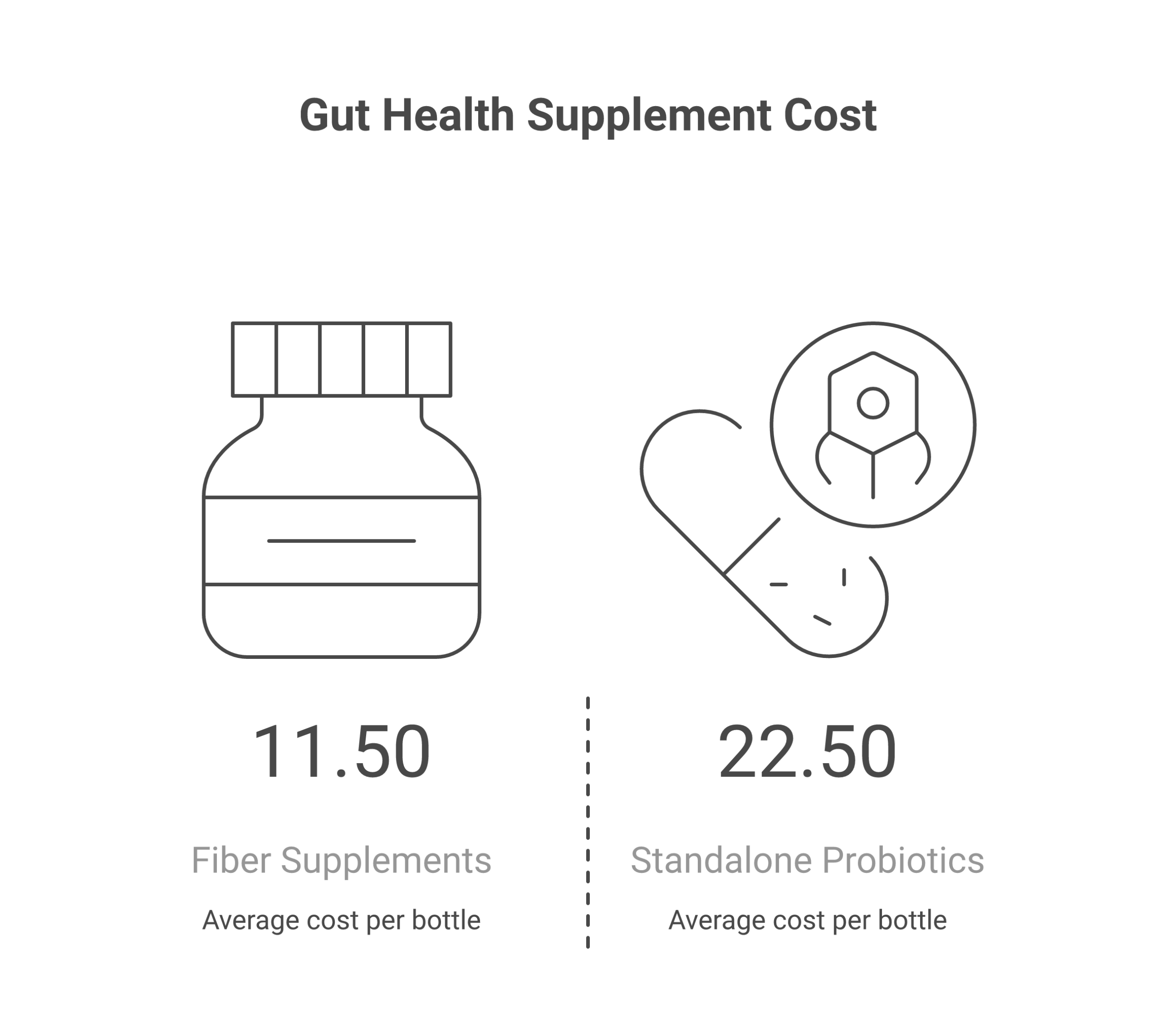
Fiber supplements (psyllium, methylcellulose, inulin) have the longest track record for constipation relief and are recommended by the American Gastroenterological Association as a first-line treatment.
Berberine standalone supplements are available for a fraction of Emma’s price ($15-25 for a 60-capsule bottle) with clearly labeled dosages, typically 500 mg per capsule. If berberine is the ingredient you’re most interested in, a standalone product gives you more control and transparency.
For a broader look at how different gut health supplements stack up, see our complete gut health supplement reviews.
Is Emma Relief Worth It?
Here’s my honest assessment after reviewing the formula, the research, and hundreds of customer experiences.
What Emma Relief Gets Right
- The formula includes ingredients with genuine research support (berberine, quercetin, chicory inulin)
- It’s formulated by a board-certified gastroenterologist with relevant clinical experience
- Many customers do report positive results for constipation and bloating
- The product targets multiple aspects of gut health (motility, barrier function, microbiome balance)
Where It Falls Short
- No publicly disclosed ingredient dosages, so you can’t verify whether you’re getting clinically effective amounts
- F rating with the Better Business Bureau due to billing and refund complaints
- Multiple reports of unauthorized charges and difficulty getting refunds honored
- $59 per bottle is premium pricing for a supplement with unknown dosages
- Some ingredients (star anise, resveratrol) have limited clinical evidence for the specific claims made
- The mixed Trustpilot rating (3.4, “Average”) combined with the BBB F rating raises questions about customer satisfaction
If you’re considering Emma Relief specifically for constipation, you might also want to read our guide on the best supplements and remedies for chronic constipation, which covers evidence-based options across multiple categories. For bloating, our article on how to improve gut health and reduce bloating breaks down dietary and supplement strategies.
Bottom line: Emma Relief isn’t a scam in the sense that you receive a real product with real ingredients. But the lack of dosage transparency, the BBB complaints, and the premium price tag make it hard to recommend when more transparent alternatives exist. If you want a gut health supplement backed by clear dosing and fewer customer service red flags, I’d look elsewhere. Our gut health reviews page is a good starting point for comparison.
You may also want to read our guide on natural cough remedies.
Frequently Asked Questions
Is Emma Relief FDA approved?
No. Like all dietary supplements in the United States, Emma Relief is not FDA-approved. The FDA does not approve dietary supplements before they go to market. Supplements are regulated under the Dietary Supplement Health and Education Act (DSHEA) of 1994, which places the burden of safety on the manufacturer, not the FDA. This is true for Emma Relief and every other supplement on the market.
Is Emma Relief a scam?
Emma Relief is a real product that ships to customers and contains actual ingredients. It is not a scam in the traditional sense. However, the company has an F rating with the Better Business Bureau due to complaints about billing practices, unauthorized charges, and difficulty obtaining refunds. Whether those business practices cross a line is something each consumer will have to evaluate.
How long does Emma Relief take to work?
According to customer reviews, some users report noticing changes in bowel regularity within 3-7 days. Others report taking 2-4 weeks before seeing results. Individual responses to gut supplements vary based on diet, existing gut microbiome composition, hydration, activity level, and the specific digestive issue being addressed. Some users report no noticeable benefit at all.
Can you buy Emma Relief on Amazon?
Emma Relief does appear on Amazon, but the brand’s official website states that Amazon listings may be unauthorized and could contain counterfeit product. If you choose to purchase, the brand recommends buying directly from emmarelief.com. Note that Amazon’s return policy may be easier to navigate than the brand’s own refund process, based on BBB complaints.
What are the side effects of Emma Relief?
Some customers report gas, bloating (especially in the first few days), mild stomach cramps, and headaches. These side effects are consistent with what you’d expect from berberine and prebiotic fiber (chicory inulin), both of which can cause temporary digestive adjustment. If you experience persistent or severe symptoms, stop taking the product and consult your doctor.
Does Emma Relief work for constipation?
Some customers report that Emma Relief helped with constipation, particularly in the first few weeks of use. The formula does contain berberine and chicory root inulin, both of which have published research supporting their use for bowel regularity. However, without knowing the exact doses in Emma Relief, it’s impossible to say whether the product delivers clinically effective amounts. If constipation is your primary concern, our guide on constipation causes, symptoms, and treatment covers the full range of options.
Is Emma Relief the same as Emma for bowels?
Yes. “Emma for bowels,” “Emma by Dr. Gina Sam,” and “Emma Relief” all refer to the same product sold at emmarelief.com. The different names come from various search terms and ad campaigns the brand uses.
Medical Disclaimer: The information in this article is for educational and informational purposes only. It is not intended as medical advice and should not be used to diagnose, treat, cure, or prevent any disease. Always consult a qualified healthcare provider before starting any new supplement, especially if you are pregnant, nursing, taking medications, or have an existing medical condition. Individual results may vary. Consumer Health Guide is an independent review site. We may earn commissions from products we review, which helps fund our research. This does not influence our editorial assessments.
Want to explore more options? Browse our full library of gut health supplement reviews or start with our homepage to find the right supplement category for your needs. For deeper reading on gut health science, see our guides on the best foods for gut health and tributyrin and CoreBiome butyrate.