
The best eye creams for puffy eyes, dark circles, and under-eye bags share one thing in common: they target the actual cause of each concern with the right active ingredient. I’ve spent months comparing clinical research, dermatologist recommendations, and real user experiences to cut through the marketing noise. If you’re dealing with morning puffiness, stubborn dark shadows, or bags that won’t go away no matter how much sleep you get, this guide covers what actually works, what doesn’t, and when you might need to skip the cream aisle entirely.
Medical Disclaimer: This article is for informational purposes only and does not constitute medical advice. Consult a board-certified dermatologist or physician before starting any new skincare regimen, especially if you have underlying health conditions.
Puffy Eyes, Dark Circles, and Bags Are Not the Same Thing
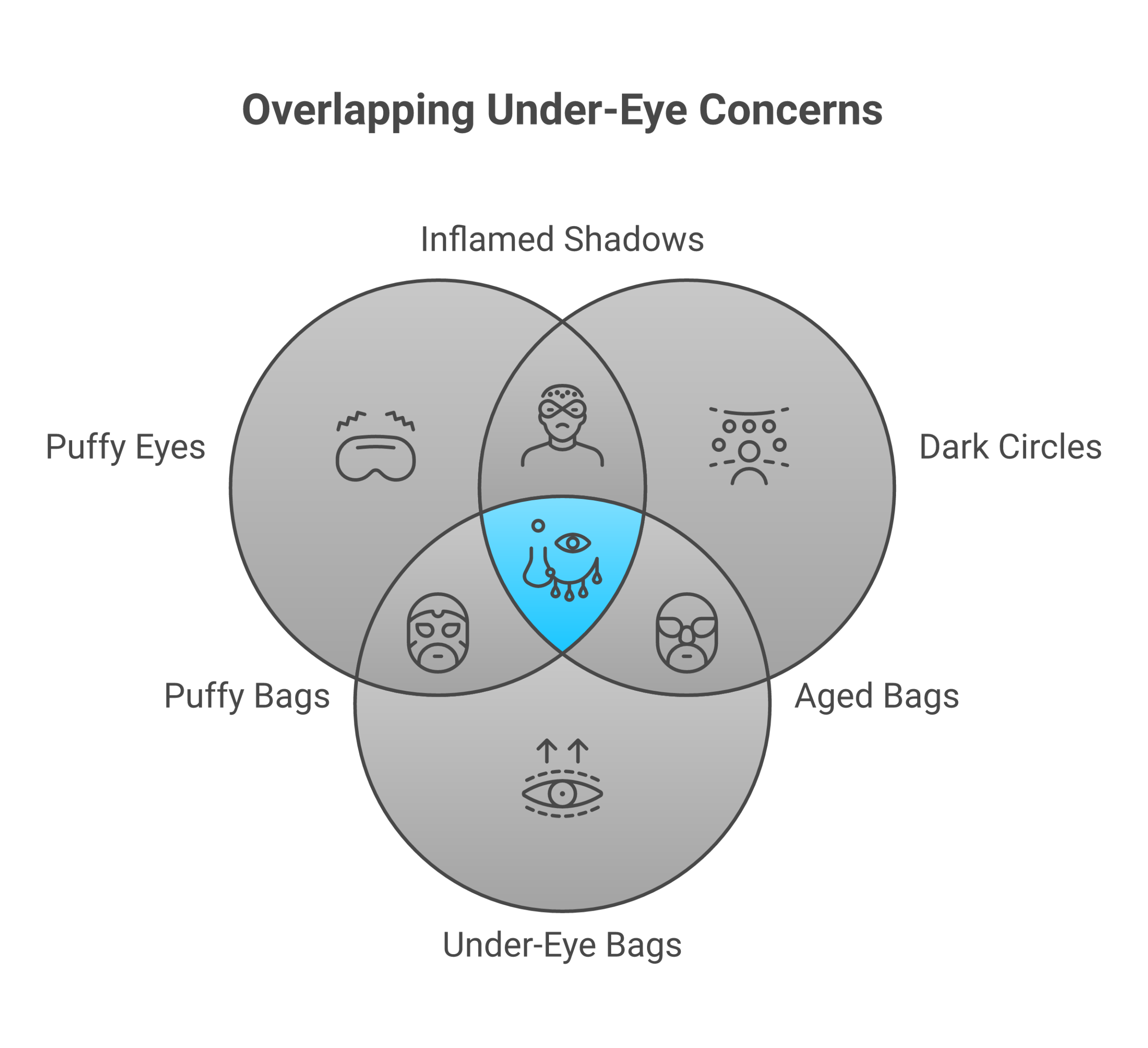
Most people use these terms interchangeably. That’s a problem, because each one has a different cause and responds to different ingredients. Treating dark circles with a de-puffing cream won’t do much. And no cream on earth will fix structural fat pad herniation.
Here’s what’s actually going on with each one:
Puffy eyes are usually temporary swelling caused by fluid retention. You wake up with them after a salty dinner, a bad night of sleep, seasonal allergies, or crying. The tissue around your eyes is loose and thin, so fluid pools there easily. In most cases, puffiness resolves on its own within a few hours of being upright.
Dark circles are a color problem, not a swelling problem. The skin under your eyes is roughly 0.5mm thick (the thinnest skin on your body), and blood vessels underneath show through as a blue-purple tint. Some people also have hyperpigmentation from sun damage, genetics, or post-inflammatory changes. Volume loss in the tear trough area can create shadows that look like dark circles even when pigmentation is normal.
Under-eye bags are a structural issue. As you age, the orbital septum (a thin membrane that holds fat behind your eye socket) weakens. Fat pads push forward through the membrane, creating a permanent bulge. According to the Mayo Clinic, the tissues and muscles supporting your eyelids weaken with age, and skin may begin to sag. Fat that normally stays around the eye can then migrate into the area below the eyes.
Why Under-Eye Problems Get Worse After 50
Several things happen simultaneously in your 40s and 50s that make all three concerns more visible:
- Collagen and elastin decline: Production drops roughly 1-1.5% per year after age 25. By 50, you’ve lost a significant portion of the structural proteins that keep skin firm and elastic around the eyes.
- Fat pad descent: The malar fat pads in your midface drop lower, creating a hollow between the lower eyelid and cheek. This makes existing bags look larger and shadows deeper.
- Orbital bone remodeling: The eye socket actually expands slightly with age, giving fat pads more room to bulge forward. A 2011 study published in Plastic and Reconstructive Surgery by Kahn and Shaw confirmed measurable changes in orbital aperture dimensions with aging.
- Thinner skin: The already-thin under-eye skin loses additional thickness, making blood vessels and pigmentation more visible.
- Fluid retention changes: Kidney function, sodium sensitivity, and lymphatic drainage all shift with age, making morning puffiness more persistent.
If you’re over 50 and noticing a combination of puffiness, discoloration, and sagging, it’s probably not one single cause. It’s several of these factors compounding. That’s also why a single “miracle” eye cream rarely fixes everything.
Best Ingredients for Puffy Eyes
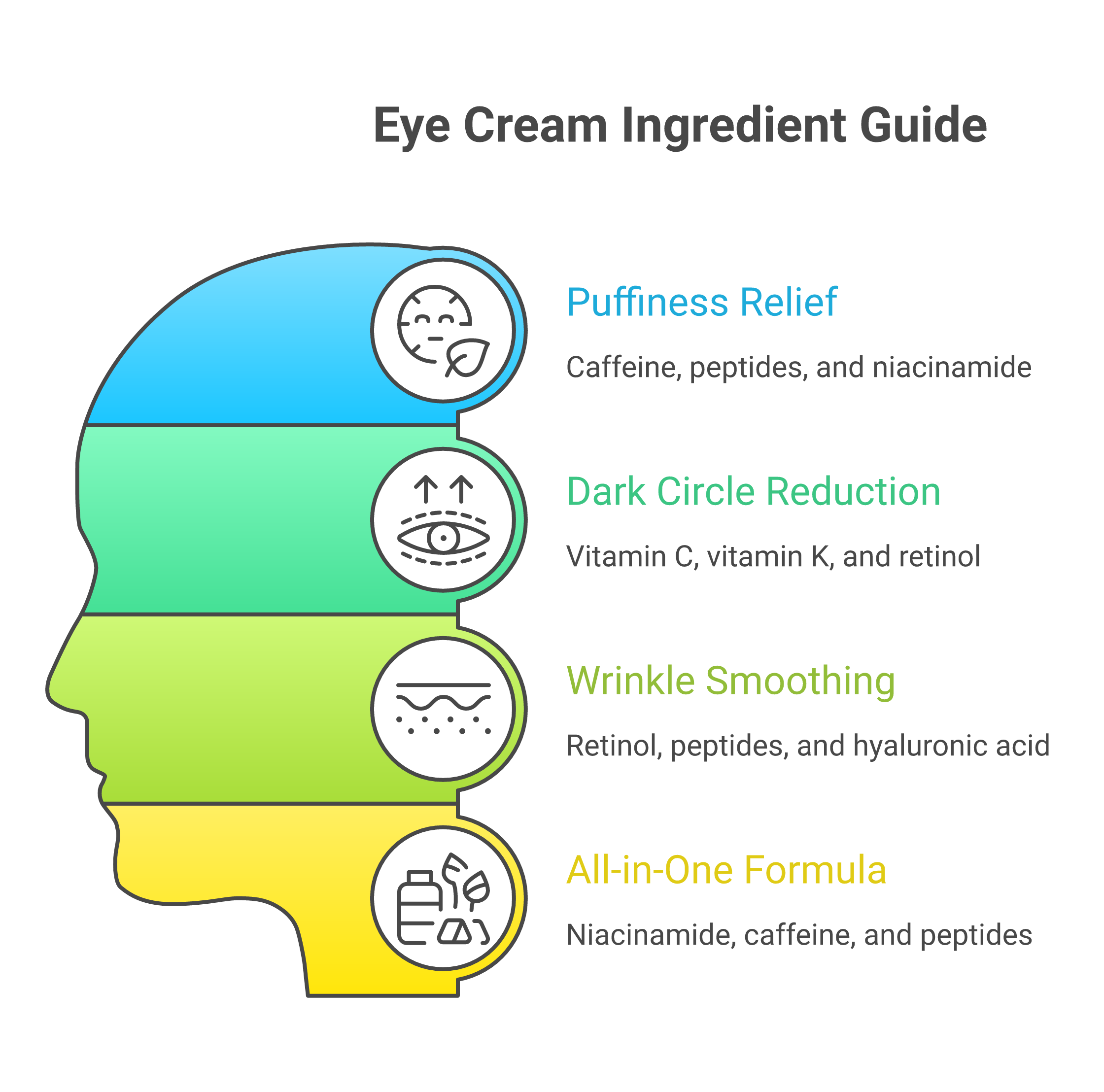
For temporary, fluid-related puffiness, the right active ingredients can make a noticeable difference within minutes to weeks. Here’s what the research supports:
Caffeine
Caffeine is a vasoconstrictor, meaning it narrows blood vessels and reduces fluid accumulation. A 2015 study published in the Journal of Cosmetics, Dermatological Sciences and Applications found that a caffeine-containing eye pad applied daily for one month significantly reduced periorbital puffiness and pigmentation in a small trial of 11 women. The proposed mechanism is phosphodiesterase inhibition, which stimulates lipolysis (fat breakdown) in the tissue.
That said, results are mixed. A separate randomized, double-blind trial comparing 3% caffeine gel to a placebo base gel found that only 23.5% of the 34 volunteers responded to caffeine’s de-puffing effect. So caffeine works for some people, but it’s not guaranteed.
I’d still recommend it as a first-line ingredient for morning puffiness. It’s inexpensive, well-tolerated, and the vasoconstrictive effect kicks in fast.
Peptides
Peptides like palmitoyl tetrapeptide-7 and acetyl hexapeptide-8 (Argireline) signal skin cells to produce more collagen and reduce inflammation. A 2024 review in the International Journal of Women’s Dermatology noted that peptide-containing eye creams showed measurable improvements in skin firmness and fine line reduction over 12-week treatment periods. For puffiness specifically, the firming effect helps tighten lax skin that allows fluid to pool.
Niacinamide (Vitamin B3)
Niacinamide at 4-5% concentration strengthens the skin barrier, reduces transepidermal water loss, and has anti-inflammatory properties. It won’t produce dramatic de-puffing on its own, but it supports overall skin health in the delicate eye area. I consider it a strong supporting ingredient rather than a standalone treatment for puffiness.
Cold Compress and Cucumber Extract
This isn’t marketing fluff. Cold temperatures constrict blood vessels and reduce swelling. It’s basic physiology. Cucumber extract contains antioxidants and has mild anti-inflammatory properties. A chilled eye cream or even a cold spoon held under your eyes for 5 minutes can reduce morning puffiness faster than any active ingredient alone.
Best Ingredients for Dark Circles
Dark circles are stubborn because they have multiple possible causes. The ingredient that works depends on why your circles are dark in the first place.
Vitamin C (Ascorbic Acid)
Vitamin C is a well-studied brightening agent. A 2009 clinical trial published in the Journal of Cosmetic Dermatology tested 10% ascorbic acid applied to the under-eye area for six months. The treatment measurably increased skin thickness under the eye, which reduced the visibility of dark blood vessels showing through thin skin. The study concluded that vitamin C was effective for vascular-type dark circles (the blue-purple kind).
For dark circles caused by hyperpigmentation (brown discoloration), vitamin C inhibits tyrosinase, the enzyme responsible for melanin production. Results typically take 8-12 weeks of consistent daily use.
Retinol
Retinol (vitamin A) stimulates collagen production and accelerates cell turnover, which gradually thickens the under-eye skin and reduces the translucency that makes vessels visible. A study by Hermitte (2003) cited in the International Journal of Women’s Dermatology review found that a topical formulation combining 0.1% retinol with vitamins C, E, and K was “fairly or moderately effective” at reducing dark circles in healthy Japanese adults.
Start with a low concentration (0.025-0.05%) around the eyes. The under-eye area is extremely sensitive to retinoids. Many people experience redness, peeling, and irritation when they start with full-strength retinol near the eyes. The best eye creams for wrinkles often contain retinol at eye-safe concentrations if you’re also targeting fine lines.
Vitamin K
Vitamin K supports blood clotting and may reduce the appearance of dark blood vessels under the skin. The clinical evidence is limited, but a 2004 study in the Journal of Cosmetic Dermatology testing a combination pad containing vitamin K and caffeine did show improvement in dark circle severity. Vitamin K is unlikely to work as a standalone ingredient, but it’s a reasonable addition to a multi-ingredient formula.
Arnica and Kojic Acid
Arnica has anti-inflammatory properties and may help with vascular dark circles by reducing blood pooling. Kojic acid is a melanin inhibitor that can improve hyperpigmentation-type dark circles, though it can cause contact dermatitis in sensitive skin. Both are secondary ingredients, not primary treatments.
Best Ingredients for Under-Eye Bags
Here’s what most brands won’t tell you: no topical cream can reverse structural under-eye bags caused by fat pad herniation through the orbital septum. Once that fat has pushed forward, it’s a structural problem. Creams can improve the appearance of mild bags and slow progression, but they cannot undo moderate to severe bags.
That honest caveat aside, here are the ingredients with the best evidence for mild bags:
Retinol (Long-Term)
Regular retinol use over 3-6 months thickens the dermis by stimulating collagen production. Thicker skin around the eye area can mask mild fat protrusion and improve overall skin texture. The American Academy of Dermatology (AAD) recommends retinoids as one of the most effective topical anti-aging ingredients, though they note results take 3-6 months to appear.
Peptides
Signal peptides like Matrixyl (palmitoyl pentapeptide-4) communicate with fibroblasts to ramp up collagen synthesis. A split-face study cited in the 2024 International Journal of Women’s Dermatology review found that palmitoyl-KTTKS produced a significant reduction in fine lines and improved skin firmness over 12 weeks. Firmer skin helps contain mild fat pad protrusion.
Hyaluronic Acid
Hyaluronic acid (HA) is a humectant that draws water into the skin, plumping the surface and temporarily smoothing the appearance of fine lines and mild bags. A study testing HA on 76 women aged 30-60 found significant improvement in skin hydration and elasticity, with wrinkle depth reductions of 10-20%. HA is not fixing the underlying cause, but it visually improves the area by hydrating depleted skin.
What Plexaderm Actually Does (and Doesn’t Do)
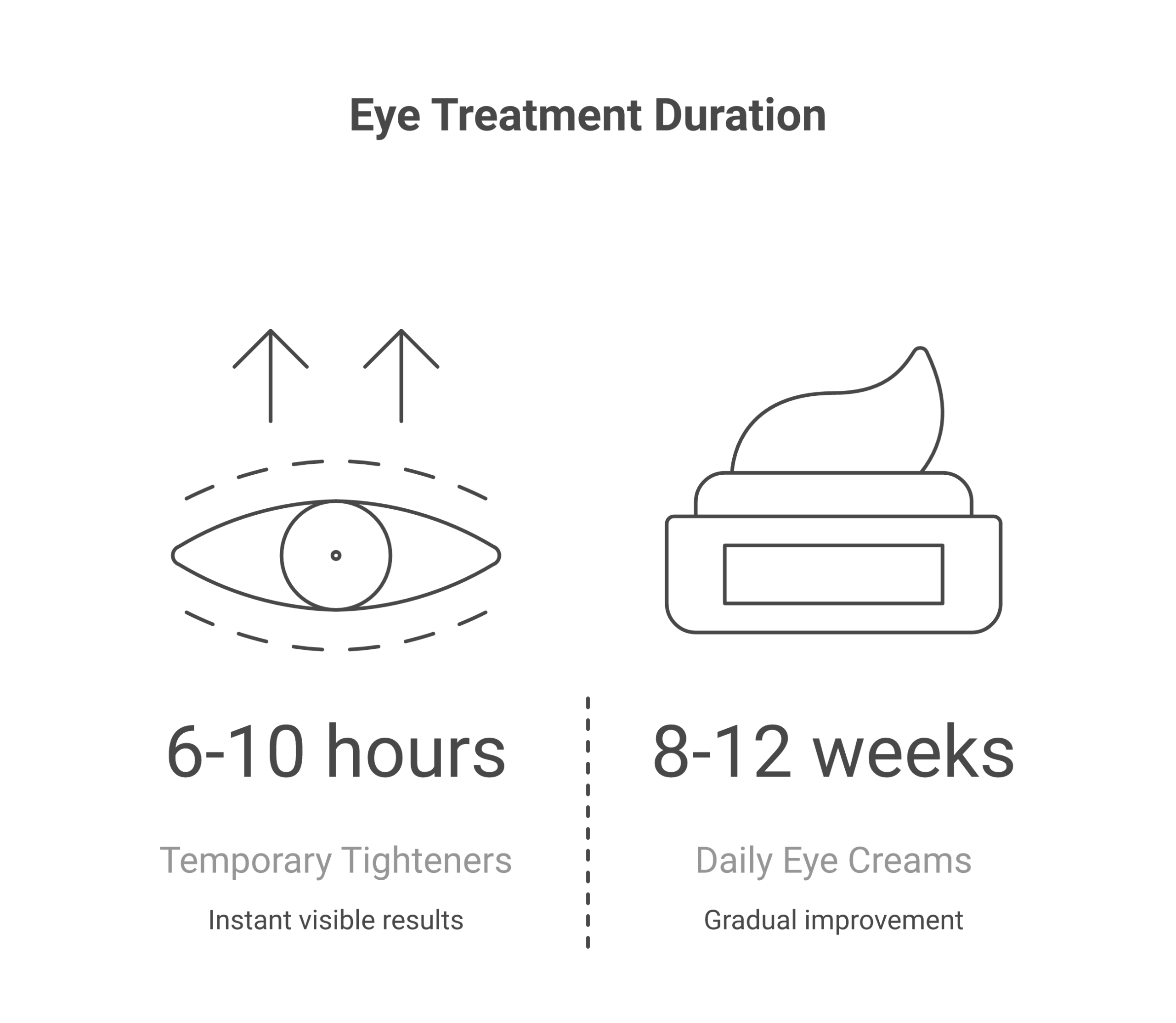
Plexaderm is one of the most searched eye products for bags and puffiness. It uses silicate minerals derived from shale clay to form a temporary film on the skin surface that physically tightens and smooths the area. The visible effect can start within 10 minutes and lasts up to 10 hours, according to the manufacturer.
The formula also contains acetyl hexapeptide-8 (Argireline) and titanium dioxide. The peptide may provide some long-term benefit with consistent use, and the titanium dioxide helps lighten the appearance of dark areas through a light-diffusing effect.
But here’s the reality: Plexaderm is a cosmetic concealer, not a treatment. The tightening effect is a surface film that washes off. It’s not changing the skin’s structure, stimulating collagen, or addressing fat pad herniation. If you need to look refreshed for an event or a video call, it can work well as a temporary fix. But it’s not replacing daily skincare that targets the root causes.
I’d position Plexaderm in your routine as an “event product,” not a treatment. Use it when you need quick results. Use a retinol or peptide eye cream for the ongoing work.
How to Choose the Right Eye Cream for Your Concern
Stop buying eye creams based on the brand name or package design. Start by identifying your primary concern, then match it to the active ingredient with the best evidence:
- Morning puffiness that resolves by afternoon: Look for caffeine as the first or second active ingredient. Store the cream in the refrigerator for an added vasoconstrictive boost.
- Blue-purple dark circles (vascular): Vitamin C at 5-10% concentration, applied consistently for 8-12 weeks. Expect gradual brightening, not overnight results.
- Brown dark circles (hyperpigmentation): Vitamin C, kojic acid, or niacinamide. Sunscreen is non-negotiable here, since UV exposure drives melanin production and will undo whatever the cream achieves.
- Mild under-eye bags with fine lines: Retinol (start low, 0.025%) combined with peptides. Give it 3-6 months of nightly use before judging results.
- Moderate to severe bags: Be honest with yourself. Topical creams will provide modest improvement at best. A consultation with a board-certified oculoplastic surgeon about treatment options may be more productive than cycling through products.
What Realistic Results Look Like
Eye creams maintain and modestly improve. They do not transform. If anyone promises you’ll “erase” bags or “eliminate” dark circles with a cream, they’re selling you hope, not science.
Here’s a realistic timeline based on the clinical data:
- Week 1-2: Improved hydration and smoother texture (from HA and moisturizing bases). Caffeine may show mild de-puffing within days.
- Week 4-6: Niacinamide and vitamin C begin showing measurable changes in skin brightness and barrier function.
- Week 8-12: Retinol and peptides produce visible improvements in skin thickness, firmness, and fine line depth. Dark circles from vascular causes may appear lighter.
- Month 3-6: Maximum results from retinol. This is when you can truly judge whether your eye cream is working.
If you’ve used a product for 12 weeks with zero visible change, it’s not the right formula for your specific issue. Switch ingredients, not just brands.
How to Apply Eye Cream Correctly
Application technique matters more than most people realize. The skin around your eyes has fewer sebaceous glands and less structural support than the rest of your face. Rough handling can worsen puffiness and accelerate fine lines.
- Use your ring finger. It naturally applies the least pressure of any finger.
- Dot, don’t drag. Place small dots of cream along the orbital bone (the bony ridge around the eye socket), then pat gently until absorbed. Never drag or pull the skin.
- Stay on the bone. Apply to the orbital bone, not directly against the lash line. Product migrates upward and inward. If you apply too close, it can seep into your eyes and cause irritation.
- Less is more. A pea-sized amount covers both eyes. Excess product doesn’t work harder. It just sits on the surface and can cause milia (tiny white bumps).
- Apply morning and night. Caffeine-based products work best in the morning. Retinol should only be used at night.
When to See a Doctor About Under-Eye Changes
Most under-eye puffiness, dark circles, and bags are cosmetic concerns. But certain signs warrant a medical evaluation:
- Sudden onset: Puffiness or swelling that appears abruptly (not gradually over months or years) could indicate an allergic reaction, infection, or systemic condition.
- Asymmetry: Swelling or bags on one side only could suggest a localized problem such as a blocked tear duct, orbital cellulitis, or (rarely) a mass.
- Thyroid symptoms: If under-eye changes accompany fatigue, weight changes, hair thinning, temperature sensitivity, or heart rate changes, ask your doctor about thyroid testing. According to the Cleveland Clinic, thyroid eye disease (Graves’ disease) causes inflammation in the tissues around the eyes and requires specific treatment beyond cosmetic products.
- Vision changes: Blurred vision, double vision, or eye pain alongside puffiness is a medical emergency. See an ophthalmologist immediately.
- Persistent swelling that doesn’t respond to anything: If elevation, cold compresses, antihistamines, and topical treatments produce zero change over several weeks, an underlying condition (kidney function, cardiac issues, medication side effects) could be the cause.
Lifestyle Changes That Actually Help
Before spending on expensive creams, make sure the basics are covered. These cost nothing and can produce more visible results than any product:
- Sleep position: Sleep with your head slightly elevated. This prevents fluid from pooling around your eyes overnight. An extra pillow or a 15-degree bed wedge can make a noticeable difference in morning puffiness.
- Sodium intake: High sodium meals cause water retention. If your eyes look puffy every morning, track your evening sodium intake for a week. The American Heart Association recommends no more than 2,300mg per day.
- Allergy management: Uncontrolled allergies cause chronic eye rubbing and histamine-driven swelling. An over-the-counter antihistamine (cetirizine, loratadine) taken regularly during allergy season can reduce puffiness significantly.
- Sun protection: UV exposure thins the under-eye skin faster and increases hyperpigmentation. A mineral sunscreen with zinc oxide is gentle enough for the eye area. This is the single most effective long-term dark spot prevention strategy.
- Hydration: Counterintuitive, but drinking adequate water reduces puffiness. Dehydration triggers the body to retain more fluid.
Frequently Asked Questions
Can eye cream really get rid of dark circles permanently?
No. Eye creams can reduce the appearance of dark circles by brightening pigmentation (vitamin C, niacinamide) or thickening skin so blood vessels are less visible (retinol). But they cannot permanently eliminate dark circles, especially when the cause is genetic thin skin or volume loss. For permanent improvement, dermal fillers in the tear trough or laser treatment targeting pigmentation are more effective options. Talk to a dermatologist about what’s realistic for your specific type of dark circles.
How long does it take for an eye cream to work?
It depends on the active ingredient. Caffeine can reduce puffiness within 15-30 minutes. Hyaluronic acid provides immediate hydration and plumping. Vitamin C and niacinamide take 8-12 weeks to produce visible brightening. Retinol and peptides need 3-6 months to stimulate enough collagen production for measurable changes in skin thickness and firmness.
Is Plexaderm worth buying for eye bags?
Plexaderm works well as a temporary cosmetic fix. The silicate-based formula creates a visible tightening effect within 10 minutes that lasts up to 10 hours. It’s a good option for photos, events, or video calls when you need quick results. But it’s not a treatment. It doesn’t address the underlying cause of bags, and the effect washes off completely. For ongoing improvement, pair it with a retinol or peptide eye cream used nightly. You can read real user experiences on our eye cream review page.
What is the best eye cream ingredient for someone over 50?
For people over 50 dealing with multiple concerns (puffiness, dark circles, fine lines, mild bags), a formula combining retinol, peptides, and niacinamide covers the most ground. Retinol stimulates collagen and thickens skin. Peptides support firmness. Niacinamide reduces inflammation and improves skin barrier function. Start with low-concentration retinol (0.025%) and increase gradually as your skin tolerates it.
Can allergies cause puffy eyes and dark circles?
Yes. Allergic reactions (seasonal, environmental, or contact) trigger histamine release that causes blood vessel dilation and fluid accumulation around the eyes. Chronic allergies also lead to “allergic shiners,” a term dermatologists use for the dark discoloration caused by nasal congestion restricting blood flow from the area under the eyes. Managing allergies with antihistamines, nasal corticosteroid sprays, and avoiding triggers can significantly reduce both puffiness and dark circles without any topical eye product.
Should I use different eye creams for morning and night?
Yes, and here’s why. In the morning, your priority is de-puffing and protection. A caffeine-based eye cream addresses overnight fluid retention, and following with SPF protects the thin under-eye skin from UV damage. At night, your skin is in repair mode. That’s the time for retinol, peptides, or vitamin C, ingredients that work best during overnight cell turnover. Using a single “all-purpose” eye cream means you’re compromising on both fronts.
Are expensive eye creams better than drugstore options?
Not necessarily. Price often reflects packaging, marketing, and brand positioning more than ingredient quality. A $15 eye cream with 5% niacinamide and caffeine can outperform a $90 cream with a proprietary blend that doesn’t disclose concentrations. Read the ingredient list. Check that your target active (caffeine, retinol, vitamin C, peptides) appears in the first 5-7 ingredients. If it’s buried at the bottom of a long list, the concentration is likely too low to produce results.
Finding the right approach for your under-eye concerns takes some patience and honest self-assessment. Match your primary concern to the right ingredient, give it adequate time to work, and don’t expect miracles from a jar. For product comparisons and real user feedback, visit our verified eye cream reviews. If you’re also targeting crow’s feet and fine lines, check our guide to the best eye creams for wrinkles. For broader skin concerns like wrinkle creams or dark spot removers, explore our other category guides on the Consumer Health Guide homepage. For more about our editorial process, see our About Us page.